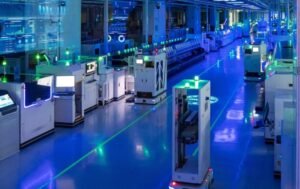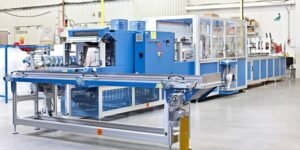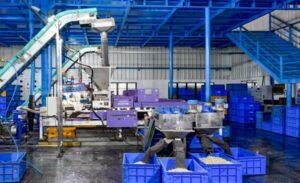
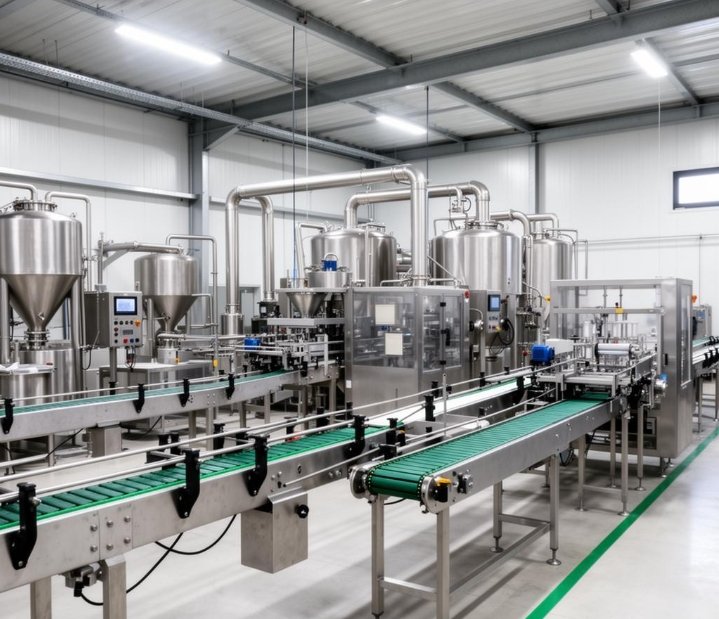
Kerala can build a digitally connected network that allows businesses, cooperatives, farmers, and entrepreneurs to discover, book, access, and share industrial machinery across geographical boundaries. Instead of every enterprise investing in expensive equipment that may remain idle for much of the day, a digital infrastructure platform could connect available machinery with businesses that need it.
The concept is to treat industrial equipment as a distributed network of productive assets. A fruit-processing unit in one district, a fisheries enterprise in another, and a small manufacturing business elsewhere could each access suitable equipment through a common digital system, subject to transport costs, technical compatibility, and availability.
Such a platform would help increase machinery utilisation, reduce capital expenditure, and make advanced production technology accessible to smaller enterprises.
The platform would function through a shared digital inventory of industrial assets. Every participating machine would have a profile containing its location, capabilities, processing capacity, availability, operating costs, safety requirements, and service history. Businesses could search by machine type, raw material, production requirement, distance, and price.
A booking system would coordinate schedules, payments, transportation, trained operators, maintenance, and quality assurance. Where appropriate, connected sensors could report equipment utilisation, energy consumption, operating hours, and maintenance needs. The system could also recommend nearby alternatives when a machine is unavailable.
The business model should accommodate different forms of access. Some users may rent machinery by the hour or day; others may pay per kilogram processed, per production batch, or per completed manufacturing job. Investors could finance equipment and earn revenue from usage fees, while cooperatives and local enterprises coordinate demand and provide local operating support.
This model has international precedents. FLOOW2 facilitates sharing of underused business equipment and workforce capabilities. The production-as-a-service model similarly allows businesses to access manufacturing capacity without owning the underlying factory assets.
For Kerala, implementation could begin with a regional pilot covering agro-processing machinery, cold storage, packaging equipment, CNC machines, and material-handling systems. The initial platform should prioritise verified machinery listings, availability, transparent pricing, and reliable service delivery before adding complex automation.
The ultimate objective is to create a geographically distributed industrial network in which machinery is used more productively, investment reaches more enterprises, and businesses can access capabilities beyond their immediate locality. Digital infrastructure would become the coordinating layer connecting equipment owners, operators, investors, cooperatives, and manufacturers into a more efficient regional economy.