Agricultural processing is often treated as a manufacturing problem: build a factory, install machines and process crops. The next generation of agro-processing will require something more—a digital infrastructure connecting farms, collection centres, processing units, warehouses, laboratories, transporters, buyers and consumers.
The basic idea is simple: every major agricultural production region should have a digital layer that allows its physical food economy to operate as one connected system.
A farmer growing bananas should not have to operate independently from the processor who needs bananas, the cold-storage facility holding them, the transporter moving them and the retailer eventually selling the finished product. A digital agricultural-processing network can connect all these participants.
The first component would be a regional agricultural data platform. It could maintain information about production volumes, crop varieties, harvesting periods, processing capacity, storage availability, transportation and market demand. This would allow processors to understand what raw materials will become available and when.
Artificial intelligence could then forecast supply and demand. If a processing cluster expects a large banana harvest, the system could identify available processing capacity, storage requirements and potential buyers before the crop arrives.
The second component would be digital collection centres.
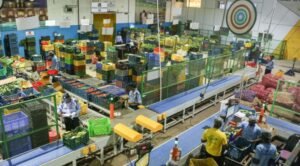
Instead of farmers bringing produce randomly to markets, collection centres could digitally record incoming crops, quantities, quality measurements and origin. Weighing, grading and quality testing could be connected directly to a digital platform.
This creates traceability.
A processor buying spices, fruits or vegetables could know where the raw material came from, when it was harvested, how it was transported and what quality tests were performed. Such information becomes particularly valuable for premium domestic markets and exports.
The third component would be smart processing factories.
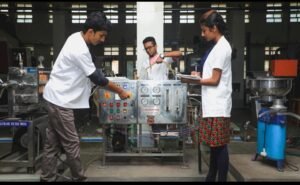
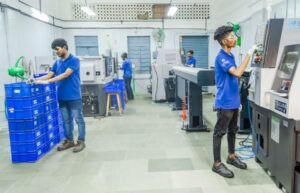
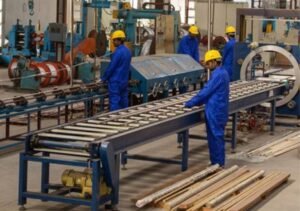
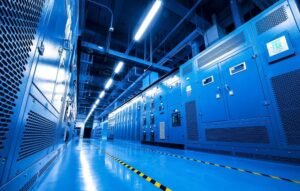
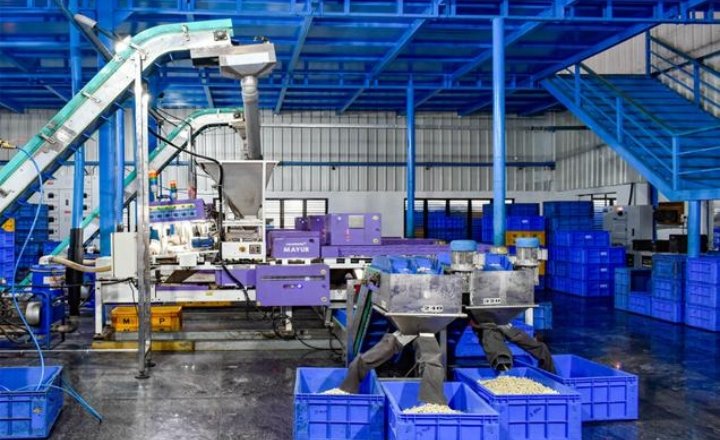
Machines inside agro-processing facilities can generate continuous information about production, temperature, moisture, energy consumption, machine performance and output quality. Connecting these machines to a central industrial platform allows operators to monitor production in real time.
Predictive maintenance could identify machinery problems before a breakdown stops production. Energy-management systems could identify inefficient equipment. Automated quality-control systems could detect deviations in production.
The result is a factory that does not simply process agricultural products but continuously learns from its own operations.
The fourth layer is digital cold-chain infrastructure.
Perishable agricultural products lose significant value when storage and transportation are poorly coordinated. Sensors can monitor temperature, humidity and location while products move between farms, collection centres, warehouses and factories.
A digital platform could provide a real-time map of available cold-storage capacity. If one facility is approaching full capacity, products could be redirected to another facility.
This transforms cold storage from isolated warehouses into a coordinated regional infrastructure.
The fifth component is a digital marketplace for processing capacity.
Many small processing businesses have machines that remain unused for significant periods. At the same time, farmers and entrepreneurs may need access to equipment without being able to afford their own factory.
A digital platform could allow businesses to book processing capacity.
One entrepreneur could book a fruit pulping line for two days. Another could reserve packaging equipment. A farmer collective could rent a dehydration unit during harvest season.
This would create a shared industrial infrastructure model for rural areas.
The sixth component would be digital finance.
Once production, quality, inventory and sales are digitally recorded, financial institutions can potentially gain better visibility into business operations. Processors could use verified inventory and purchase contracts to support working-capital requirements, subject to appropriate lending standards.
Farmers could also receive faster digital payments based on recorded deliveries and quality measurements.
The seventh component is export infrastructure.
Agro-processing clusters should be digitally connected to testing laboratories, certification systems, customs processes, logistics providers and international buyers. Export documentation, product specifications and quality records could be managed through integrated digital systems.
This would make it easier for small processors to participate in international markets without having to build every administrative capability independently.
The long-term vision is a digital agro-industrial district.
Imagine a region where thousands of farms connect to collection centres. Those centres connect to processing factories. Factories connect to cold storage and logistics operators. Laboratories verify quality. A digital marketplace connects processors with buyers. Energy systems monitor industrial consumption. AI forecasts production and demand.
The physical economy remains local, but the information infrastructure connects the entire system.
This could be particularly powerful for Kerala. The state has diverse agricultural production but limited land availability. Instead of focusing only on increasing agricultural acreage, Kerala can increase the value generated from every kilogram of agricultural output.
A banana should not simply be sold as a banana. It can become chips, flour, puree, beverages, ingredients, animal feed, fibre or other products. A coconut can generate food products, oil, fibre and industrial materials. Spices can become packaged consumer products rather than remaining bulk commodities.
Digital infrastructure can coordinate this transformation.
The goal is not to replace farmers or factory workers with technology. It is to give the entire agricultural value chain better information, better coordination and better access to infrastructure.
The farm remains the starting point.
But the future agro-processing economy should operate like a connected digital-industrial network, where information moves as efficiently as the agricultural products themselves.