International trade does not begin at a port. It begins inside a factory, warehouse or farm, where a product is manufactured, processed, packaged and prepared for a customer in another country. Between that point and the final overseas destination lies a complex chain involving roads, warehouses, customs, freight operators, ports, shipping companies, banks, insurers and government agencies. A Smart Export Corridor would connect these elements through digital infrastructure so that the physical movement of goods and the movement of information happen as one coordinated process.
The conventional export system often treats logistics as a sequence of separate activities. A manufacturer finishes production and contacts a transporter. The transporter moves the goods to a warehouse or port. Documentation is prepared separately. Customs procedures occur through another system. Shipping arrangements are managed by another organization. Each participant may perform its own function efficiently while the overall journey still experiences delays because information does not move at the same speed as the cargo.
A Smart Export Corridor attempts to address this coordination problem.
The corridor would connect manufacturing clusters with logistics hubs, ports, airports, customs facilities, warehouses and international shipping networks. Digital systems would allow authorized participants to exchange information about cargo readiness, transportation, documentation, capacity, inspections and expected arrival times.
The objective would not simply be to build another highway. The corridor would combine physical infrastructure with digital infrastructure.
A manufacturer could create a digital export order when production is nearing completion. The system could identify the shipment’s destination, expected volume, transportation requirements and documentation needs. Logistics providers could receive information about when the cargo is expected to be ready. Transport capacity could be scheduled accordingly.
This could reduce waiting time.
Today, a truck may arrive before cargo is ready or cargo may remain at a factory waiting for transportation. Warehouses can experience similar mismatches. A digital corridor could synchronize these activities more closely.
The system could also provide continuous shipment visibility. Once cargo leaves the factory, its location and status could be updated through appropriate tracking technologies. The exporter could see whether the shipment is moving according to schedule. Logistics providers could identify delays. Ports could receive advance information about expected arrivals.
This is particularly valuable for time-sensitive exports.
A shipment of industrial components, pharmaceuticals, food products or other sensitive goods may have specific transportation requirements. Digital monitoring can provide information about location, temperature or other relevant conditions where appropriate.
The corridor could also connect manufacturers with customs systems before the physical arrival of cargo.
Export documentation could be prepared digitally and submitted in advance. Customs authorities could perform appropriate risk assessment before the shipment reaches the port. This could reduce the amount of administrative work required after the cargo physically arrives.
The objective is not to remove customs controls. Rather, digital information can allow controls to become more predictable and risk-based.
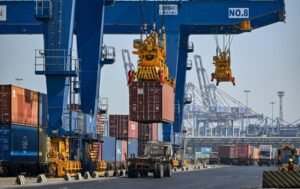
Ports are particularly important because congestion at ports can disrupt the entire export chain. A Smart Export Corridor could provide ports with information about expected cargo volumes from connected industrial clusters.
If thousands of containers are expected from a particular manufacturing region, the port can plan equipment, yard capacity and transportation requirements accordingly.
The corridor can also connect port operations with inland logistics.
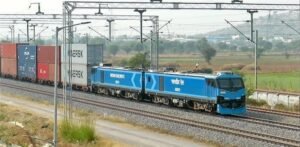
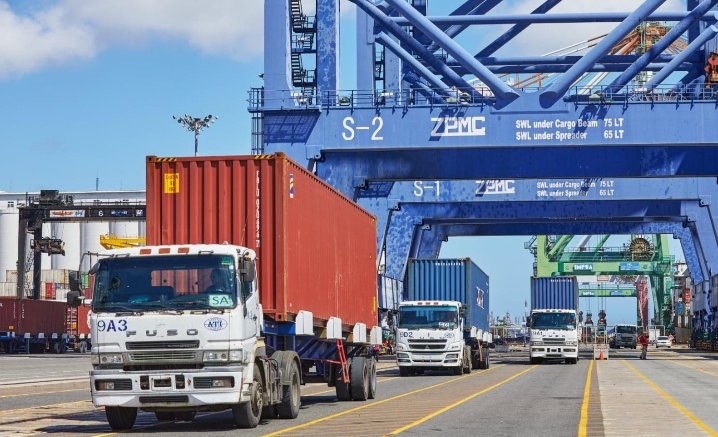
Trucks arriving at a port could receive digital scheduling information. Warehouses could coordinate container movements. Rail services could be integrated where available. The objective would be to reduce unnecessary vehicle queues and improve the utilization of transport infrastructure.
Industrial clusters could become the starting points of such corridors.
Instead of connecting every individual factory separately to global logistics systems, an industrial cluster could have shared digital infrastructure. Factories could connect to a common logistics platform that communicates with transport operators, warehouses, ports and government systems.
This could particularly benefit small and medium-sized exporters.
A large multinational company may have its own logistics department and sophisticated supply-chain software. A small manufacturer may depend on freight forwarders and manual coordination. A shared corridor platform could provide smaller businesses with access to digital logistics capabilities without requiring them to develop complex systems internally.
Artificial intelligence could be used to improve corridor management.
An AI system could analyze historical shipment data, traffic patterns, weather information, port congestion and transportation schedules to identify potential delays. If a port is expected to experience congestion, the system could identify alternative schedules or routes.
The AI system would not necessarily make decisions independently. It could provide recommendations to logistics managers, exporters and infrastructure authorities.
Digital twins could eventually be applied to the corridor itself.
A digital representation of the physical corridor could model factories, roads, warehouses, railway lines, ports, traffic flows and logistics capacity. Authorities could use the model to examine the impact of infrastructure changes.
For example, before constructing a new logistics terminal, planners could model expected freight flows and determine how the facility would affect surrounding transportation networks.
The corridor could also become a platform for energy transition.
Electric trucks are increasingly relevant to logistics, but their usefulness depends partly on charging infrastructure. A Smart Export Corridor could integrate information about charging stations, vehicle schedules and electricity availability.
Electric freight vehicles could receive route information based not only on distance but also on charging requirements and expected congestion.
Renewable energy installations could be incorporated into logistics hubs and warehouses. Battery storage could support charging infrastructure. The digital system could coordinate energy consumption with broader grid conditions.
Environmental monitoring could become another layer.
Sensors along the corridor could collect information about air quality, noise, traffic and other environmental conditions. This would provide infrastructure managers with information about the impact of freight activity.
Such data could support decisions about routing, scheduling and infrastructure improvements.
Cybersecurity would be essential because the corridor would connect multiple critical systems. A disruption to the digital platform could affect factories, logistics companies and ports simultaneously. Strong authentication, network segmentation, monitoring and incident-response mechanisms would therefore be necessary.
Data governance would also matter. Companies may be willing to share shipment status but not detailed commercial information. The system should therefore use controlled access, ensuring that participants receive only the information necessary for their authorized role.
The corridor could eventually integrate trade finance.
Once an export shipment has been digitally verified and its movement recorded, authorized financial institutions could receive relevant transaction information. This could potentially support faster processing of trade-finance activities.
Insurance systems could similarly receive appropriate information about cargo and transportation conditions.
The result would be a connected export ecosystem in which physical movement and financial processes operate alongside the digital flow of information.
Government would have an important coordinating role. Roads, ports, customs systems, railways and industrial infrastructure often involve different agencies and jurisdictions. A Smart Export Corridor requires these systems to communicate.
Government could establish interoperability standards, facilitate infrastructure investment and coordinate agencies. Private logistics companies, manufacturers, technology providers and financial institutions could operate many of the services.
The corridor would therefore become a public-private infrastructure ecosystem.
The long-term potential extends beyond individual shipments.
Once enough information accumulates, governments and businesses can identify structural bottlenecks. If exporters from a particular industrial cluster repeatedly experience delays at the same transport junction, the problem becomes measurable. If particular ports consistently experience congestion during specific periods, logistics planning can adapt. If certain products face recurring documentation problems, the underlying process can be redesigned.
This creates a feedback loop between trade data and infrastructure planning.
The export corridor becomes a learning system.
The deeper idea is that competitiveness in international trade is not determined only by the quality or price of a product. The speed, predictability and reliability with which that product reaches an international customer also matter.
A manufacturer can produce an excellent product and still lose opportunities if transportation is unreliable, documentation is slow or port delays are unpredictable.
A Smart Export Corridor addresses this part of competitiveness by treating the entire journey from factory to foreign customer as one connected system.
The future export corridor may therefore consist of two parallel networks. The first is physical: factories, roads, railways, warehouses, ports, ships and aircraft. The second is digital: data, identities, documents, tracking systems, customs information, logistics schedules and financial records.
When these two networks operate together, the movement of goods becomes more visible, coordinated and predictable.
The Smart Export Corridor is ultimately an Industry 4.0 concept applied beyond the factory. It extends digital intelligence into the infrastructure that connects manufacturing with the global economy, turning export logistics from a collection of separate transactions into a connected industrial system.