International trade is built on the movement of goods, but modern trade also depends on the movement of information. An exporter needs to communicate with a buyer, prepare commercial documents, obtain certificates, arrange transportation, complete customs procedures, secure financing and insurance, track the shipment and confirm delivery. Each stage may involve different organizations and different digital systems. Digital Trade Infrastructure offers a way to connect these activities through a common digital layer.
The idea is to create infrastructure through which businesses and public institutions can exchange trusted trade information efficiently. Instead of treating invoices, certificates, customs declarations, shipping information, inspection records and logistics updates as disconnected documents, the system can connect them to the same underlying transaction.
The result would be a digital representation of the trade journey from production to delivery.
A manufacturing company preparing an export shipment could begin by creating a digital trade record. The record could contain information about the product, exporter, buyer, quantity, value, origin, destination and relevant regulatory requirements. As the shipment moves through the trade system, additional information could be attached to the same record.
A certificate of origin could be connected to the transaction. Inspection information could be added. Customs declarations could reference the same product information. Logistics providers could update shipment status. Banks and insurers could receive authorized information relevant to financing or risk assessment.
The purpose would not be to create one enormous database controlled by a single institution. International trade involves sovereign governments, private companies and multiple legal jurisdictions. A practical system would therefore require interoperable platforms capable of exchanging information according to agreed standards.
Interoperability is one of the most important challenges in digital trade.
An exporter may use one enterprise system. A logistics company may use another. A port may have its own platform. Customs authorities may operate another system. Banks, insurers and certification agencies may use additional platforms. Without common digital standards, businesses may still be forced to enter the same information repeatedly.
Digital Trade Infrastructure could reduce this duplication.
For example, information about a product’s description, quantity and value could be entered once and then reused across authorized trade documents. This could reduce administrative work and the risk of inconsistent information.
The concept is particularly relevant to small and medium-sized exporters. Large multinational companies often have dedicated trade-compliance departments, logistics teams and sophisticated enterprise software. Smaller businesses may depend on external consultants or manually manage documentation.
Reducing administrative complexity could make international markets more accessible to smaller manufacturers.
Customs is one of the most important areas where digital infrastructure can create efficiency. Customs authorities need information about shipments to assess compliance, calculate duties and identify potential risks. If relevant trade information is available digitally before goods arrive, authorities can potentially perform more of their assessment in advance.
This can support risk-based customs processing.
Instead of treating every shipment identically, customs systems can use available information to identify shipments requiring additional examination while allowing lower-risk transactions to move through appropriate simplified procedures.
Such systems still require human oversight and robust risk controls. Digitalization does not eliminate the need for customs expertise. It can, however, help authorities concentrate attention where it is most necessary.
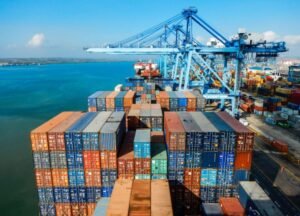
Ports could become another major component.
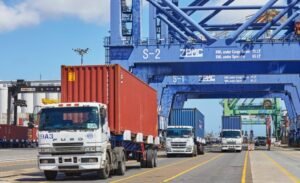
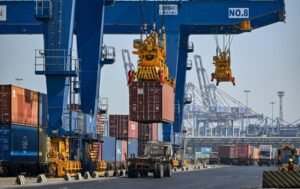
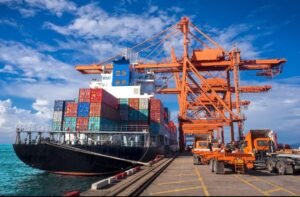
A shipment may pass through exporters, trucking companies, warehouses, ports, shipping lines and customs authorities. If each organization has limited visibility into what the others are doing, delays can accumulate.
A connected digital trade infrastructure could provide authorized participants with a common view of shipment status. A logistics company could know when cargo is ready. A port could receive advance information. A customs authority could begin processing documentation before physical arrival. A buyer could monitor the shipment without repeatedly contacting multiple parties.
The result would be greater synchronization between physical logistics and digital information.
Financial services could also become part of the infrastructure.
International trade often requires working capital. An exporter may need financing before receiving payment from an overseas customer. Banks need information to evaluate transactions, while insurers need information about shipments and risks.
A trusted digital trade record could allow authorized financial institutions to access verified transaction information. This could potentially make certain trade-finance processes more efficient.
The same infrastructure could support insurance. Information about cargo, route, carrier and shipment status could be connected digitally. Insurers could receive relevant updates as the transaction progresses rather than relying entirely on static documents.
One of the most significant developments could be the digitization of trade documents themselves.
International trade has historically depended heavily on paper documentation. Bills of lading, certificates, invoices, inspection certificates and other documents can involve multiple organizations and jurisdictions. Digitally native documents can potentially reduce processing time and administrative costs when legal recognition, security and interoperability are properly established.
However, digitization must address trust.
A digital document is valuable only if participants can determine whether it is authentic, who issued it, whether it has been altered and whether the issuing institution is authorized. Digital signatures, cryptographic verification, trusted identities and secure audit trails can help establish this trust.
Blockchain or distributed-ledger technologies may be useful in some specific applications, but they are not automatically required for every digital trade system. The fundamental requirement is trusted, interoperable information exchange.
Artificial intelligence could provide another layer of capability.
Trade regulations can be complex. Different countries have different product standards, tariffs, documentation requirements and restrictions. AI systems could assist exporters in identifying relevant requirements based on the product, destination and transaction.
An exporter preparing to sell a particular product to a foreign market could receive a structured checklist of documentation and regulatory requirements. The system could also identify missing information before submission.
AI could similarly assist customs authorities with risk analysis and anomaly detection.
Again, the objective should be decision support rather than replacing institutional responsibility. Trade compliance involves legal obligations, and final decisions should remain subject to appropriate human and regulatory oversight.
Digital product passports could become another important component of future trade infrastructure. A product could carry a digital record containing information about its origin, materials, manufacturing processes, certifications, repair history or environmental characteristics where required or voluntarily provided.
This could become increasingly relevant as markets introduce product standards and sustainability requirements.
For manufacturers, such systems could also provide better visibility into international demand. If trade data, logistics information and market signals are connected appropriately, exporters could identify changing demand patterns and adjust production.
This creates a feedback loop between trade and manufacturing.
Manufacturing systems produce goods. Digital trade infrastructure connects those goods to markets. Market information returns to manufacturers. Production can then respond to changing international demand.
The system could therefore become part of Industry 4.0 rather than remaining a separate trade technology.
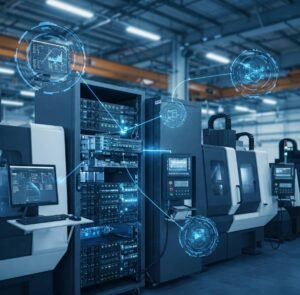
Ports, factories and logistics infrastructure could eventually operate as connected digital ecosystems. A factory could notify logistics providers that an order is ready. The logistics system could schedule transportation. Customs information could be prepared in advance. The port could receive arrival information. The buyer could receive continuous updates.
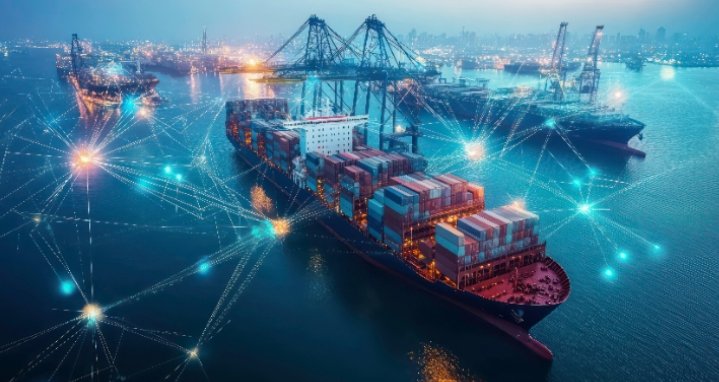
The physical shipment would move through the world while its digital representation moves through interconnected information systems.
There are significant challenges. Different countries have different laws, standards and digital capabilities. Businesses may be reluctant to share commercially sensitive information. Governments must protect personal and commercial data. Cybersecurity must be maintained across international networks.
Interoperability between national systems is therefore essential.
International organizations and standards bodies can play an important role in developing common frameworks. Governments can establish legal recognition for appropriate electronic documents. Businesses and technology providers can build systems that comply with those standards.
The transition would also need to accommodate companies that are not yet digitally advanced. A trade infrastructure designed only for large technology-intensive companies could widen existing inequalities. Digital service providers, trade associations and governments could provide tools that allow smaller exporters to participate without building complex systems themselves.
The ultimate objective is not simply faster paperwork.
Digital Trade Infrastructure can change how international commerce is organized. Trade becomes a continuously connected process rather than a chain of disconnected transactions. Production, certification, customs, logistics, finance and delivery can become parts of the same digital journey.
For an exporting country, this infrastructure can become a strategic economic asset. Ports and highways move physical goods, but digital infrastructure determines how efficiently information moves alongside them.
The future of global trade will therefore depend not only on ships, containers, factories and warehouses, but also on the invisible systems connecting them.
Digital Trade Infrastructure can provide that connective layer, creating a more integrated environment in which businesses and governments can exchange trusted information, coordinate physical movement and manage international transactions with greater speed and visibility.