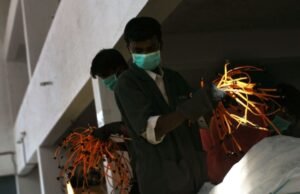
Kerala can create new employment opportunities for its rural population by training people with limited formal education or technical experience to operate modern machinery used in processing locally available raw materials. The objective is to transform rural workers from participants in low-productivity manual activities into skilled machine operators who can support agricultural processing, fisheries, recycling, manufacturing, and other rural industries.
Automation is often perceived as a technology that replaces workers. However, when introduced alongside practical training, it can also create new occupations for people who learn to operate, monitor, maintain, and manage automated equipment. The opportunity is to make these skills accessible to rural communities without requiring every trainee to possess an engineering qualification.
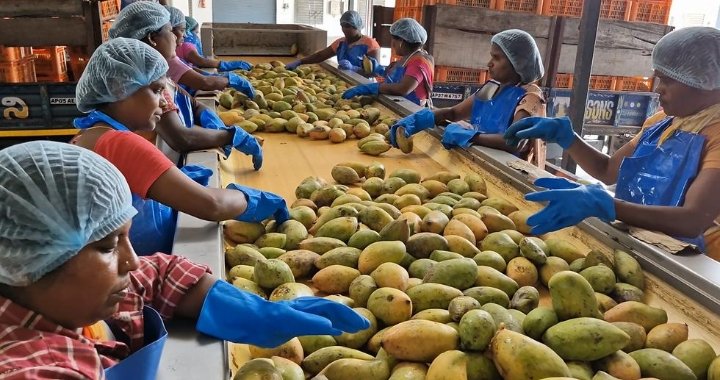
A person who has never worked in a factory could learn to operate a fruit washer, coconut dehusking machine, spice grinder, fish-cutting machine, industrial dryer, packaging line, or material-sorting system through structured, hands-on instruction. With appropriate safety training and supervised practice, workers can progress towards operating more sophisticated equipment.
The central policy idea is to train people around the machinery that local industries actually need, rather than offering generic courses disconnected from employment opportunities.
The programme should be designed around accessible, practical training rather than classroom qualifications. India’s ITI agro-processing curriculum already includes machinery such as grain cleaners, mini rice mills, oil expellers, pulverisers, and packaging machines. Kerala also has community skill parks and common facility centres that provide potential institutional foundations.
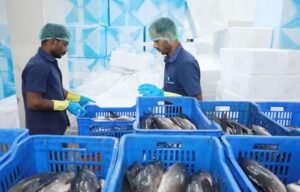
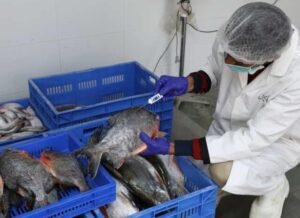
A village-level training hub could offer short modules organised around specific raw materials. Trainees could learn to clean, sort, grade, dry, grind, extract, process, package, and store agricultural products. Separate modules could cover coconut, spices, fruits, vegetables, fish, and other locally available materials. Training should also include hygiene, quality control, equipment safety, basic troubleshooting, and preventive maintenance.
The programme should connect training directly to employment. Cooperatives and private processing businesses could identify the machinery operators they need, provide supervised practical experience, and recruit successful trainees. Shared processing centres could offer paid machine-operation work, while groups of trained workers could eventually operate service enterprises that process raw materials for multiple producers.
Training should be accessible to people with limited formal education, including rural women and young people. Instruction can use demonstrations, visual guides, local languages, repeated practice, and competency-based assessments. Participants should be evaluated on their ability to operate equipment safely and consistently rather than on their ability to pass conventional written examinations alone.
Kerala could build on existing agricultural mechanisation and skills programmes to establish a coordinated rural automation initiative. Its success should be measured through employment, earnings, machinery utilisation, processing productivity, reduced raw-material wastage, and the number of rural enterprises supported.
The goal is to make rural people active participants in modern production. By combining accessible training, shared machinery, and assured links to employers and markets, Kerala can turn technological progress into practical livelihood opportunities for people who have traditionally remained outside advanced manufacturing.