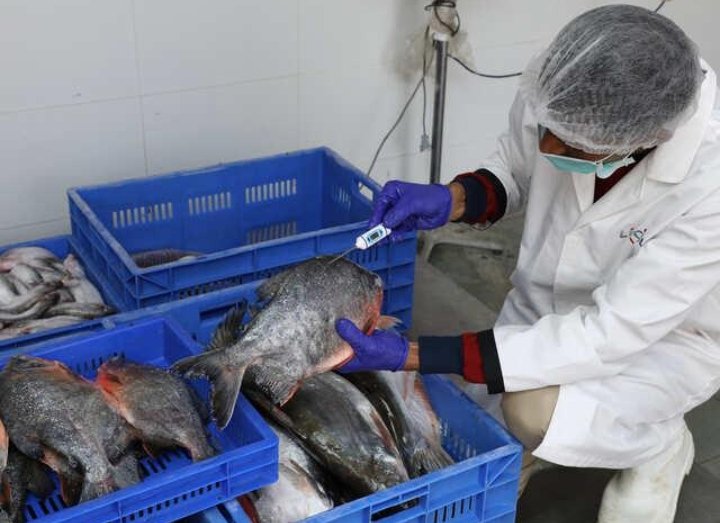
India’s fisheries industry is one of the largest in the world, supplying seafood to domestic consumers as well as international markets. After fish are harvested, one of the most critical operations is grading. Fish are sorted according to size, weight, species and quality before they are sent for processing, export or retail sale. In many facilities this work is still carried out manually. Human grading is labour intensive, time consuming and often produces inconsistent results. Industry 4.0 technologies, particularly computer vision and artificial intelligence, can modernize this stage of the fisheries value chain.
Computer vision refers to the ability of computers to analyse digital images and videos. High resolution cameras installed above conveyor belts capture images of every fish moving through the processing line. Artificial intelligence algorithms analyse these images within seconds and determine the size, species, shape, colour and physical condition of each fish.
Instead of relying entirely on manual inspection, the system automatically classifies products into different grades. Mechanical sorting equipment then directs the fish to the appropriate processing or packaging section. This creates a faster and more accurate production process.
One of the biggest advantages of automated grading is consistency. Human inspectors may classify the same fish differently depending on experience, fatigue or workload. Artificial intelligence applies identical grading standards throughout the day, ensuring uniform product quality for domestic and export markets.
The technology also identifies physical defects such as damaged skin, bruises, cuts or deformities. Products that fail quality standards can immediately be separated from premium export batches. This reduces customer complaints and strengthens confidence among international buyers.
Machine learning continuously improves the grading system. Thousands of fish images collected from different regions, species and seasons are used to train artificial intelligence models. As more data becomes available, grading accuracy continues to increase, allowing the system to recognize even subtle quality differences.
Processing speed improves significantly with computer vision. Modern systems can analyse hundreds of fish every minute while maintaining high levels of accuracy. This increases production capacity without compromising quality, helping processing plants meet growing market demand.
Digital records generated during grading provide valuable business intelligence. Processing companies gain detailed information about average fish size, seasonal variations, supplier performance and production trends. Managers can use this information to improve procurement strategies and optimize plant operations.
Government fisheries departments also benefit from digital grading systems. Standardized grading improves transparency across the seafood supply chain and helps establish uniform quality benchmarks. Digital records simplify inspections and strengthen compliance with export regulations.
Small fisheries cooperatives can also adopt this technology through shared processing centres. Rather than investing individually in expensive equipment, multiple fishing communities can use common automated grading facilities. This improves access to modern technology while reducing capital costs.
Computer vision integrates effectively with other Industry 4.0 technologies. IoT sensors monitor conveyor performance, processing temperature and equipment health. Artificial intelligence combines operational data with grading information to optimize workflow throughout the processing plant.
Blockchain systems can also use grading information as part of seafood traceability. Every package carries verified digital records showing how the fish was graded, processed and handled. Buyers gain greater confidence because grading information cannot be easily manipulated after processing.
Labour requirements do not disappear with automation. Instead, the nature of work changes. Employees move from repetitive manual sorting to supervising automated systems, analysing production data and maintaining digital equipment. This creates opportunities for higher skill employment within the fisheries sector.
Predictive maintenance further improves operational efficiency. Cameras, conveyors and sorting equipment continuously generate performance data. Artificial intelligence identifies early signs of mechanical wear and recommends maintenance before breakdowns interrupt production.
Export competitiveness is strengthened because international buyers increasingly expect standardized grading and consistent quality. Automated systems help Indian seafood processors meet these expectations while improving operational efficiency and reducing product variation.
Training remains essential for successful implementation. Processing plant employees require skills in operating computer vision systems, interpreting analytical reports and maintaining digital equipment. Fisheries training institutes and technical universities can develop specialized programmes focused on Industry 4.0 technologies.
Cybersecurity also becomes important as processing facilities adopt connected digital systems. Secure networks and protected data storage ensure that operational information remains safe while supporting continuous production.
India’s fisheries industry is entering an era where technology will determine competitiveness as much as production volume. Automated fish grading through computer vision provides a practical Industry 4.0 solution that improves accuracy, productivity and product quality across the seafood value chain.
By integrating artificial intelligence, high resolution imaging, cloud computing and smart automation, India can build processing facilities capable of meeting global quality standards while improving profitability for seafood companies and strengthening the country’s position as a leading exporter in the global fisheries market.