
India’s growing industrial economy depends heavily on copper for electrical networks, renewable energy systems, electric vehicles, consumer electronics, railway infrastructure, telecommunications, and manufacturing. While primary copper production remains important, recycled copper is becoming an equally valuable resource because it retains nearly all of its original properties and requires significantly less energy to process than newly mined copper. As demand continues to rise, improving governance over copper recycling has become a strategic national priority. A Digital Governance Platform for Copper Recycling offers an Industry 4.0 solution that integrates artificial intelligence, cloud computing, Internet of Things technology, blockchain, and predictive analytics to modernize the recycling ecosystem.
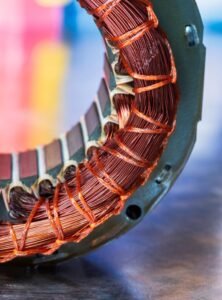
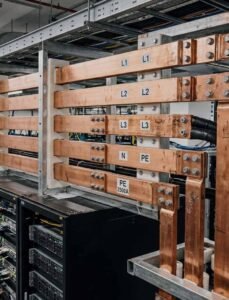
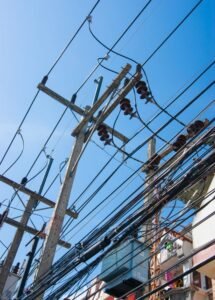
Copper scrap is generated from many sources including electrical cables, transformers, industrial machinery, household appliances, construction waste, telecommunications equipment, electric motors, automobiles, railway systems, manufacturing plants, and electronic waste. These materials pass through collectors, aggregators, transport companies, recyclers, refiners, manufacturers, and exporters before returning to industrial production.
Today, much of this movement is documented using separate databases, paper records, or disconnected software systems. This limits visibility across the recycling chain and makes it difficult for policymakers and industries to understand the true availability of recyclable copper.
A Digital Governance Platform would establish a unified national information system for copper recycling. Every registered recycler, collection centre, warehouse, transporter, refinery, and manufacturing facility would contribute digital information regarding copper movement, processing capacity, inventory, and production.
Artificial intelligence would analyse recycling trends across different regions of India. By studying industrial production, construction activity, vehicle retirement rates, electronic waste generation, and infrastructure replacement projects, AI could estimate where large volumes of recyclable copper are likely to become available in the future.
Internet of Things sensors would improve operational monitoring throughout recycling facilities. Smart weighing systems would automatically record incoming scrap quantities. Environmental sensors would monitor temperature, humidity, energy consumption, and equipment performance. Automated identification systems would track copper as it moves through sorting, shredding, melting, refining, and packaging operations.
Computer vision technology would improve scrap classification. High resolution cameras supported by artificial intelligence could distinguish between different grades of copper scrap, identify contamination, estimate purity levels, and separate recyclable materials with greater accuracy than traditional manual inspection. Better classification improves recovery rates while reducing processing costs.
Cloud computing would allow authorised stakeholders to access real time dashboards showing regional scrap availability, refinery capacity, inventory levels, transportation status, and expected production. Manufacturers requiring recycled copper could identify reliable suppliers more efficiently while planners monitor national recycling performance.
Predictive analytics would strengthen long term resource planning. Artificial intelligence would forecast future copper recycling volumes by analysing historical trends together with infrastructure investment, urban redevelopment, renewable energy expansion, and electric vehicle adoption. These forecasts would support investment decisions for new recycling facilities and processing equipment.
Blockchain technology would enhance transparency throughout the recycling ecosystem. Every batch of recycled copper would receive a secure digital record documenting its origin, collection point, processing stages, quality certification, and final destination. Manufacturers purchasing recycled copper would gain confidence regarding material authenticity and traceability.
The platform could also improve environmental governance. Artificial intelligence would estimate carbon savings achieved through recycling compared with primary copper production. Policymakers would receive accurate sustainability indicators supporting national climate commitments and circular economy initiatives.
Public infrastructure projects increasingly require sustainable construction materials. Government procurement agencies could use verified recycling records when evaluating suppliers, encouraging greater use of certified recycled copper in public projects while supporting environmentally responsible manufacturing.
Manufacturers would benefit through improved access to recycled raw materials. Electrical cable producers, transformer manufacturers, motor manufacturers, renewable energy companies, and electronics firms could monitor available supplies across different regions, reducing procurement uncertainty and inventory costs.
Financial institutions would also benefit. Banks financing recycling companies would receive verified operational information regarding inventory, production capacity, and supply chain performance. Insurance companies could evaluate facilities more accurately using continuously updated operational data.
State pollution control boards and environmental regulators would gain improved oversight through automated reporting. Digital monitoring would reduce administrative burdens while improving compliance verification and environmental performance assessment.
Technology companies would find significant opportunities to develop artificial intelligence software, industrial sensors, cloud platforms, blockchain systems, intelligent sorting equipment, and digital governance solutions tailored specifically for India’s metal recycling industry. Universities and research institutions could contribute advanced material recognition algorithms, robotics, and recycling optimisation models.
Traditional recycling expertise would remain highly valuable. Skilled workers would continue identifying materials, operating equipment, maintaining machinery, and ensuring safe industrial practices. Industry 4.0 technologies would complement their experience by providing better information, faster analysis, and improved operational coordination.
India’s transition toward a circular economy depends on recovering valuable industrial resources efficiently. Copper recycling reduces dependence on imported raw materials, lowers energy consumption, decreases industrial waste, and strengthens long term resource security. Digital governance creates the transparency needed to support this transition at a national scale.
A Digital Governance Platform for Copper Recycling represents an important Industry 4.0 opportunity for India. By combining artificial intelligence, computer vision, Internet of Things technology, blockchain, cloud computing, and predictive analytics into an integrated governance ecosystem, India can improve recycling efficiency, strengthen industrial sustainability, support manufacturing growth, increase resource security, and establish a modern digital framework for one of the country’s most valuable industrial metals.