Industrial catalysts are at the heart of modern chemical manufacturing. They enable faster chemical reactions while reducing energy consumption and improving production efficiency. India’s catalyst industry supports petroleum refining, fertilizers, petrochemicals, pharmaceuticals, hydrogen production, pollution control, food processing and specialty chemicals. As India expands its manufacturing capacity and clean energy ambitions, Industry 4.0 offers a pathway to transform catalyst manufacturing into a highly intelligent, data-driven industry.
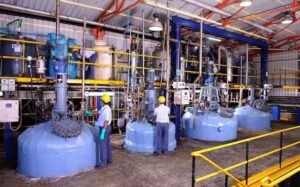
Catalyst manufacturing involves raw material preparation, precipitation, impregnation, filtration, drying, calcination, pelletizing, coating and quality testing. Each stage requires precise control over particle size, surface area, pore structure and chemical composition because these characteristics determine catalytic performance.
Industry 4.0 enables manufacturers to monitor every stage of production through connected sensors embedded across reactors, mixers, dryers, kilns, pelletizing machines and packaging systems. Continuous data collection allows engineers to identify process deviations immediately instead of relying solely on periodic laboratory inspections.
Artificial intelligence improves manufacturing by analysing production histories together with live operational data. Machine learning algorithms identify process settings that maximize catalyst activity while reducing raw material losses, production time and energy consumption. Manufacturers can consistently produce catalysts with higher efficiency and longer operational life.
Digital twins create virtual replicas of catalyst manufacturing plants. Engineers can simulate production schedules, evaluate new formulations and optimize equipment performance before making changes to live operations. This reduces technical risks while accelerating process innovation.
Calcination is one of the most energy-intensive stages of catalyst production. Intelligent furnace management systems continuously optimize heating profiles, airflow and cooling rates to produce catalysts with uniform crystal structures while reducing fuel consumption.
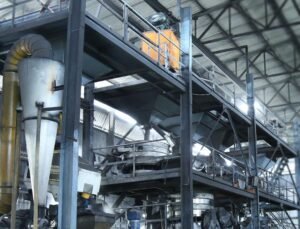
Predictive maintenance improves plant reliability by monitoring mixers, crushers, rotary kilns, conveyors and screening equipment. Connected sensors analyse vibration, pressure, motor performance and bearing temperatures to detect equipment deterioration before failures interrupt production.
Quality assurance becomes significantly more advanced through online analytical systems. Automated instruments continuously measure particle size distribution, pore volume, surface area and chemical composition throughout manufacturing. Immediate process adjustments improve product consistency while reducing rejected batches.
India’s petroleum refining industry represents one of the largest consumers of industrial catalysts. Smart manufacturing systems enable catalyst producers to meet demanding performance requirements for hydrocracking, desulfurization and catalytic reforming processes used in modern refineries.
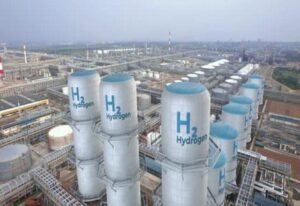
The green hydrogen sector is emerging as another major opportunity. Electrolyzers, fuel cells and hydrogen production technologies depend on advanced catalysts with extremely high efficiency. Industry 4.0 enables manufacturers to consistently produce these high-value materials while supporting India’s clean energy transition.
Supply chain integration improves coordination between raw material procurement, production planning, inventory management and customer demand. Digital manufacturing platforms allow companies to optimize inventory levels, improve delivery schedules and reduce operational costs.
Energy management systems continuously monitor electricity, steam and fuel consumption throughout manufacturing operations. Artificial intelligence identifies opportunities for heat recovery, process optimization and equipment scheduling, improving both sustainability and profitability.
Environmental monitoring supports responsible manufacturing through continuous measurement of emissions, wastewater quality and resource consumption. Automated compliance reporting reduces administrative burden while helping manufacturers achieve increasingly stringent environmental standards.
Worker safety improves through connected monitoring of chemical storage, dust control systems, kiln operations and hazardous material handling. Intelligent warning systems immediately alert operators whenever abnormal operating conditions develop.
Research and development becomes increasingly data driven through Industry 4.0. Artificial intelligence analyses production data together with laboratory experiments to identify new catalyst formulations for carbon capture, sustainable aviation fuel, biomass conversion and advanced chemical synthesis.
Indian software companies have an opportunity to develop specialized catalyst manufacturing platforms that combine production monitoring, laboratory analytics, predictive maintenance and digital quality management. Such technologies can strengthen India’s industrial software ecosystem while supporting chemical manufacturers.
Universities should modernize chemical engineering and materials science programs by integrating industrial automation, machine learning, digital manufacturing and catalyst informatics. Future engineers will require expertise that combines chemistry, process engineering and data science.
Government initiatives supporting refinery modernization, green hydrogen, specialty chemicals and industrial digitalization can accelerate Industry 4.0 adoption across catalyst manufacturing. Collaboration among research institutions, technology firms and manufacturers can strengthen domestic innovation while reducing dependence on imported catalyst technologies.
Global demand for advanced catalysts continues to grow as industries pursue cleaner fuels, lower emissions, renewable chemicals and sustainable manufacturing. India possesses strong chemical engineering capabilities and a rapidly expanding industrial base that position it to become an important supplier of catalyst technologies.
Industry 4.0 transforms catalyst manufacturing into an intelligent production ecosystem where quality, efficiency and innovation are continuously optimized. By integrating artificial intelligence, predictive maintenance, digital twins and real-time quality monitoring, India’s industrial catalysts industry can strengthen its global competitiveness while supporting the country’s ambitions in refining, clean energy and advanced chemical manufacturing.