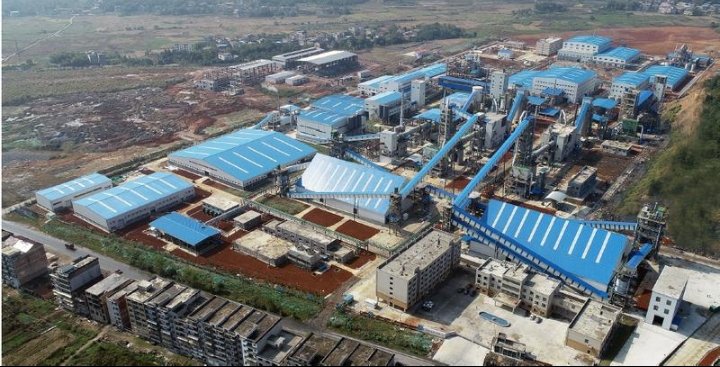
India’s battery chemicals industry is emerging as a strategic pillar of the country’s clean energy transition. The rapid growth of electric vehicles, renewable energy storage systems, consumer electronics and grid-scale batteries is creating strong demand for battery-grade chemicals such as lithium compounds, electrolyte materials, cathode and anode precursors, graphite processing chemicals and specialty additives. Industry 4.0 provides an opportunity to build globally competitive battery chemical manufacturing facilities that combine precision, efficiency and sustainability.
Battery chemicals require extremely high levels of purity. Even microscopic contamination can reduce battery life, charging performance and safety. Manufacturing therefore depends on tightly controlled chemical synthesis, purification, filtration, drying, blending and packaging processes that must consistently meet stringent quality specifications.
Industry 4.0 enables continuous monitoring of every production stage through connected sensors installed across reactors, filtration systems, dryers, storage tanks and packaging lines. Engineers gain real-time visibility into process conditions, allowing rapid intervention whenever production parameters begin to deviate from target values.
Artificial intelligence strengthens manufacturing by analysing historical production data together with live operational information. Machine learning models identify process conditions that maximize product purity while reducing raw material consumption, chemical waste and energy use. These improvements increase productivity while maintaining the strict quality standards expected by battery manufacturers.
Digital twins provide virtual models of battery chemical plants. Engineers can simulate equipment modifications, evaluate new production methods and optimize plant layouts before implementing physical changes. Virtual experimentation reduces technical risks while accelerating process innovation.
Predictive maintenance improves operational reliability across pumps, mixers, filtration units, crystallizers and drying equipment. Connected monitoring systems analyse vibration, temperature, electrical performance and pressure to identify equipment wear before failures occur. Planned maintenance minimizes production interruptions while extending equipment life.
Online quality monitoring represents one of the most valuable Industry 4.0 applications. Advanced analytical instruments continuously measure chemical purity, particle size distribution, moisture content and trace impurities throughout production. Immediate process corrections reduce rejected batches and improve manufacturing consistency.
India’s electric vehicle industry is expected to become a major customer for domestically produced battery chemicals. Smart manufacturing systems enable chemical producers to meet the demanding specifications required by lithium-ion battery manufacturers while supporting the government’s vision of strengthening domestic battery supply chains.
Supply chain integration also becomes more intelligent through connected digital platforms. Procurement, inventory management, production scheduling and customer demand forecasting operate as a unified system. Manufacturers can respond quickly to changing market conditions while minimizing inventory costs and improving delivery performance.
Energy management is particularly important because battery chemical production often requires energy-intensive purification and drying operations. Intelligent energy management systems optimize electricity and steam consumption while identifying opportunities for waste heat recovery and process improvements.
Water management is another critical area. High-purity water is essential for many battery chemical manufacturing processes. Digital monitoring systems continuously evaluate water quality, optimize recycling and detect leaks, improving both sustainability and operational efficiency.
Environmental monitoring supports responsible manufacturing by continuously measuring emissions, wastewater quality and chemical handling operations. Automated reporting simplifies regulatory compliance while helping manufacturers improve environmental performance.
Worker safety becomes increasingly sophisticated through connected monitoring of hazardous chemical storage, ventilation systems and production equipment. Intelligent warning systems immediately notify operators if abnormal conditions develop, allowing rapid response before incidents occur.
Research and development benefits from data-driven manufacturing. Artificial intelligence analyses production histories and laboratory results to identify opportunities for improving chemical formulations, increasing production yields and reducing manufacturing costs. Continuous learning accelerates innovation across the battery materials sector.
Indian technology companies have an opportunity to develop specialized manufacturing execution systems, industrial analytics software and quality management platforms specifically designed for battery chemical production. Such innovations strengthen India’s industrial technology ecosystem while supporting domestic manufacturing.
Engineering institutions should modernize chemical engineering and materials science education by incorporating battery technology, industrial automation, artificial intelligence and digital manufacturing into academic curricula. Future engineers will require interdisciplinary expertise that combines chemistry, electronics and advanced manufacturing.
Government initiatives supporting electric mobility, advanced chemistry cells, critical minerals and industrial digitalization can accelerate Industry 4.0 adoption throughout India’s battery chemicals industry. Public-private partnerships involving manufacturers, research institutions and technology companies can further strengthen innovation.
Global demand for battery chemicals continues to rise as countries invest in electric transportation and renewable energy storage. India possesses the scientific talent, manufacturing capability and expanding domestic market needed to become a significant global supplier.
Industry 4.0 transforms battery chemical manufacturing into an intelligent, connected production ecosystem where quality, efficiency and sustainability are continuously optimized through digital technologies. By integrating artificial intelligence, predictive maintenance, digital twins and real-time analytics, India’s battery chemicals industry can strengthen its position in global clean energy supply chains while supporting the country’s transition toward a low-carbon economy.