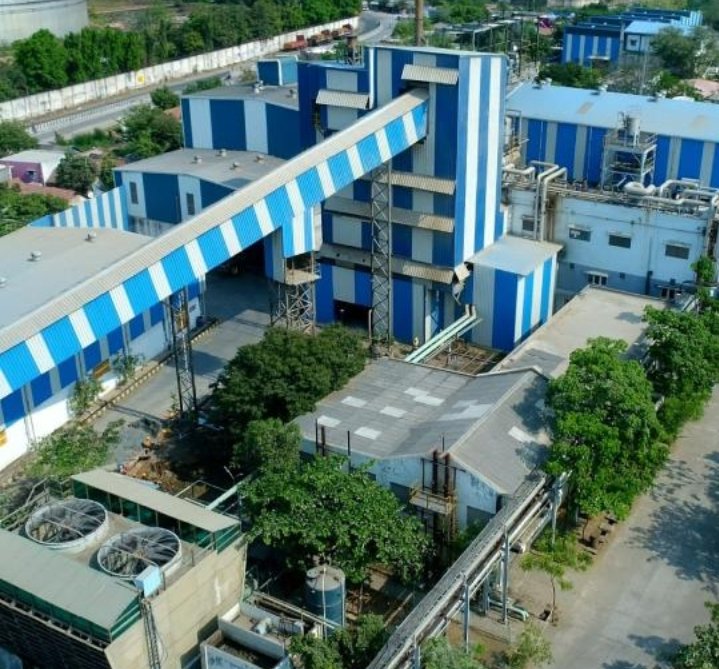
India’s adhesives and sealants industry plays a critical role in manufacturing, construction, automotive production, furniture, packaging, electronics and aerospace. Adhesives have increasingly replaced traditional fastening methods such as screws, rivets and welding, enabling lighter, stronger and more efficient products. As India’s industrial economy expands, Industry 4.0 offers an opportunity to modernize adhesive and sealant manufacturing through intelligent production systems that improve quality, productivity and sustainability.
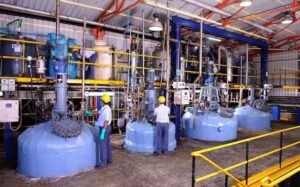
Adhesive manufacturing involves blending polymers, resins, solvents, fillers, additives and specialty chemicals under carefully controlled conditions. Small changes in temperature, mixing speed, viscosity or ingredient ratios can significantly affect bonding performance and product durability. Maintaining consistency across every batch is essential for industrial customers.
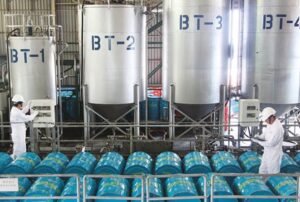
Industry 4.0 introduces connected manufacturing where mixers, reactors, storage tanks, pumps and packaging systems continuously transmit operational data. Engineers gain real-time visibility into production performance, allowing faster decision-making and improved process control.
Artificial intelligence enhances manufacturing efficiency by analysing production histories together with live operational information. Machine learning algorithms identify process settings that maximize product quality while reducing raw material waste, energy consumption and production time. Manufacturers achieve greater operational efficiency while maintaining strict quality standards.
Digital twins provide virtual models of adhesive production facilities. Engineers can simulate new formulations, evaluate equipment upgrades and optimize production schedules without interrupting live manufacturing. Virtual testing reduces technical risks while accelerating product development.
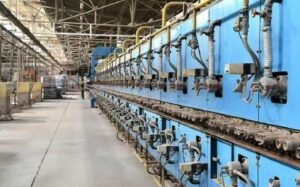
Predictive maintenance is particularly valuable because mixing equipment, pumps, compressors and filling lines operate continuously under demanding industrial conditions. Connected sensors monitor vibration, pressure, motor performance and temperature to identify equipment deterioration before breakdowns occur. Scheduled maintenance improves plant reliability while reducing costly production interruptions.
Quality assurance becomes increasingly automated through online monitoring systems. Viscosity, density, curing characteristics and chemical composition can be measured continuously throughout production instead of relying entirely on laboratory testing after manufacturing. Immediate process adjustments reduce rejected batches and improve customer satisfaction.
India’s automotive industry is a major consumer of advanced structural adhesives. Modern vehicles rely on adhesives for lightweight construction, improved crash performance and enhanced durability. Industry 4.0 helps adhesive manufacturers consistently meet the demanding specifications required by automotive companies.
The construction sector also benefits from improved manufacturing precision. High-performance sealants used in buildings, bridges, airports and infrastructure projects require excellent weather resistance and long-term durability. Smart manufacturing systems ensure stable product characteristics across large production volumes.
Supply chain integration connects procurement, production planning, inventory management and customer demand through digital manufacturing platforms. Better coordination improves delivery performance while reducing warehouse costs and raw material shortages.
Energy management represents another important opportunity. Mixing, heating and curing processes consume substantial energy. Intelligent monitoring systems optimize equipment utilization, recover waste heat and improve utility efficiency, lowering both production costs and environmental impact.
Environmental sustainability is becoming increasingly important as manufacturers seek to reduce solvent emissions and transition toward water-based and bio-based adhesive technologies. Industry 4.0 provides continuous monitoring of emissions, solvent recovery systems and resource consumption, helping manufacturers achieve environmental goals while maintaining productivity.
Water management systems equipped with digital monitoring improve cooling operations, detect leaks and optimize recycling throughout manufacturing facilities. Efficient resource utilization supports both sustainability and cost reduction.
Worker safety improves through intelligent monitoring of chemical storage areas, mixing operations and solvent handling systems. Automated alerts allow operators to respond immediately whenever abnormal conditions develop, reducing industrial risks.
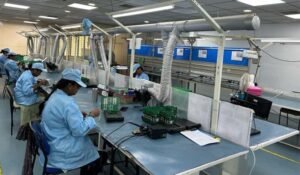
India’s electronics manufacturing sector is creating new demand for specialized adhesives used in smartphones, consumer electronics, electric vehicles and semiconductor packaging. Smart manufacturing systems provide the precision required for producing these high-value specialty products.
Research and development also benefit from Industry 4.0 technologies. Artificial intelligence analyses formulation data, customer feedback and manufacturing performance to identify opportunities for developing stronger, lighter and more environmentally friendly adhesive products.
Indian automation companies can develop specialized manufacturing software, industrial sensors and quality analytics platforms designed specifically for adhesive production. These domestic technologies strengthen India’s industrial automation ecosystem while reducing dependence on imported digital solutions.
Engineering institutions should incorporate industrial automation, process analytics, artificial intelligence and smart manufacturing into chemical engineering education. Future engineers will increasingly manage digitally connected production facilities rather than conventional standalone manufacturing systems.
Government initiatives supporting advanced manufacturing, construction materials and specialty chemicals can accelerate Industry 4.0 adoption across the adhesives and sealants industry. Collaborative research involving manufacturers, universities and technology companies can further strengthen innovation.
Global demand for high-performance adhesives continues to grow alongside electric vehicles, renewable energy systems, aerospace manufacturing and sustainable construction. India has the opportunity to become a significant supplier by combining its chemical manufacturing expertise with intelligent production technologies.
Industry 4.0 transforms adhesive manufacturing into a data-driven, connected and highly efficient production ecosystem. By integrating artificial intelligence, predictive maintenance, digital twins and real-time quality monitoring, India’s adhesives and sealants industry can improve global competitiveness while supporting the country’s broader industrial and infrastructure ambitions.