Industry 4.0 represents a fundamental transformation in how goods are designed, manufactured, monitored, and delivered. By integrating artificial intelligence, industrial robotics, the Internet of Things, cloud computing, digital twins, advanced analytics, and connected supply chains, it enables factories to move beyond conventional automation towards intelligent, adaptive production systems. For India, this transformation presents an opportunity to strengthen industrial competitiveness, improve productivity, reduce resource consumption, and develop new manufacturing capabilities.
However, Industry 4.0 is not simply a matter of purchasing advanced machinery. Its success depends on integrating technologies with industrial processes, workforce capabilities, infrastructure, cybersecurity, and long-term investment strategies. India must therefore approach industrial digitalisation as an economic and institutional transformation rather than an isolated technology initiative.
From Automation to Intelligent Manufacturing
Traditional industrial automation relies on machines performing predefined tasks according to programmed instructions. Industry 4.0 expands these capabilities by enabling machines, sensors, software, and enterprise systems to exchange information continuously.
Sensors installed in production equipment can measure temperature, vibration, pressure, energy consumption, and operating speed. This information can be analysed to identify abnormalities, predict equipment failures, and improve production schedules. Artificial intelligence can help manufacturers detect quality defects, optimise material usage, and identify inefficiencies that may remain invisible through conventional monitoring.
For example, a manufacturing plant producing automotive components can integrate machine sensors, production planning software, and quality inspection systems. If a machine begins operating outside its normal parameters, the system can alert maintenance personnel before a breakdown disrupts production. Quality data can also help identify the underlying causes of defective components.
Such capabilities reduce unplanned downtime and improve consistency. Nevertheless, the benefits depend on the quality of collected data, the reliability of industrial networks, and the ability of employees to act on analytical findings.
The Internet of Things and Connected Factories
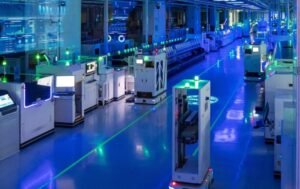
The Industrial Internet of Things is one of the foundations of Industry 4.0. It connects physical equipment to digital systems, enabling manufacturers to monitor operations across production lines, warehouses, utilities, and distribution networks.
Connected factories can provide managers with a more comprehensive understanding of industrial performance. Instead of receiving delayed reports, they can monitor production output, machine utilisation, inventory levels, and energy consumption through integrated dashboards.
This visibility is particularly valuable for Indian manufacturers operating multiple facilities or working with geographically dispersed suppliers. Standardised information systems can help identify production bottlenecks, coordinate deliveries, and reduce excessive inventory.
However, connecting industrial equipment creates technical challenges. Many factories operate machinery acquired over several decades, using incompatible communication protocols and outdated control systems. Replacing all existing equipment would be expensive and often unnecessary.
India should encourage affordable industrial retrofitting, allowing sensors, communication gateways, and analytics software to be integrated with existing machinery. This approach would make digitalisation more accessible to small and medium-sized enterprises, which constitute a significant part of the country’s manufacturing ecosystem.
Artificial Intelligence and Predictive Maintenance
Artificial intelligence can improve industrial decision-making by identifying patterns in large volumes of operational data. One important application is predictive maintenance, which estimates when equipment is likely to require servicing.
Conventional maintenance often follows fixed schedules or begins after equipment fails. Predictive maintenance uses operational measurements and historical failure information to determine when intervention may be necessary. This can reduce unnecessary servicing, prevent avoidable breakdowns, and improve the utilisation of expensive industrial assets.
AI-powered visual inspection can also identify surface defects, dimensional inconsistencies, and assembly errors. In sectors such as electronics, automotive manufacturing, pharmaceuticals, and precision engineering, these capabilities can improve quality assurance.
Yet industrial AI should not be treated as a substitute for engineering judgement. Models may perform poorly when operating conditions change, data is incomplete, or equipment behaves differently from the environments in which the models were developed.
Manufacturers need validation procedures, human oversight, clear accountability, and continuous monitoring. In safety-critical environments, automated recommendations must be supported by appropriate engineering controls and independent verification.
Digital Twins and Simulation
Digital twins are virtual representations of physical assets, production lines, or industrial systems. They combine engineering models, operational data, and simulation techniques to help manufacturers understand how physical systems behave under different conditions.
A manufacturer can use a digital twin to evaluate production layouts, test alternative operating parameters, estimate energy requirements, and identify potential bottlenecks before implementing changes on the factory floor.
For Indian industries facing high capital costs, simulation can reduce the risks associated with major investment decisions. Manufacturers can compare alternative equipment configurations and production strategies before committing substantial resources.
Digital twins can also support the development of new products. Engineers can simulate performance under different operating conditions, identify design weaknesses, and reduce the number of expensive physical prototypes required.
Their effectiveness, however, depends on accurate models, reliable data, and regular updates. Developing highly detailed digital twins for every industrial asset may not be economically justified. Companies should begin with applications where improved decisions can generate measurable operational benefits.
The Role of Robotics and Human-Machine Collaboration
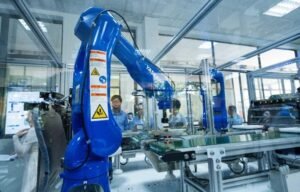
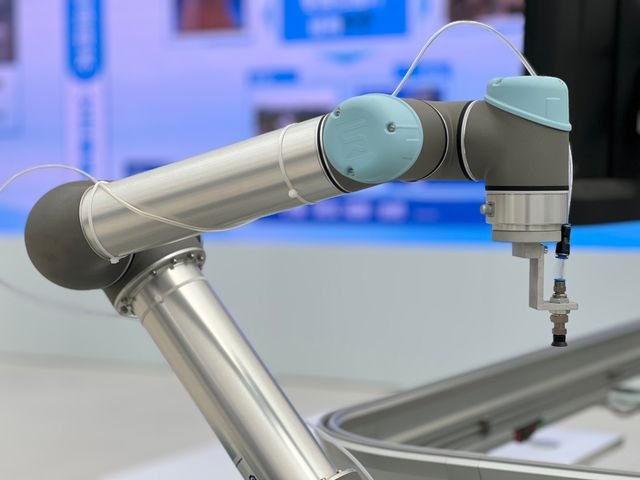
Industrial robotics has traditionally been associated with large factories capable of supporting substantial capital expenditure. Industry 4.0 expands the possibilities through collaborative robots, machine vision, flexible automation, and improved programming tools.
Robots can undertake repetitive, physically demanding, or hazardous tasks, including material handling, welding, assembly, packaging, and inspection. Collaborative systems can also support workers in environments where humans and machines need to operate in close proximity, subject to appropriate safety assessments.
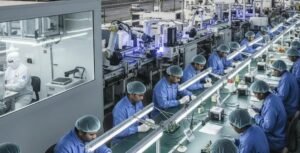
For India, the priority should not be indiscriminate replacement of labour. Manufacturing remains an important source of employment, and industrial policy must balance productivity improvements with job creation, skill development, and wage growth.
Automation can help Indian manufacturers compete in markets where consistency, precision, and delivery reliability are essential. It can also create demand for technicians, robotics programmers, maintenance specialists, industrial data analysts, and systems integrators.
The transition requires structured workforce development. Industrial training institutions should teach employees how to operate, maintain, troubleshoot, and supervise connected machinery. Workers should be involved in technology adoption because their practical knowledge can help identify implementation problems that software developers and external consultants may overlook.
Energy Efficiency and Sustainable Production
Industry 4.0 can contribute to environmental sustainability by making industrial resource consumption more visible and manageable.
Connected energy meters can measure electricity use at the level of individual machines, production lines, and facilities. Analytics can identify energy-intensive operations, unnecessary idle running, inefficient compressed-air systems, and opportunities to improve equipment scheduling.
Manufacturers can combine these insights with renewable energy, battery storage, demand management, and improved process design. Digital systems can also track material waste, water consumption, and emissions, supporting better environmental reporting.
These improvements are especially relevant in India, where industrial competitiveness increasingly depends on reliable energy access, efficient resource use, and compliance with changing domestic and international requirements.
However, digital technologies also consume electricity and require hardware, networking infrastructure, and computing resources. Their environmental value must therefore be assessed through measurable reductions in total resource consumption rather than assumed from digitalisation alone.
Cybersecurity and Industrial Resilience
Greater connectivity creates new vulnerabilities. A cyberattack affecting industrial control systems can interrupt production, damage equipment, compromise product quality, or threaten worker safety.
Manufacturers must therefore integrate cybersecurity into the design and operation of connected factories. Essential measures include separating critical control networks from ordinary business networks, restricting access privileges, maintaining secure backups, monitoring suspicious activity, and regularly updating vulnerable systems.
Legacy equipment presents a particular challenge because some industrial devices were designed without modern security protections. Retrofitting must therefore include risk assessments and safeguards that account for operational continuity.
India should strengthen cooperation among manufacturers, technology providers, cybersecurity specialists, and relevant public institutions. Shared technical standards and incident-reporting mechanisms can improve resilience, particularly for smaller companies that lack specialised security teams.
A Practical Roadmap for India
India’s Industry 4.0 strategy should prioritise implementation over technology demonstrations. Government support can encourage pilot projects in industrial clusters, common testing facilities, affordable technology adoption, and partnerships between manufacturers and engineering institutions.
Small and medium-sized enterprises need particular attention. Shared industrial technology centres could provide access to robotics, machine vision, simulation software, digital manufacturing tools, and technical expertise without requiring every business to build its own advanced facility.
Financial support should be linked to measurable outcomes such as improved productivity, reduced downtime, lower defect rates, energy savings, and increased production capacity. Independent evaluation can help distinguish successful projects from expensive technology deployments that produce little operational value.
India should also develop domestic capabilities in industrial sensors, controllers, robotics, manufacturing software, edge computing, and industrial cybersecurity. Building these capabilities would reduce dependence on imported systems while creating opportunities for Indian technology companies to serve domestic and international markets.
Finally, industrial digitalisation requires coordination among technology suppliers, factory management, employees, financial institutions, and policymakers. Equipment purchases alone cannot produce transformation without redesigned processes, skilled personnel, reliable infrastructure, and sustained managerial commitment.
Conclusion
Industry 4.0 offers India a pathway towards more productive, resilient, and resource-efficient manufacturing. Its greatest value lies not in the number of connected machines or artificial intelligence systems deployed, but in the improvements they deliver to industrial performance.
A successful strategy must combine advanced technology with practical engineering, workforce development, cybersecurity, and disciplined investment. By making these capabilities accessible to manufacturers of different sizes, India can strengthen its industrial base, develop domestic technological expertise, and create a more competitive manufacturing economy.