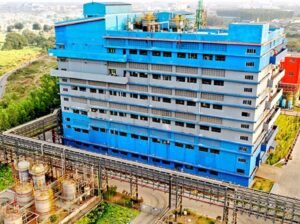
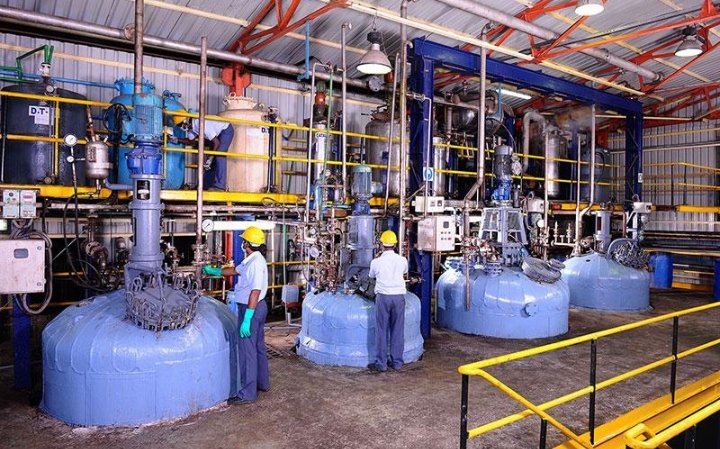
India’s specialty chemicals industry has emerged as one of the fastest-growing segments of the country’s manufacturing economy. Unlike bulk chemicals, specialty chemicals are designed for specific industrial applications and are used in pharmaceuticals, electronics, cosmetics, food processing, construction, agriculture, textiles and automotive manufacturing. As international demand grows, Industry 4.0 offers an opportunity to strengthen India’s position as a global supplier of high-value chemical products.
Specialty chemical manufacturing differs from large-scale commodity production. Products are often manufactured in smaller batches with strict quality requirements and customized formulations. Maintaining consistency across every production cycle is essential because even minor variations can affect product performance and customer acceptance.
Industry 4.0 enables manufacturers to monitor every stage of production using connected sensors, industrial automation and real-time analytics. Temperature, pressure, flow rates, mixing speeds and chemical concentrations can all be monitored continuously. Instead of depending only on periodic inspections, engineers receive immediate information about production performance.
One of the greatest advantages is batch optimization. Specialty chemical manufacturers frequently produce multiple products using the same production equipment. Artificial intelligence can analyse historical production data to recommend the most efficient operating conditions for each formulation. This reduces production time while improving product consistency.
Digital manufacturing systems also reduce raw material waste. Specialty chemicals often involve expensive ingredients that require precise measurements. Intelligent dosing systems automatically adjust ingredient quantities based on real-time process conditions, minimizing material losses and improving production efficiency.
Quality assurance becomes significantly more advanced under Industry 4.0. Online analytical instruments continuously evaluate chemical composition throughout production. If product characteristics begin moving outside acceptable limits, automated systems notify operators immediately. Early intervention reduces rejected batches while maintaining customer confidence.
Digital twins provide another valuable capability. Manufacturers can create virtual models of production processes and evaluate formulation changes before introducing them into actual manufacturing. Engineers can experiment with operating conditions, equipment configurations and production schedules without disrupting factory operations.
Predictive maintenance reduces unexpected equipment failures. Pumps, mixers, reactors and filtration systems operate continuously under demanding conditions. Smart monitoring systems identify early warning signs through vibration analysis, temperature monitoring and electrical performance data. Maintenance can then be scheduled before failures interrupt production.
Supply chain management is becoming increasingly important for specialty chemical manufacturers. Many products require imported raw materials while finished products are exported to international customers. Industry 4.0 platforms integrate procurement, inventory management, production planning and logistics into a single digital environment. Manufacturers gain better visibility across the entire value chain.
Export competitiveness also improves through digital traceability. International customers increasingly request detailed manufacturing records, quality certifications and production histories. Connected manufacturing systems automatically generate digital records documenting every production stage. This simplifies regulatory compliance while strengthening customer trust.
Environmental sustainability has become a major consideration in specialty chemical manufacturing. Smart energy management systems optimise electricity and steam consumption across production facilities. Water recycling systems equipped with digital monitoring reduce freshwater consumption while supporting environmental compliance.
Emission monitoring also becomes more effective through connected sensors. Continuous measurement of air emissions and wastewater quality allows manufacturers to respond immediately if environmental parameters approach regulatory limits. Automated reporting reduces administrative effort while improving transparency.
The electronics sector presents an important opportunity for India’s specialty chemicals industry. Semiconductor manufacturing, battery production and electronic assembly require extremely high-purity chemicals. Industry 4.0 technologies help manufacturers achieve the precision and consistency demanded by these advanced industries.
Research and development also benefit from digital manufacturing. Production data collected over many years becomes a valuable knowledge resource for developing improved formulations and more efficient manufacturing methods. Artificial intelligence can identify relationships between process variables and product performance that support innovation.
Workforce development is equally important. Chemical engineers increasingly require skills in automation, data analytics, industrial software and artificial intelligence alongside traditional chemical engineering knowledge. Universities should integrate these technologies into engineering education to prepare graduates for modern manufacturing environments.
Indian technology companies have opportunities to develop specialized software for specialty chemical production. Locally developed manufacturing execution systems, industrial analytics platforms and digital quality management tools can address the specific needs of domestic manufacturers while creating new technology exports.
Government initiatives supporting digital manufacturing can accelerate Industry 4.0 adoption across specialty chemical clusters. Financial incentives, collaborative research centres and industrial training programmes can encourage companies of different sizes to modernize production systems.
India already possesses significant strengths in chemistry, engineering talent and manufacturing capability. By combining these advantages with Industry 4.0 technologies, the specialty chemicals sector can move further toward high-value manufacturing while improving productivity and product quality.
Global customers increasingly evaluate suppliers not only on price but also on consistency, traceability, sustainability and manufacturing excellence. Smart factories equipped with connected technologies are better positioned to meet these expectations.
As international demand for specialty chemicals continues to grow, Industry 4.0 provides India with an opportunity to strengthen its competitiveness in one of the world’s most knowledge-intensive manufacturing sectors. Digital manufacturing, intelligent automation and data-driven decision-making can help transform specialty chemical production into a globally recognized example of advanced industrial capability.