India’s next phase of export growth may depend increasingly on companies that are much smaller than the country’s major industrial groups. Thousands of medium and small manufacturers already produce machinery, engineering components, chemicals, textiles, food products and specialised equipment, but many remain focused primarily on the domestic market.
The opportunity is to turn more of these businesses into regular exporters.
India’s merchandise exports reached about US$437.4 billion during April 2025 to January 2026, according to government data. Engineering goods, electronic goods, chemicals, pharmaceuticals and several other manufactured categories remain important components of the export basket. (commerce.gov.in)
For a small manufacturer, however, entering an international market is very different from simply having a product that can technically be exported.
The company needs to understand foreign standards, certification requirements, packaging rules, documentation, payment risks, shipping costs and local distribution. It may also need to modify the product itself.
This is particularly important for engineering businesses. A manufacturer may produce a component successfully for an Indian customer but discover that an overseas buyer expects different dimensions, certifications, testing procedures or documentation. Export competitiveness therefore begins inside the factory.
The Gulf offers one particularly interesting market for Indian small businesses. The UAE, Saudi Arabia, Oman and other Gulf economies import large quantities of manufactured products, construction materials, machinery, food products and consumer goods. India’s geographical proximity gives exporters an advantage in shipping time compared with more distant manufacturing locations.
The India-UAE Comprehensive Economic Partnership Agreement has also created a framework for increasing bilateral trade and reducing tariffs on a wide range of products. India and the UAE have set a target of reaching US$100 billion in non-oil bilateral trade. (commerce.gov.in)
For smaller Indian manufacturers, the opportunity is not necessarily to build a huge overseas operation. A company producing industrial valves, electrical equipment, fabricated metal products, furniture, processed foods or specialised machinery may begin with a small number of foreign customers.
Digitalisation has made this process easier.
A manufacturer can now identify potential buyers, communicate with distributors, display technical catalogues and conduct preliminary negotiations without establishing an overseas office. Digital trade platforms and government-supported export initiatives can further reduce some of the barriers faced by first-time exporters.
Yet one of the biggest challenges remains consistency.
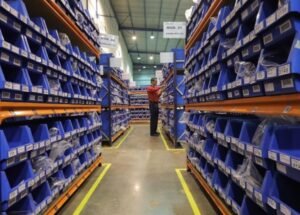
International buyers generally need suppliers that can deliver the same specification repeatedly. A small manufacturer that produces an excellent product occasionally may still struggle to become a reliable export supplier. Quality systems, production planning, inventory management and documentation therefore become part of the export strategy.
Finance is another issue.
Export orders can require working capital long before payment arrives. The manufacturer may have to purchase raw materials, produce the goods, package them and arrange transportation before receiving payment from the buyer. Access to appropriate export finance and insurance can therefore determine whether a small company is willing to accept larger overseas orders.
Logistics is equally important.
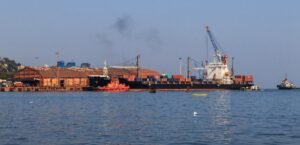
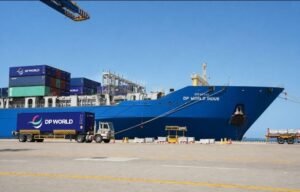
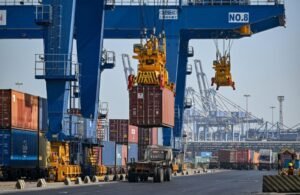
India’s expanding network of ports, dedicated freight corridors, highways and multimodal logistics infrastructure can gradually improve the competitiveness of smaller exporters. But the final transportation cost from a factory to a port can still be significant, particularly for companies located far from established logistics hubs.
This is why export clusters matter.
When several manufacturers producing related products operate in the same region, they can create demand for specialised logistics providers, testing laboratories, packaging companies and export consultants. Over time, the entire ecosystem becomes more capable of serving foreign customers.
The model can be seen across several Indian manufacturing sectors. Tiruppur has developed a major textile export ecosystem. Rajkot has an established engineering and auto-component base. Morbi has become a significant ceramics manufacturing centre. Surat has a major textile and diamond ecosystem.
The next opportunity is to create similar export-oriented capabilities in smaller industrial clusters.
India does not necessarily need every small manufacturer to become a global company. Even a business with ten or twenty international customers can develop a meaningful export operation if those relationships are stable and profitable.
This also changes how manufacturers should think about product development.
Domestic competition often pushes companies toward lower prices. International markets can create opportunities for specialised products where quality, reliability, certification and engineering support matter more than simply offering the cheapest product.
A small Indian manufacturer can therefore compete internationally by becoming highly specialised.
The challenge is moving from being an occasional exporter to becoming an export-oriented company.
That transition requires management attention, market research, quality control, financial planning and patience. It also requires manufacturers to treat exports as a long-term business capability rather than as an additional sales channel.
India’s large corporations will remain important to national export growth. But a much broader base of smaller manufacturers could make the export economy more resilient.
If thousands of Indian businesses can move from local production to specialised international supply, the country’s export story could become less about a handful of large companies and more about a distributed manufacturing economy connected to markets around the world.