Water is one of the most important resources in India, yet its governance remains fragmented across institutions, sectors and administrative boundaries. Water affects agriculture, cities, industry, public health, ecosystems and economic development. It is therefore not simply a resource to be supplied. It is a system that must be governed.
India receives substantial rainfall, but water availability varies dramatically across seasons and regions. Monsoon dependence creates another paradox: the country can experience devastating floods during one period and severe water shortages months later. The central policy challenge is therefore not simply to find more water. It is to govern existing water resources more intelligently.
The first requirement is to recognize water as a connected system.
- Moving from water supply to water governance
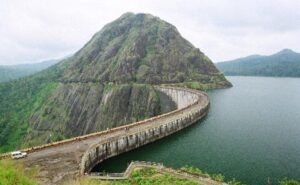
Traditional water policy has often concentrated on creating infrastructure: dams, canals, pipelines, wells and treatment plants. These remain important, but infrastructure alone cannot solve the problem.
Water governance must ask deeper questions. How much water is available? Where is it located? How quickly is groundwater being depleted? How much water is being consumed by agriculture? How much is being lost through leakage? How much wastewater can be safely reused? Which ecosystems need minimum flows?
These questions require coordination between departments that have traditionally operated separately.
India already has policy institutions working across drinking water, irrigation, groundwater, sanitation, watershed management and river systems. NITI Aayog, for example, identifies integrated watershed and river-basin management, wastewater reuse, rainwater harvesting and sustainable water use as important areas of policy intervention.
The next step is to make such integration the organizing principle of water governance.
- Groundwater must become visible
Groundwater is perhaps the clearest example of why India needs better governance.
The 2025 national assessment estimated annual groundwater recharge at 448.52 billion cubic metres and annual extractable groundwater resources at 407.75 billion cubic metres. Total groundwater extraction was estimated at 247.22 billion cubic metres. The same assessment classified 730 of 6,762 assessment units as over-exploited.
These numbers demonstrate why groundwater cannot remain an invisible resource beneath individual farms, houses and factories.
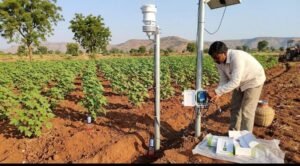
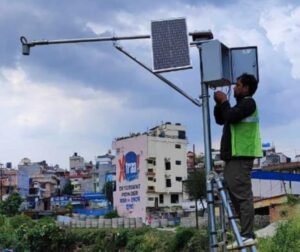
India should develop a national groundwater intelligence network combining sensors, satellite observations, aquifer mapping and predictive models. Data should be available at district, block and aquifer levels.
Farmers and local governments should be able to see how much groundwater is available, how much is being extracted and whether recharge is keeping pace.
Governance becomes much more effective when the resource itself becomes measurable.
- Water governance should follow the basin
Administrative boundaries rarely correspond to hydrological boundaries.
A river does not stop because a district boundary ends. A groundwater aquifer does not necessarily follow a state border. Pollution introduced upstream can affect communities hundreds of kilometres downstream.
River-basin institutions therefore need a stronger role in planning.
This does not necessarily mean replacing state governments. Instead, basin institutions can provide common data, scientific modelling, allocation frameworks and mechanisms for negotiation between states and sectors.
India has previously recognized basin-level governance as an important policy direction. The challenge is to translate that principle into stronger operational institutions.
- Cities must become water-smart
Urban water governance needs a major shift from supply expansion to demand management.
A city should know how much water enters its network, how much reaches consumers, how much is lost, and how much wastewater is generated.
Leakage reduction should therefore become a core infrastructure priority. Metering can improve understanding of consumption. Rainwater harvesting can supplement local supplies. Groundwater extraction should be monitored. Treated wastewater should increasingly be used for construction, landscaping, industry and other applications where potable water is unnecessary.
The objective should be to create urban water cycles rather than one-way systems in which freshwater enters a city and polluted wastewater leaves it.
India’s existing policy discussions already recognize recycling and reuse as important components of urban water management.
- Agriculture must become part of water governance
Agriculture is inseparable from India’s water future.
Water policy cannot simply tell farmers to use less water. It must change the economic and technological conditions under which water is used.
Micro-irrigation, crop diversification, improved soil management, better weather information and incentives for water-efficient agriculture can reduce pressure on water resources.
The objective should be to produce more economic and nutritional value from each unit of water.
This requires moving from measuring agricultural success primarily through land productivity to also considering water productivity.
- Wastewater should become a resource
A major weakness in conventional water management is the assumption that water has a linear life cycle.
Freshwater is extracted, transported, consumed and discharged as wastewater.
A circular system would instead treat wastewater as another source of water.
Cities could develop separate networks for potable and non-potable uses. Industries could increasingly use treated municipal wastewater. Local treatment systems could support decentralized reuse.
Such an approach reduces pressure on freshwater sources while creating an economic value for treatment infrastructure.
- Pricing must support responsible use
Water pricing is politically and socially sensitive because basic water access is essential.
However, the absence of meaningful economic signals can encourage waste.
A future water-pricing framework should protect a basic level of household consumption while making higher levels of consumption progressively more expensive. Agriculture and industry should also face incentives to improve efficiency and reuse water.
Pricing should not become a mechanism for excluding poorer households. Instead, targeted subsidies can protect essential access while allowing the wider system to communicate the scarcity and cost of water.
- Every infrastructure project should have a water balance
Water needs to become part of infrastructure planning.
Industrial parks, housing projects, airports, highways and large commercial developments should assess their water requirements before approval.
Large projects could be required to demonstrate how they will source water, reduce consumption, recycle wastewater and contribute to local recharge.
The idea of water neutrality can become a useful planning principle: development should not simply consume water without accounting for its impact on local water systems.
- Restore natural water infrastructure
India’s water infrastructure is not limited to dams and pipelines.
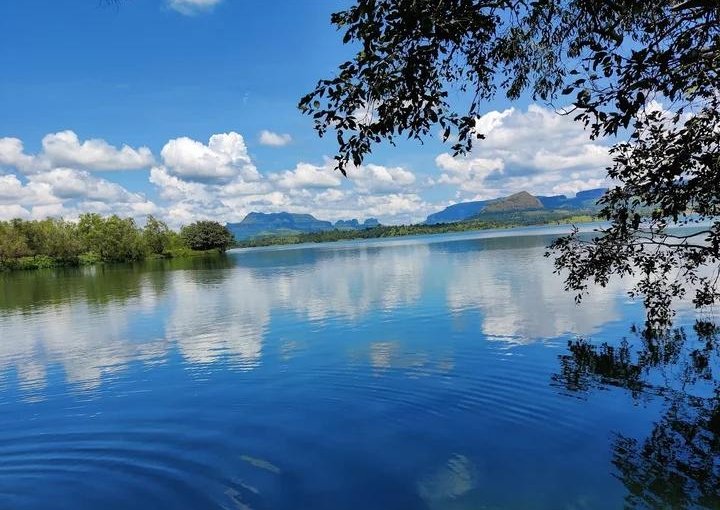
Wetlands, lakes, ponds, floodplains, forests, mangroves and watersheds are also infrastructure.
They store water, recharge groundwater, reduce flood impacts and support ecosystems.
Restoring these systems can sometimes provide multiple benefits from the same investment. NITI Aayog’s water policy work already includes water-body rejuvenation, watershed management and community participation among its areas of focus.
- Build a culture of water governance
Ultimately, water governance cannot be created by one ministry or one programme.
It requires cooperation between governments, farmers, industries, municipalities, researchers and citizens.
India needs transparent water data, measurable targets, basin-level planning, groundwater intelligence, efficient agriculture, water-smart cities and strong local institutions.
The country has already accumulated decades of water policies and programmes. The next challenge is institutional integration.
Water should no longer be governed primarily as a collection of separate problems: irrigation here, drinking water there, groundwater somewhere else and wastewater somewhere else.
It should be governed as one interconnected system.
The future of water security will depend not only on how much water India receives, but on how intelligently that water is measured, allocated, conserved, reused and protected.
The central policy shift is therefore simple: India must move from managing water projects to governing water systems.
That shift could determine whether future generations experience water as a source of security or as a recurring source of conflict and scarcity.