India’s trade ambitions are usually discussed through large categories. Automobiles, pharmaceuticals, electronics, textiles, chemicals, engineering goods and agricultural products dominate the conversation. Governments and companies naturally focus on products that can be manufactured at enormous scale and exported to large international markets.
There is another opportunity hiding underneath this conventional trade strategy.
The global spare parts economy.
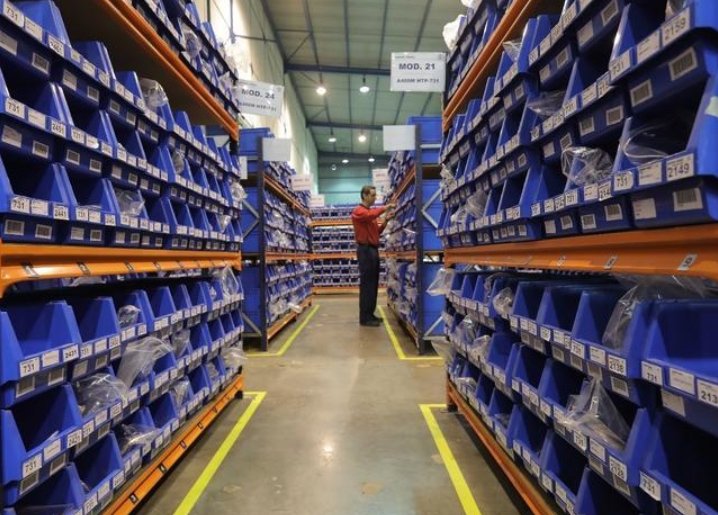
Every factory, ship, power plant, mining operation, construction company, railway system and agricultural business depends on thousands of components that are rarely visible to consumers. Gears, bearings, shafts, seals, valves, couplings, pumps, castings, electrical components and specialised mechanical parts keep industrial systems functioning.
When one of these components fails, the value of the replacement is often far greater than its manufacturing cost. A small component can stop an entire production line. The buyer therefore does not simply want the cheapest supplier. The buyer wants availability, accuracy, reliability and speed.
This creates an unusual opportunity for India.
India does not necessarily need to manufacture the entire machine to participate in its global value chain. It can become the country that supplies the component that keeps the machine running.
This is particularly attractive because the spare parts market is fragmented. Large multinational manufacturers dominate many original equipment markets, but thousands of smaller engineering companies produce compatible components, replacement parts and specialised industrial products.
The challenge is that these manufacturers are often difficult for international buyers to discover.
A European factory may need a particular gear for a machine that is twenty years old. A mining company in Africa may need replacement components for equipment imported from Japan. A food processing company in the Middle East may require a specialised shaft or coupling. A ship operator may urgently need a mechanical component that is no longer easily available from the original manufacturer.
Today, finding such suppliers can be surprisingly difficult.
India could build a specialised export ecosystem around solving this problem.
The country already has a large engineering manufacturing base. There are companies capable of forging, casting, machining, grinding, heat treating and fabricating sophisticated components. What is often missing is international visibility and a systematic mechanism connecting these capabilities with global demand.
A national industrial component marketplace could change this.
Instead of organising Indian manufacturing primarily around finished products, such a system could catalogue the capabilities of thousands of component manufacturers. Buyers could search by dimensions, material, tolerance, application, production process, certification and quantity.
The system could also support reverse engineering.
A foreign company could upload technical drawings or photographs of an obsolete component. Indian manufacturers could compete to reproduce it according to required specifications. Quality inspection and certification could be integrated into the process.
This would create a completely different form of export business.
India would effectively become a global repair and maintenance supply network.
The opportunity becomes even more interesting in developing markets. Across Africa, West Asia, South Asia and parts of Southeast Asia, enormous quantities of industrial equipment are already operating. Many machines are imported from different countries and different generations.
Their owners may struggle to obtain original replacement parts quickly and economically.
Indian engineering companies could fill this gap.
Instead of competing directly with major manufacturers for new equipment sales, Indian companies could build businesses around maintaining the equipment already installed around the world.
This is an example of a trade strategy based on installed equipment rather than new equipment.
Once a machine enters a market, it creates years of demand for maintenance.
That means the export opportunity does not end when the machine is sold.
It continues through the machine’s operating life.
India could also develop regional spare parts hubs near major international markets. Warehouses in the Middle East, East Africa and Southeast Asia could stock frequently required Indian-made components. Digital ordering could connect these warehouses with manufacturers in India.
Speed would become part of the product.
A buyer may be willing to pay more for a component that arrives in three days rather than three weeks because the cost of industrial downtime can be enormous.
This model could particularly benefit small and medium-sized Indian manufacturers. They do not need to build giant factories to participate. A highly specialised company producing one type of gear or industrial coupling could potentially serve customers across multiple countries.
The real competitive advantage would therefore come from aggregation.
One Indian company may be too small to serve the global market. Thousands of specialised Indian companies, connected through a common discovery, certification, logistics and payment ecosystem, could become a formidable industrial supply network.
There is also a strategic advantage.
Spare parts are less dependent on consumer fashion than finished consumer products. Industrial customers tend to value reliability, technical specifications and continuity of supply. Once a supplier earns trust, the relationship can become long term.
India’s export strategy has traditionally focused heavily on selling products.
Perhaps it should also focus on selling continuity.
Factories around the world will continue to age. Machines will continue to break. Components will become obsolete. Production lines will require maintenance.
Someone will have to manufacture the small part that allows a much larger machine to operate for another decade.
India could become that someone.
The country’s future trade advantage may not always come from producing the world’s biggest products.
It could come from becoming exceptionally good at producing the small, specialised and indispensable components that the world’s industries cannot operate without.