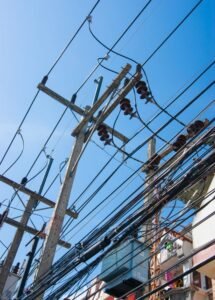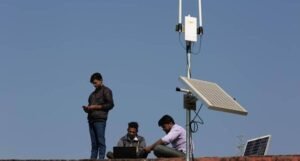
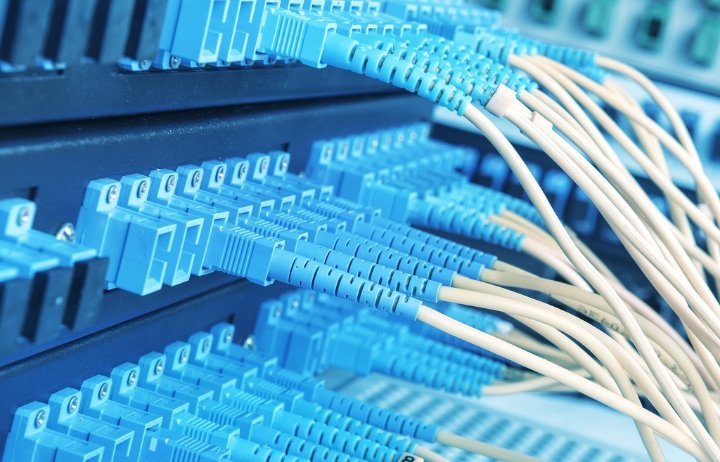
India has invested heavily in laying optical fibre across cities, industrial parks, highways, railways and rural areas. Government agencies, telecom operators, power utilities, railways, metro systems and private enterprises have collectively deployed millions of kilometres of fibre. Despite this enormous investment, a significant portion of fibre capacity remains underutilized because it is owned by separate organizations that rarely share infrastructure efficiently. India should establish a National Fibre Utilisation Exchange to transform unused fibre into a productive national asset.
Most organizations deploy fibre networks to meet their own future requirements. As a result, many fibre routes contain unused strands or excess bandwidth that remain idle for years. Meanwhile, nearby businesses, internet providers and government agencies often invest in constructing entirely new networks because they cannot easily access existing capacity.
A Fibre Utilisation Exchange would function as a digital marketplace where verified owners list available fibre routes, dark fibre, bandwidth and network capacity. Telecom companies, internet service providers, data centres, enterprises and public agencies could lease these resources instead of duplicating infrastructure.
Every fibre asset would receive a digital identity containing route information, technical specifications, available capacity, maintenance history and ownership details. Standardized digital records would simplify network planning while improving transparency across the telecommunications ecosystem.
The exchange should include infrastructure owned by highways, railways, electricity transmission companies, petroleum pipelines, airports, ports, smart cities and industrial parks. Many of these organizations possess extensive communication networks that remain partially unused despite growing national demand for connectivity.
Artificial intelligence could continuously analyse fibre utilization across the country, identifying regions with surplus capacity and areas requiring additional investment. Policymakers would gain a far more accurate understanding of national digital infrastructure before allocating resources to new projects.
The platform should support both long-term leasing and short-term capacity allocation. A technology company establishing a temporary research centre or industrial project could obtain connectivity within days instead of waiting months for new fibre construction.
State governments would also benefit. District administrations, educational institutions, hospitals and public service centres could connect to existing infrastructure at lower cost while accelerating digital service delivery.
Standardized commercial agreements would simplify transactions between infrastructure owners and network operators. Instead of negotiating separate contracts for every connection, participants could operate under common technical and commercial frameworks approved by regulators.
Cybersecurity and network integrity would remain essential. The exchange would manage commercial access while ensuring that critical government, defence and emergency communication systems remain appropriately protected. Strong authentication and network segmentation would preserve operational security.
Indian software companies could develop mapping platforms, route optimization tools, capacity forecasting systems and automated network management applications that operate on top of the exchange. This would create a new ecosystem of digital infrastructure services alongside the physical network.
Universities and research institutions could use anonymized national fibre data to study broadband expansion, infrastructure resilience and communication network efficiency. These insights would support better policy decisions while encouraging innovation in telecommunications engineering.
Industrial development would accelerate as manufacturers gain faster access to high-capacity digital connectivity. Advanced manufacturing, cloud computing, artificial intelligence, financial services and research facilities increasingly depend on reliable fibre infrastructure to remain competitive.
Environmental benefits would also emerge. Maximizing the utilization of existing fibre reduces unnecessary excavation, construction materials and energy consumption associated with building duplicate communication networks. Better infrastructure sharing supports both economic efficiency and sustainability.
As India’s digital economy continues to expand, connectivity will become as important as electricity and transportation. A National Fibre Utilisation Exchange would ensure that existing infrastructure is fully used before new investments are made, lowering costs, improving digital access and strengthening the country’s communications backbone for the next generation of economic growth.