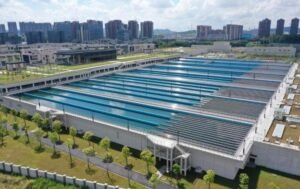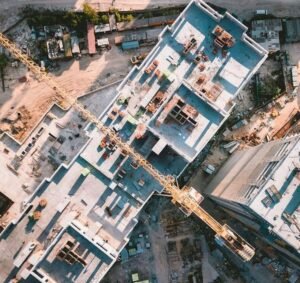

Governments own enormous portfolios of public assets, including land, buildings, warehouses, office complexes, industrial estates, ports, airports, renewable energy facilities and unused infrastructure. Many of these assets remain underutilized because information is fragmented, valuation is outdated and transactions often involve lengthy administrative procedures. A Tokenized Government Asset Marketplace provides a digital platform where public assets can be transparently catalogued, leased and, where legally permitted, partially monetized using blockchain technology.
The marketplace begins by creating a verified digital registry of government-owned assets. Every property, facility or infrastructure asset receives a blockchain-based identity containing ownership records, location details, legal status, maintenance history and valuation reports. This creates a single trusted source of information for authorized users.
Artificial intelligence continuously updates asset valuations using market trends, nearby infrastructure development, rental demand and historical transaction data. Government agencies receive more accurate estimates of asset value, enabling better planning and resource allocation.
Public agencies can list assets available for lease, concession or public-private partnership. Interested businesses submit proposals through the platform, where all bids are securely recorded and time-stamped. This creates a transparent process that is easier to audit and less vulnerable to document manipulation.
Smart contracts automate agreements once approvals are completed. Lease payments, concession fees and milestone obligations are executed according to predefined terms. Payment records, contract amendments and compliance reports are permanently stored on the blockchain.
Unused government buildings can be repurposed more efficiently. Educational institutions, startups, research organizations and community enterprises can discover available facilities through a searchable digital marketplace, reducing the time required to identify suitable public properties.
Infrastructure projects also benefit. Airports, logistics parks, industrial corridors and renewable energy installations often require long-term private participation. Blockchain-based agreements improve transparency while simplifying contract administration throughout multi-year projects.
Artificial intelligence monitors asset performance after contracts begin. Occupancy levels, maintenance requirements, revenue generation and operational efficiency are continuously evaluated. Government departments receive dashboards highlighting underperforming assets and opportunities for optimization.
Maintenance management becomes more proactive. IoT sensors installed in buildings and infrastructure collect information on equipment condition, energy consumption and structural health. AI predicts maintenance needs before failures occur, extending asset life while reducing repair costs.
Banks and financial institutions may participate by providing financing for approved concessionaires and infrastructure operators. Since contract information is securely verified on the blockchain, lenders gain greater confidence in evaluating long-term financing opportunities.
Citizens also benefit from increased transparency. Public dashboards can display non-confidential information regarding government assets, lease allocations, concession agreements and revenue generation, strengthening public trust in asset management.
Audit authorities receive complete digital histories of every asset transaction. Ownership changes, valuation updates, lease renewals, inspections and financial flows are permanently recorded, simplifying compliance reviews and reducing administrative burdens.
Cybersecurity is essential because government asset databases represent critical national information. Secure authentication, encryption, digital signatures and continuous monitoring protect sensitive records while ensuring operational resilience.
India possesses one of the world’s largest portfolios of public assets across central, state and local governments. As infrastructure development accelerates and public-private partnerships expand, a blockchain-based government asset marketplace could improve utilization, enhance transparency and generate additional public revenue while maintaining strong regulatory oversight.
A Tokenized Government Asset Marketplace illustrates how Web3 can modernize public asset management. By combining blockchain transparency, artificial intelligence and smart contract automation, governments can manage public resources more efficiently, improve accountability and unlock greater economic value from existing assets. Such platforms have the potential to become an important component of future digital governance ecosystems.