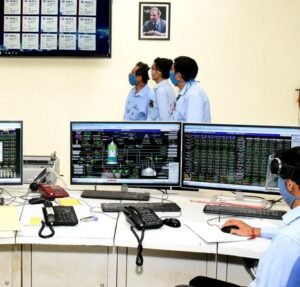

As Indian factories become increasingly connected through automation, robotics, cloud platforms and industrial Internet of Things devices, cybersecurity is becoming as important as physical security. Production lines, power systems, chemical plants and logistics facilities now rely on digital networks that can become targets for cyberattacks. India should establish Industrial Cyber Ranges across major manufacturing clusters to prepare industries for the next generation of cyber threats.
Unlike conventional cybersecurity laboratories that focus on office computers and enterprise software, an Industrial Cyber Range recreates an actual factory environment. It includes programmable logic controllers, industrial robots, sensors, conveyor systems, machine vision equipment, industrial communication networks and supervisory control systems. Companies can safely test cyberattacks and defence strategies without disrupting real production.
Many manufacturers still conduct cybersecurity training using simulated office environments that do not accurately represent industrial operations. Factory networks behave differently from corporate IT systems because they prioritize continuous production, real-time communication and equipment safety. Dedicated cyber ranges would expose engineers to realistic industrial attack scenarios.
Each manufacturing cluster could establish a shared cyber range serving automotive companies, electronics manufacturers, pharmaceutical plants, food processors, chemical industries and engineering firms. Instead of every company investing independently, the facility would operate as common industrial infrastructure.
The cyber range would simulate ransomware attacks on production lines, unauthorized access to programmable logic controllers, manipulation of industrial sensors, attacks on warehouse automation, disruption of robotic systems and failures in industrial communication networks. Engineers would learn how to detect, contain and recover from these incidents before they occur in operational factories.
Indian equipment manufacturers could use cyber ranges to evaluate the security of new industrial products before commercial deployment. Programmable controllers, industrial gateways, sensors, robotics platforms and machine vision systems could undergo standardized cybersecurity testing, improving confidence among domestic and international customers.
Universities and technical institutes should integrate industrial cybersecurity into engineering education. Students would gain practical experience securing operational technology rather than focusing exclusively on traditional information technology networks. This would help address the growing shortage of specialists capable of protecting modern factories.
National cybersecurity standards should require critical manufacturing sectors to conduct periodic cyber resilience exercises using certified industrial cyber ranges. These exercises would verify preparedness while identifying weaknesses in operational technology environments.
Research institutions could use cyber ranges to study emerging threats involving artificial intelligence, autonomous robots, connected factories and machine-to-machine communication. Findings would support the development of stronger industrial security standards and indigenous cybersecurity technologies.
The facilities could also encourage innovation by startups developing industrial firewalls, anomaly detection systems, secure industrial gateways, asset monitoring platforms and AI-driven threat detection tools. Manufacturers would gain access to realistic environments where new security technologies can be validated before deployment.
Government agencies responsible for critical infrastructure could use the same facilities to evaluate cyber resilience across sectors such as power generation, water treatment, transportation, oil and gas and telecommunications. A common testing environment would improve coordination while strengthening national preparedness.
Certification services could become an important function of the cyber ranges. Industrial products meeting defined cybersecurity standards would receive nationally recognized certifications, supporting exports and improving trust in Indian industrial technology.
As Industry 4.0 expands, cyber resilience will become a fundamental requirement for manufacturing competitiveness. International customers increasingly expect suppliers to demonstrate strong operational technology security alongside product quality and production capability.
India has invested extensively in industrial corridors, logistics infrastructure and manufacturing incentives. Establishing Industrial Cyber Ranges would complement these investments by ensuring that the country’s digital factories remain secure, resilient and globally competitive. By treating industrial cybersecurity as shared infrastructure rather than an individual company responsibility, India can build a safer and more innovative manufacturing ecosystem for the decades ahead.