Industry 4.0 is transforming manufacturing through robotics, artificial intelligence, industrial Internet of Things systems, digital twins, advanced analytics and automated production. Yet access to these technologies is not evenly distributed. Large manufacturers can invest in sophisticated automation systems, dedicated engineering teams and expensive digital infrastructure, while smaller manufacturers may struggle to justify the cost of adopting even a small part of the technology stack. Factory-as-a-Service offers a different model: instead of requiring every manufacturer to own all the infrastructure needed for Industry 4.0, essential technologies can be provided as shared services.
The concept is based on a simple change in ownership and access. A traditional factory purchases machines, installs software, builds computing infrastructure, hires specialists and maintains the entire system internally. Under a Factory-as-a-Service model, some of these capabilities become shared infrastructure. Manufacturers pay for access to the capacity or service they actually use.
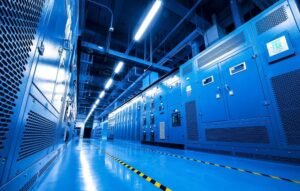
The model is comparable to cloud computing. A company does not need to build its own data centre to access computing power. It can rent computing resources according to its requirements. Factory-as-a-Service applies a similar principle to selected manufacturing capabilities.
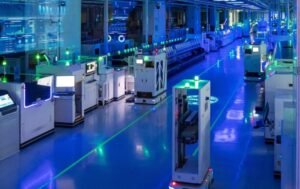
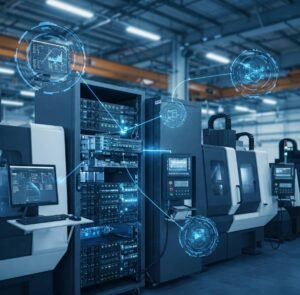
A shared industrial facility could provide robotic equipment, automated inspection, industrial sensors, edge computing, artificial intelligence tools, digital-twin platforms, testing equipment and specialized production machinery. A manufacturer could use these resources without purchasing every piece of infrastructure outright.
This could be particularly valuable for small and medium-sized enterprises.
Consider a small manufacturer that receives a new order requiring automated inspection. Purchasing a sophisticated machine-vision system might require a significant investment, along with software, installation and specialist expertise. Under a Factory-as-a-Service model, the company could potentially use a shared inspection facility or rent the equipment for a defined period.
The manufacturer would pay for the capability rather than necessarily owning the entire system.
This could make advanced manufacturing technology more flexible.
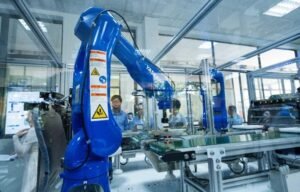
The same approach could apply to robotics. A manufacturer may experience a temporary increase in demand but may not want to purchase a robotic system that will remain underutilized afterwards. A shared robotics facility could provide additional production capacity during periods of high demand.
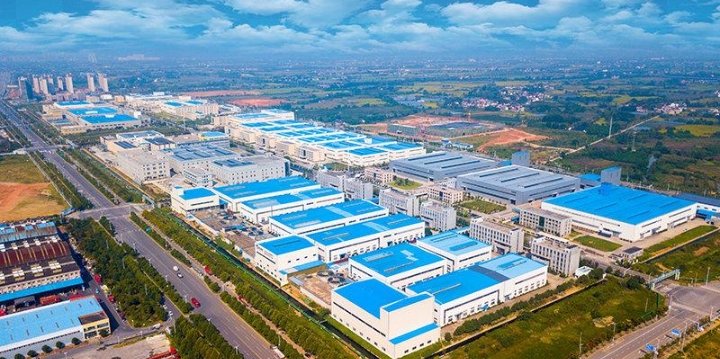
Industrial parks could become natural locations for such services. Instead of every company building its own digital and automation infrastructure, the industrial park could provide shared technology centres containing advanced equipment and computing resources.
These facilities could operate as industrial utilities.
One company might use a robotic cell for several hours. Another might use the same facility later. A third company could access a machine-vision system for quality testing. Specialized equipment could therefore achieve higher utilization than if each company purchased an independent system.
This creates a different economic model for industrial technology.
The initial capital expenditure is distributed across multiple users, while operating costs are associated with actual usage. For smaller companies, this can reduce the barrier to experimentation.
Factory-as-a-Service could also include software.
Manufacturers could access production planning systems, industrial analytics, digital twins, simulation software and AI models through subscription or usage-based arrangements. Rather than maintaining large internal software infrastructure, companies could use specialized services when required.
Cybersecurity could also be offered as a shared service. An industrial technology provider could operate security monitoring, vulnerability assessment, network protection and incident-response capabilities for multiple manufacturers within an industrial cluster.
This would help address one of the difficulties facing smaller companies: cybersecurity expertise is expensive and difficult to maintain internally.
Maintenance could become another service layer. Instead of employing specialists for every category of industrial equipment, manufacturers could access a shared network of engineers and technicians. Predictive maintenance systems could identify equipment requiring attention, while the service provider supplies the appropriate expertise.
The result is a manufacturing ecosystem in which specialized capabilities are accessible without requiring every company to maintain them independently.
Factory-as-a-Service can also support rapid innovation.
Manufacturing companies often hesitate to adopt new technologies because of uncertainty. A company may not know whether a particular robot, AI system or automated process will produce sufficient value to justify a major investment.
A shared facility allows the company to test the technology under real production conditions before committing significant capital.
This creates a bridge between experimentation and permanent adoption.
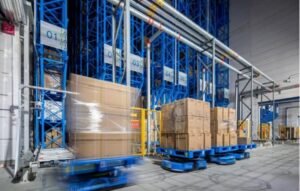
For example, a manufacturer could test an automated material-handling system for three months. During that period, it could measure productivity, labour requirements, maintenance costs, quality improvements and energy consumption. If the results justify the investment, the company could subsequently deploy its own system.
The shared facility becomes a technology adoption laboratory.
Universities and technical institutions could participate as well. Industrial technology centres could be connected to engineering colleges, research institutions and vocational training organizations. Students and researchers could work with real industrial equipment while companies gain access to research capabilities.
This would help reduce the distance between academic research and industrial application.
Workforce development is another important component. Industry 4.0 changes the skills required in manufacturing. Workers increasingly need familiarity with robotics, sensors, industrial software, data analysis and automation.
A Factory-as-a-Service centre could double as a training facility. Workers could receive hands-on training using the same equipment they encounter in modern factories. Manufacturers would not need to establish independent training laboratories for every technology.
The infrastructure could therefore serve three purposes simultaneously: production, experimentation and education.
There are important governance considerations. Shared industrial infrastructure must establish clear rules about scheduling, pricing, access, intellectual property, data ownership and equipment responsibility.
A company using a shared robotic cell should not automatically expose its production data to another company. Data generated during production must be appropriately segregated. Intellectual property associated with manufacturing processes must remain protected.
The service provider must also maintain high equipment availability. If multiple manufacturers depend on the same system, equipment downtime can affect several companies simultaneously.
This means that Factory-as-a-Service requires professional infrastructure management.
Pricing is another challenge. Services need to be affordable enough for smaller companies while generating sufficient revenue to maintain and upgrade the infrastructure. Different pricing models could be used depending on the technology. Some services might be subscription-based, while others could use hourly, transaction-based or capacity-based pricing.
Government could potentially support the early development of such infrastructure through industrial policy, public-private partnerships or shared technology centres. The objective would not necessarily be for government to operate manufacturing services permanently. Instead, public support could help create the infrastructure and ecosystem needed for private-sector adoption.
Industrial clusters could also develop specialized versions of the model.
A textile cluster might provide automated cutting, digital design, quality inspection and advanced dyeing infrastructure. An automotive cluster could provide robotic assembly, machine vision, testing and simulation. A food-processing cluster could provide automated packaging, quality analysis and cold-chain infrastructure.
The technology infrastructure would therefore reflect the specific needs of the industrial ecosystem.
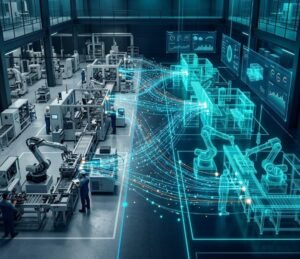
Over time, Factory-as-a-Service could become increasingly autonomous. Production orders could be submitted digitally. Software could determine available machine capacity. Automated scheduling systems could allocate equipment. Robots could perform production tasks. Quality-control systems could inspect outputs. Digital systems could generate production records and coordinate logistics.
This does not mean that factories become entirely human-free. Human engineers, operators, managers and technicians remain responsible for designing processes, supervising operations, maintaining systems and making strategic decisions.
The deeper change is that advanced manufacturing capability becomes accessible as a service rather than being tied entirely to ownership.
This could have major implications for industrial development. New companies could begin manufacturing without investing immediately in an entire production facility. Established manufacturers could expand capacity temporarily. Small companies could experiment with automation. Research organizations could test technologies using industrial equipment. Workers could acquire practical Industry 4.0 skills.
The industrial factory consequently becomes less like a fixed collection of assets and more like an access point to a broader manufacturing infrastructure.
Factory-as-a-Service could therefore help create a more flexible Industry 4.0 economy. Instead of asking every manufacturer to independently purchase every new technology, the industrial ecosystem can provide shared access to advanced capabilities.
The future factory may not be defined solely by the machines a company owns. Increasingly, its competitiveness may depend on the digital, robotic, analytical and production capabilities it can access when needed.