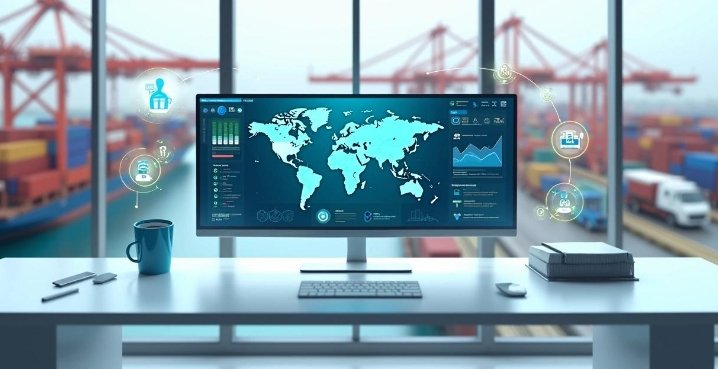
India collects enormous volumes of trade information every day through customs declarations, ports, airports, shipping lines, logistics operators, banks and export promotion agencies. Yet much of this information remains fragmented across different systems, limiting its value for policymakers and businesses. India should establish a National Trade Intelligence Platform that converts trade data into actionable economic intelligence.
Most exporters make decisions using historical trade reports that are often several months old. By the time trends become visible, global demand may already have shifted. A real-time intelligence platform would continuously analyse exports, imports, freight movement, commodity prices and supply chain performance, allowing businesses and governments to respond much earlier.
The platform should integrate customs records, shipping schedules, railway freight, air cargo, warehouse inventories, commodity exchanges and global logistics indicators into a unified digital infrastructure. Combining these datasets would create a comprehensive view of India’s international trade ecosystem.
Artificial intelligence could identify emerging export opportunities before they become obvious. If imports of a particular industrial product begin increasing across multiple countries, Indian manufacturers could receive early alerts about growing international demand. Businesses would gain valuable time to expand production and establish market presence.
The system could also identify strategic import risks. If India becomes excessively dependent on a single country for critical products such as electronic components, specialty chemicals or industrial machinery, the platform would notify policymakers and industry associations. Early warnings would encourage supplier diversification before supply disruptions occur.
Each major export sector should receive its own digital dashboard. Electronics, pharmaceuticals, textiles, engineering goods, chemicals, food processing, automotive products and renewable energy equipment could all be monitored using sector-specific indicators including export growth, logistics performance, market diversification and pricing trends.
State governments would gain access to regional trade intelligence showing export performance by district, industrial cluster and product category. Such information would support targeted industrial policies rather than relying on national averages.
The platform could measure logistics efficiency across ports, airports and land borders. Average cargo clearance times, container dwell periods, transport delays and warehouse utilization would become visible through standardized performance indicators. Continuous monitoring would encourage operational improvements throughout the trade ecosystem.
Financial institutions could use verified trade intelligence to improve export financing decisions. Banks would better understand industry trends, market demand and supply chain resilience, allowing them to develop more responsive financial products for exporters.
Indian embassies and trade missions abroad could contribute market intelligence directly into the platform. Information on regulatory changes, emerging industries, procurement programmes and infrastructure projects would become available to exporters through a common digital interface.
Universities and research institutions should receive access to anonymized trade datasets for economic analysis, supply chain modelling and policy research. Academic insights would strengthen evidence-based decision-making while encouraging innovation in trade analytics.
Small and medium exporters often lack dedicated market research capabilities. A national intelligence platform would democratize access to sophisticated trade analysis, allowing smaller businesses to compete using the same quality of information available to large multinational corporations.
The platform should also monitor global shipping disruptions, commodity price fluctuations, currency movements and geopolitical developments that influence international trade. Businesses would receive timely alerts about factors affecting export competitiveness and supply chain planning.
Instead of relying primarily on retrospective trade statistics, India can develop a predictive trade intelligence system that supports faster and more informed decision-making. A National Trade Intelligence Platform would strengthen exporters, improve policy formulation and position India as one of the world’s most data-driven trading economies.