The global mineral market changes every day. Prices of iron ore, bauxite, manganese, copper, limestone, chromite, and rare earth minerals fluctuate because of changes in industrial production, geopolitical developments, shipping costs, weather conditions, currency movements, government policies, and demand from sectors such as construction, steel, renewable energy, and electric vehicles. For Indian mining companies, understanding these changing market conditions is becoming increasingly important. Industry 4.0 technologies now offer a powerful solution through AI powered mineral price intelligence platforms.
A mineral price intelligence platform is a digital system that continuously gathers information from thousands of data sources across the world. Instead of depending only on historical price charts or manual market reports, artificial intelligence studies real time information to predict future market movements and provide decision support for exporters, traders, manufacturers, and policymakers.
The platform collects information from commodity exchanges, customs databases, shipping movements, railway freight volumes, port congestion reports, weather forecasts, industrial production figures, energy prices, foreign exchange markets, mining output statistics, and international trade policies. Artificial intelligence processes millions of data points every day to identify relationships that may influence mineral prices.
For example, if steel production increases rapidly in Southeast Asia, demand for iron ore may also rise. If heavy rainfall disrupts mining operations in another major producing country, global supply may decrease. If shipping costs increase because of congestion at major ports, export prices may change even when production remains stable. AI systems recognize these patterns much faster than conventional market analysis.
Mining companies can use these insights to determine the best time to sell their products. Rather than accepting the first available contract, exporters receive forecasts showing whether prices are expected to rise, remain stable, or decline during the coming weeks. Better timing can improve profitability without increasing production.
The platform also helps exporters identify new markets. Artificial intelligence compares mineral demand across different countries and recommends destinations where pricing conditions are most favorable. Instead of focusing only on traditional export markets, companies discover emerging opportunities that may offer higher returns.
Indian producers of critical minerals such as graphite, lithium bearing minerals, rare earth elements, and nickel stand to benefit significantly. Global demand for these resources is expanding rapidly because of investments in electric vehicles, battery manufacturing, renewable energy equipment, and advanced electronics. AI can identify changing demand patterns before they become widely recognized, allowing Indian exporters to position themselves ahead of competitors.
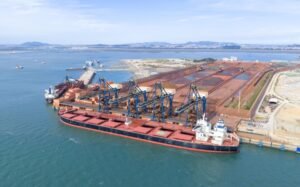
Shipping intelligence forms another important component of the platform. Freight rates often represent a significant portion of export costs. Artificial intelligence monitors vessel availability, fuel prices, weather conditions, port congestion, canal traffic, and logistics disruptions to estimate future shipping expenses. Exporters receive recommendations on the most economical transportation routes and shipping schedules.
Currency fluctuations also influence international trade. Mineral contracts are commonly priced in major international currencies, exposing exporters to exchange rate risks. AI continuously evaluates currency markets and predicts how fluctuations may affect export profitability. Companies can make informed decisions regarding contract timing and foreign exchange management.
Government agencies responsible for mining and exports can use aggregated market intelligence to support policy decisions. Anonymous trade data reveals changes in global demand, competitive positioning, export opportunities, and strategic mineral trends. Policymakers can design targeted export promotion initiatives and infrastructure investments based on reliable market evidence.
Financial institutions also benefit from improved price intelligence. Banks financing mining operations can evaluate commodity market risks more accurately before approving loans or export financing. Insurance companies gain better visibility into commercial risks associated with fluctuating mineral prices.
Artificial intelligence continues learning from every market event. As additional data becomes available, prediction models become increasingly accurate. Unexpected geopolitical developments, natural disasters, regulatory changes, and economic shifts are incorporated into future forecasts, allowing the system to adapt continuously.
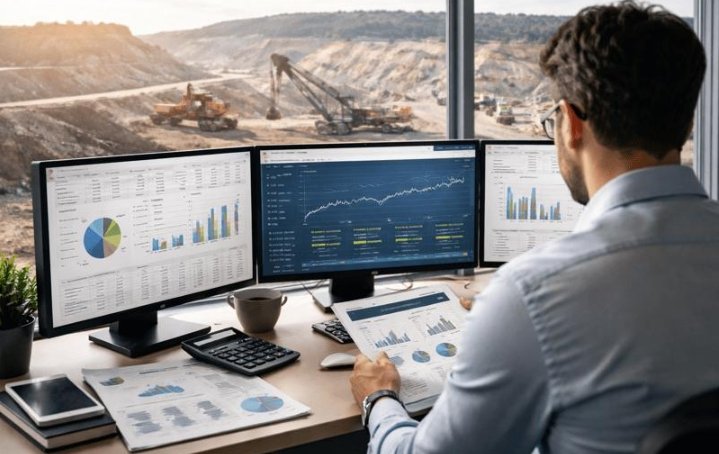
The platform also provides customized dashboards for different users. Mining companies may focus on production planning, exporters on international demand, investors on commodity trends, logistics firms on transportation costs, and government agencies on national trade performance. Each user receives information relevant to their operational needs.
Cybersecurity remains essential because commodity pricing information has significant commercial value. Secure cloud infrastructure, encrypted communications, and strict access controls protect confidential business intelligence while allowing authorized users to access market information from anywhere.
Technology companies have an opportunity to develop specialized analytics services for India’s mining sector. Artificial intelligence developers, cloud computing providers, financial technology firms, logistics companies, satellite data providers, and software developers can collaborate to build advanced market intelligence solutions that serve both domestic and international customers.
Universities and research institutions may also contribute by developing improved forecasting models using Indian market conditions. Collaboration between economists, geologists, data scientists, and mining engineers can generate innovative analytical methods that improve prediction accuracy.
As India’s mining industry expands to support infrastructure, manufacturing, renewable energy, and exports, timely market intelligence will become an increasingly valuable competitive advantage. Companies capable of making faster and more informed commercial decisions will strengthen their position in international markets.
AI powered mineral price intelligence platforms demonstrate how Industry 4.0 extends beyond production technology into global trade strategy. By combining artificial intelligence, big data, cloud computing, predictive analytics, and international market monitoring, these platforms enable Indian mining companies to understand changing market conditions with greater precision. Better information leads to better decisions, stronger export performance, improved profitability, and a more resilient mining industry prepared to compete in an increasingly dynamic global economy.