Global trade is entering a period in which information may become as important as physical infrastructure. For decades, competitive advantage was largely associated with factories, ports, machinery, capital and access to cheap labor. Companies that could manufacture efficiently and move products cheaply across borders gained enormous advantages. Increasingly, however, the ability to interpret enormous amounts of information before competitors do is becoming a critical part of international commerce.
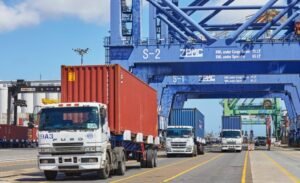
The world already produces extraordinary quantities of trade information. Shipping companies generate data about vessels and routes, ports record movements of containers, governments publish customs statistics, commodity markets reveal prices, companies disclose inventories and financial performance, while satellites can provide information about industrial activity. The challenge is no longer simply obtaining information. It is understanding what that information means before the market reacts.
A large multinational company can build systems that combine many of these signals. It can examine shipping activity, commodity prices, currency movements, weather conditions, political developments, consumer demand and supplier information simultaneously. A smaller company may be looking at only the information immediately available to it. Both companies may technically have access to the same world, but they do not necessarily have the same ability to see what is coming.
This creates a new form of inequality in global trade. A company does not need to possess secret information to gain an advantage. It can simply process ordinary information faster and more effectively. If a business identifies an emerging shortage several months before competitors recognize it, it can secure supplies at lower prices, negotiate transportation capacity and adjust its production plans while others are still operating under normal assumptions.
The same principle applies to demand. An exporter that detects changing consumer preferences early can redirect production toward a growing market. A manufacturer that recognizes weakening demand before competitors can reduce inventory and avoid being left with products that are becoming difficult to sell. The advantage comes from timing, and timing increasingly depends on intelligence.
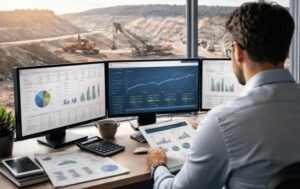
Artificial intelligence is likely to intensify this development. Modern AI systems can process enormous volumes of structured and unstructured information and identify relationships that would be difficult for conventional teams to detect. A company could potentially combine customs data, shipping movements, commodity prices, weather forecasts, financial information and regulatory announcements to identify emerging disruptions or opportunities.
This could transform supply chain management. Instead of waiting for a supplier to announce that production has been interrupted, companies could potentially identify warning signs through changes in shipping patterns, commodity purchases, delivery times and other indicators. The objective would shift from responding to disruption toward predicting disruption.
Financial markets have operated around this principle for decades, but global trade is only beginning to experience its full implications. Traders have long competed on information and speed. International manufacturers and exporters are increasingly entering a similar environment, where understanding economic signals quickly can influence purchasing, pricing, production and logistics decisions.
The consequences for smaller businesses could be significant. A small exporter may have a high-quality product and competitive manufacturing costs but still operate with limited information about international demand. It may not know that customers in another market are beginning to switch suppliers. It may not recognize that shipping costs are about to rise. It may discover a regulatory change only after competitors have already adapted.
This does not mean that smaller companies are necessarily destined to lose. Technology could actually reduce some of the information advantage traditionally held by large corporations. Affordable AI tools could eventually allow small exporters to monitor markets, analyze competitors, understand regulations and identify potential customers without maintaining large research departments.
The critical issue will be access to high-quality data. An AI system is only as useful as the information available to it. Large corporations often possess years of proprietary sales data, supplier records, customer information and operational statistics. Smaller businesses may have very little historical data. This difference could determine how effectively they can use increasingly sophisticated analytical systems.
Governments could therefore have an important role in creating public trade intelligence infrastructure. Customs information, shipping indicators, commodity statistics, regulatory developments and market data could be made easier for businesses to access and interpret. Such systems would not eliminate competition, but they could reduce the information gap between multinational corporations and smaller enterprises.
There is also a geopolitical dimension to this emerging intelligence economy. Countries that possess advanced satellite systems, financial intelligence capabilities, sophisticated customs databases and powerful computing infrastructure may be able to understand global trade flows more accurately than countries with weaker information systems. Economic power could increasingly depend not only on what a country produces, but on how well it understands the movement of goods, capital and demand around the world.
This becomes especially important for strategic commodities. Knowing that inventories of a critical mineral are declining, that a major producer is experiencing production difficulties or that shipping activity is changing can influence decisions long before an actual shortage reaches the market. Countries and companies capable of acting on those signals can secure supplies earlier and potentially avoid much higher costs.
Trade intelligence can also influence investment. If data indicates that a particular region is becoming a major manufacturing center, companies can establish facilities before land, labor and infrastructure become expensive. If another region appears increasingly vulnerable to political or environmental disruption, investment can be redirected before the problem becomes severe. Information can therefore determine where physical capital ultimately moves.
This creates a different understanding of globalization. The most important competitive asset may no longer be simply the ability to participate in global supply chains. It may be the ability to understand those supply chains as a constantly changing system.
Companies will increasingly need to know where their products are moving, where their suppliers obtain materials, which ports are becoming congested, where demand is increasing and which regulations could change their economics. The deeper the visibility, the greater the ability to respond before competitors.
The danger is that this capability could become concentrated. If only the largest corporations can afford sophisticated data systems, specialized analysts and powerful AI infrastructure, global trade could become even more unequal. Smaller businesses would compete not only against larger companies with more capital, but against organizations capable of seeing market changes significantly earlier.
The next great divide in global commerce may therefore be an invisible one. It may not be between countries that export and countries that import, or between companies that manufacture cheaply and companies that manufacture expensively. It may be between those capable of interpreting the global economy in real time and those who discover what happened only after the opportunity has disappeared.