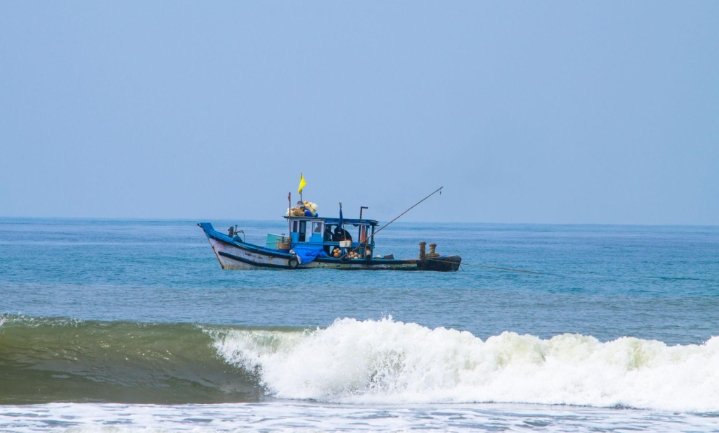
India has more than two hundred thousand registered marine fishing vessels operating along its coastline. Every day, thousands of boats leave fishing harbours in states such as Kerala, Gujarat, Tamil Nadu, Andhra Pradesh, Odisha and West Bengal to harvest marine resources. While fishing technology has improved over the decades, fleet management is still largely dependent on manual coordination, radio communication and the experience of boat operators. Industry 4.0 technologies can modernize this system through smart fleet management based on artificial intelligence, the Internet of Things, cloud computing and satellite communication.
A smart fleet management platform connects fishing vessels, harbour authorities, fisheries departments and seafood companies through a common digital network. Each fishing boat is equipped with GPS devices, communication systems and onboard sensors that continuously transmit information about location, fuel consumption, engine performance and navigation routes.
Instead of waiting for vessels to return to port before understanding their operations, fisheries managers receive real time information throughout the fishing trip. This improves operational efficiency while enhancing safety at sea.
Artificial intelligence analyses vessel movement patterns and identifies the most efficient fishing routes. Historical information, ocean currents, weather forecasts and fuel consumption data are combined to recommend routes that reduce travel time while lowering fuel costs. Since fuel represents one of the largest operating expenses for fishing vessels, even small improvements in route planning can significantly increase profitability.
Predictive maintenance is another important application of Industry 4.0. Sensors installed on engines, generators and mechanical equipment continuously monitor vibration, temperature, oil pressure and electrical performance. Artificial intelligence detects abnormal patterns that indicate possible equipment failure.
Instead of experiencing engine breakdowns while at sea, vessel owners receive maintenance recommendations before critical failures occur. This reduces repair costs, minimizes operational disruptions and improves crew safety.
Smart fleet management also strengthens search and rescue operations. If a fishing vessel stops transmitting information or deviates unexpectedly from its planned route, authorities receive immediate alerts. Rescue teams gain accurate location information, allowing faster emergency response during accidents or severe weather.
Weather intelligence is integrated directly into the fleet management platform. Artificial intelligence continuously analyses meteorological forecasts, wave height, wind speed and cyclone warnings. Fishing vessels receive updated navigation advice through onboard communication systems, allowing crews to avoid dangerous conditions.
Digital fuel monitoring improves operational transparency. Sensors record fuel usage throughout each voyage, helping vessel owners identify inefficient operating practices and reduce unnecessary consumption. Lower fuel use not only improves profitability but also reduces carbon emissions from the fishing industry.
Harbour management becomes more efficient through real time vessel tracking. Port authorities know when boats are expected to arrive, allowing better planning of unloading operations, ice supply, maintenance services and seafood transportation. Waiting time at fishing harbours decreases, improving the overall efficiency of the supply chain.
Seafood processors and exporters also benefit. Knowing the estimated arrival time of fishing vessels enables processing plants to prepare labour, packaging materials and cold storage facilities before the catch reaches shore. This reduces delays and helps preserve seafood quality.
Government fisheries departments gain access to valuable operational data. Vessel movement records help authorities understand fishing patterns, resource utilization and seasonal activity across different coastal regions. Such information supports evidence based fisheries management and policy development.
Smart fleet management also contributes to sustainable fishing. Artificial intelligence analyses fishing activity together with marine resource data to identify areas experiencing excessive fishing pressure. Authorities can recommend alternative fishing zones, supporting long term conservation of marine ecosystems.
Integration with digital catch reporting further enhances transparency. Fishermen can submit electronic records of species, quantities and fishing locations before returning to port. This improves fisheries statistics while reducing paperwork and administrative delays.
Insurance companies may offer lower premiums to vessels equipped with smart monitoring systems because continuous tracking and predictive maintenance reduce operational risks. Banks may similarly provide improved financing options to vessel owners who demonstrate efficient fleet management through verified digital records.
Small fishing cooperatives can benefit through shared digital platforms. Rather than investing individually in expensive technology, cooperatives can provide centralized fleet management services to member vessels, making Industry 4.0 solutions accessible even to small scale fishermen.
Successful implementation requires reliable satellite communication, affordable onboard equipment and training programmes for fishing communities. Government support and partnerships with technology companies can accelerate adoption across India’s coastal regions.
Cybersecurity is equally important because connected vessels exchange large volumes of operational information. Secure communication systems protect navigation data while ensuring uninterrupted operations.
India’s marine fisheries sector is entering a period where digital technology will play an increasingly important role in improving productivity, safety and sustainability. Smart fleet management provides a practical Industry 4.0 solution that connects fishing vessels with intelligent decision support systems throughout every voyage.
By integrating artificial intelligence, IoT sensors, GPS technology, satellite communication and predictive analytics, India can build a modern fishing fleet that is safer, more efficient and more environmentally responsible. Such a transformation will strengthen the country’s blue economy while improving the livelihoods of millions of people who depend on marine fisheries.