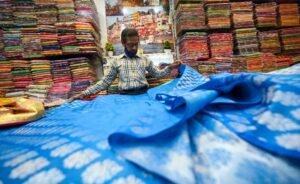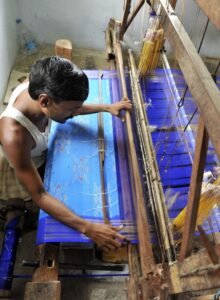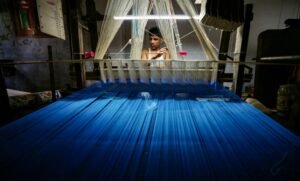
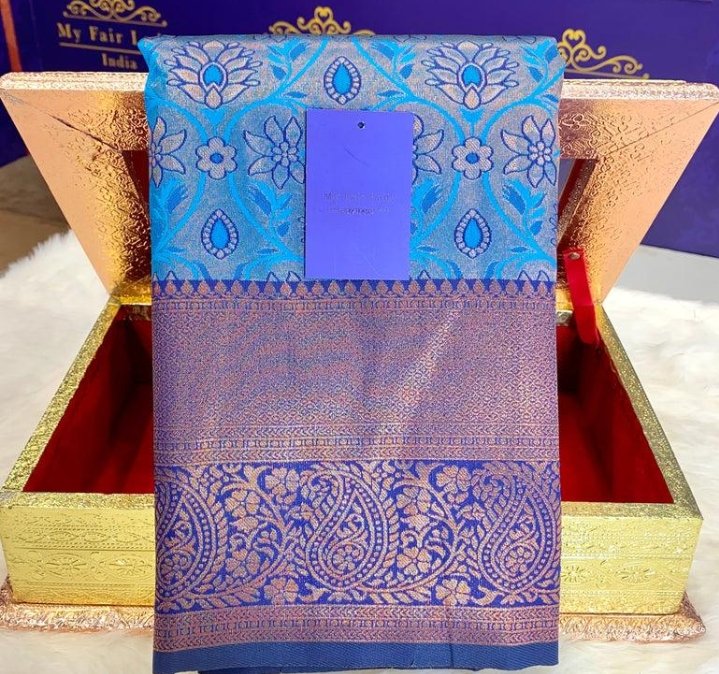
Banarasi silk is among India’s most recognizable textile products, admired for its craftsmanship, intricate zari work, and cultural significance. Although demand exists across the world, many weaving families and small enterprises struggle to participate directly in export markets. The challenge is often not product quality but the absence of strong digital export infrastructure.
Exporting a Banarasi saree requires much more than weaving. Producers must identify buyers, prepare export documentation, comply with international standards, arrange logistics, process payments, and communicate with overseas customers. For many small businesses, these processes are complex and expensive.
Digital export infrastructure can simplify this entire journey.
A dedicated digital export platform for Banarasi silk could connect weavers, exporters, customs agencies, logistics providers, banks, insurance companies, and international buyers. Every participant would operate within a single digital ecosystem, reducing delays and improving coordination.
Each product could have a digital export profile containing information about the weaving process, silk quality, zari composition, dimensions, certification, and geographical origin. International buyers increasingly value transparency, and verified product information strengthens confidence in Indian handloom products.
Digital documentation can significantly reduce paperwork. Commercial invoices, certificates of origin, quality certificates, shipping documents, and customs declarations can all be generated and managed electronically. This saves time while reducing administrative errors.
Secure digital payment systems also improve international trade. Small exporters often worry about delayed payments and financial risks. Integrated payment infrastructure provides faster settlements while improving trust between buyers and sellers.
Language barriers can be reduced through digital communication tools. Buyers from Europe, North America, the Middle East, or East Asia can communicate efficiently with Banarasi exporters through multilingual platforms, allowing negotiations and customer support without significant delays.
Artificial intelligence can analyse international demand patterns and identify emerging export opportunities. Market intelligence can reveal which countries are showing increased interest in bridal textiles, luxury fabrics, sustainable fashion, or handcrafted products. Exporters can then tailor their collections to specific markets.
Digital logistics tracking ensures that buyers know exactly where their shipments are throughout the export process. This level of transparency has become a standard expectation in global trade and helps build long-term business relationships.
Government export promotion agencies can also use digital infrastructure to organise virtual trade fairs, online buyer-seller meetings, and digital product showcases. Small weaving enterprises that cannot afford international exhibitions gain access to global customers through online platforms.
Educational institutions and export councils can provide digital training programmes on international trade regulations, branding, packaging, quality standards, and foreign market requirements. This strengthens the capabilities of the entire Banarasi ecosystem.
Varanasi has built its reputation through centuries of exceptional craftsmanship. By investing in digital export infrastructure, the city can ensure that its weaving traditions are supported by equally modern trade systems. Such an approach would expand global market access, increase export competitiveness, generate higher incomes for artisans, and position Banarasi silk as a leading example of how heritage industries can thrive in the digital economy.