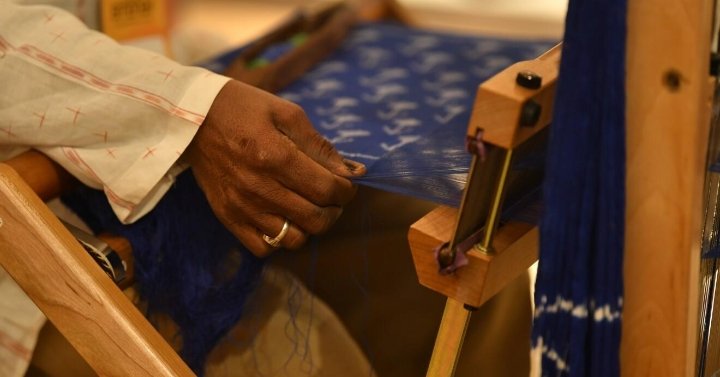
India’s handloom industry represents one of the country’s oldest and most culturally significant economic sectors. Spread across thousands of weaving clusters from Varanasi and Kanchipuram to Pochampally, Chanderi, Balaramapuram and Sambalpur, the industry supports millions of artisans while preserving centuries of craftsmanship. Yet many handloom clusters continue to face challenges that are not rooted in weaving skill but in inadequate digital infrastructure.
The discussion around digital infrastructure often focuses on software companies, financial technology, or urban startups. However, one of its greatest opportunities lies in strengthening traditional industries. Reliable internet connectivity, cloud platforms, digital marketplaces, secure payment systems, logistics integration, and digital identity services can fundamentally reshape how handloom businesses operate.
Many weavers still depend on multiple intermediaries before their products reach consumers. This often reduces the income retained by the artisan while limiting visibility into customer preferences. Strong digital infrastructure allows cooperatives and individual weavers to participate directly in national and international markets. High-speed broadband enables product catalogues, live demonstrations, virtual exhibitions, and customer interactions that were previously possible only for larger businesses.
Digital infrastructure also improves transparency throughout the supply chain. Every stage, from yarn procurement and dyeing to weaving, quality inspection, packaging, and delivery, can be digitally documented. Such traceability helps buyers verify authenticity while making it more difficult for counterfeit products to enter the market. Consumers increasingly value knowing where and how their products are made.
Digital payments have already reduced transaction barriers across India. For handloom clusters, seamless payment systems encourage direct business between artisans and customers. Faster settlements improve cash flow, enabling weavers to purchase raw materials without relying heavily on informal credit. Financial inclusion becomes an important component of industrial development.
Cloud-based inventory management provides another advantage. Many weaving societies still maintain paper records, making it difficult to estimate stock levels or forecast demand. Digital systems allow real-time inventory tracking, reducing delays and minimizing excess production. Better data enables more efficient planning and lower operating costs.
Artificial intelligence can further support the sector when backed by robust digital infrastructure. AI tools can analyze purchasing trends, recommend colour combinations based on market demand, forecast seasonal sales, and assist exporters in identifying emerging international markets. These technologies do not replace artisans. Instead, they help artisans make better business decisions while preserving traditional weaving techniques.
Digital infrastructure also strengthens design collaboration. Textile designers working in metropolitan cities can collaborate remotely with weaving clusters through high-quality video communication, cloud-based design files, and digital sampling. New products can be developed more quickly without requiring repeated physical travel. This accelerates innovation while respecting local craftsmanship.
Training becomes more accessible as well. Rural weaving communities often struggle to attend centralized workshops. Stable internet connectivity enables online learning in business management, digital marketing, quality standards, export regulations, and financial literacy. Young members of weaving families can acquire new commercial skills without leaving their communities.
Logistics improve significantly when digital systems are integrated. Orders can be tracked from production to final delivery. Customers receive accurate shipping information while producers gain better visibility into transportation timelines. Such efficiency builds confidence among domestic and international buyers.
Government support programs also become more effective through digital infrastructure. Subsidies, skill development initiatives, credit support, and welfare schemes can be delivered with greater transparency when integrated into digital platforms. Administrative delays decrease while accountability improves.
The export potential of Indian handloom products depends increasingly on digital visibility. International buyers expect professional websites, secure online payments, product certifications, responsive communication, and efficient logistics. Strong digital infrastructure provides the foundation upon which these commercial relationships are built.
As India continues investing in fibre networks, data centres, cybersecurity, and digital public infrastructure, traditional industries should remain part of this vision. Handloom is not merely a cultural heritage sector. It is a significant source of employment, exports, entrepreneurship, and rural economic activity. By combining centuries-old craftsmanship with modern digital infrastructure, India can build a handloom ecosystem that is more competitive, transparent, resilient, and globally connected while preserving the artistic traditions that make its textiles unique.