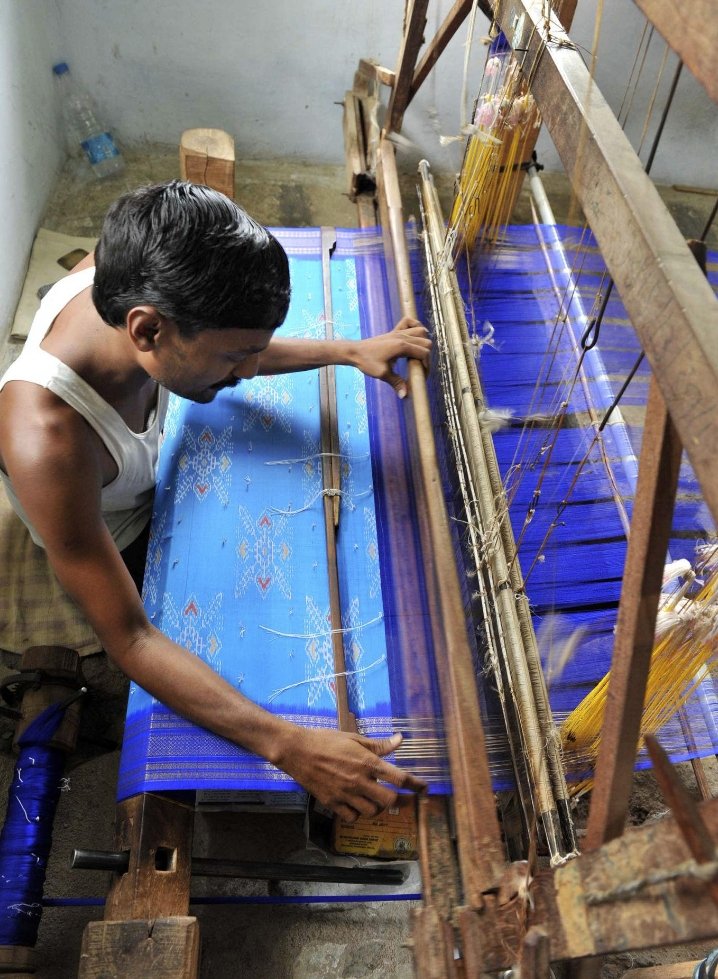
Chanderi, a historic weaving town in Madhya Pradesh, has long been synonymous with elegance, lightweight fabrics, and intricate craftsmanship. Its silk and cotton textiles are prized for their delicate texture, fine zari work, and timeless appeal. Despite its reputation, Chanderi’s weaving ecosystem still faces many of the challenges common to traditional industries, including fragmented marketing, limited market access, inconsistent demand, and dependence on intermediaries. Digital infrastructure offers an opportunity to transform Chanderi from a respected handloom cluster into a globally connected textile brand.
The first requirement is reliable broadband connectivity. Every weaving cooperative, design studio, training centre, and artisan cluster should have access to high-speed internet. This enables weavers to communicate directly with buyers, participate in online exhibitions, attend virtual training sessions, and collaborate with designers across India and abroad.
Digital cataloguing can significantly improve product visibility. Every Chanderi saree, dupatta, or fabric roll can be photographed using standardized methods and uploaded to a central digital platform. Details such as weave type, motifs, dimensions, colours, yarn composition, artisan information, and availability can be maintained in real time. Buyers no longer need to depend solely on physical visits to discover products.
A digital authentication system would strengthen consumer confidence. Each genuine Chanderi product could carry a unique QR code linked to verified production records. Customers would be able to confirm authenticity, learn about the artisan, understand the weaving process, and verify geographical origin. Such transparency helps distinguish authentic handloom products from machine-made imitations.
Artificial intelligence can assist producers without replacing traditional craftsmanship. Market data can identify emerging colour preferences, forecast seasonal demand, recommend inventory levels, and highlight export opportunities. Designers and cooperatives can make better production decisions based on market intelligence rather than assumptions.
Cloud-based production management would improve coordination across weaving societies. Orders, raw material procurement, production schedules, and delivery timelines can be monitored digitally, reducing delays while improving accountability. Small producers gain access to organizational capabilities previously available only to larger enterprises.
Digital payment systems reduce financial friction. Direct payments improve cash flow for artisans while reducing dependence on multiple intermediaries. Faster settlements enable weavers to purchase yarn and other inputs more efficiently, supporting continuous production.
Training also benefits from digital infrastructure. Young weavers can access online courses covering textile design, business management, export documentation, digital marketing, quality control, and entrepreneurship. Experienced artisans can preserve traditional knowledge while embracing modern commercial practices.
Tourism presents another opportunity. Digital platforms can promote Chanderi as a destination where visitors experience live weaving demonstrations, heritage architecture, museums, and artisan workshops. Online booking systems, virtual tours, and multilingual information make the town more accessible to domestic and international visitors.
Government agencies can use digital data to monitor production trends, evaluate support schemes, identify infrastructure gaps, and measure export performance. Better information leads to better policy decisions while ensuring that assistance reaches the communities that need it most.
Chanderi has preserved its weaving heritage for centuries through remarkable craftsmanship. The next stage of its evolution depends not on changing that tradition but on supporting it with world-class digital infrastructure. By combining heritage with connectivity, digital authentication, cloud technology, artificial intelligence, and modern logistics, Chanderi can strengthen its position as one of India’s most respected handloom centres while expanding its presence in global textile markets.