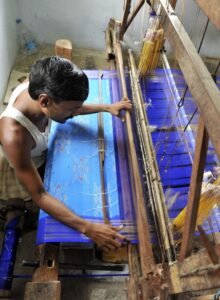
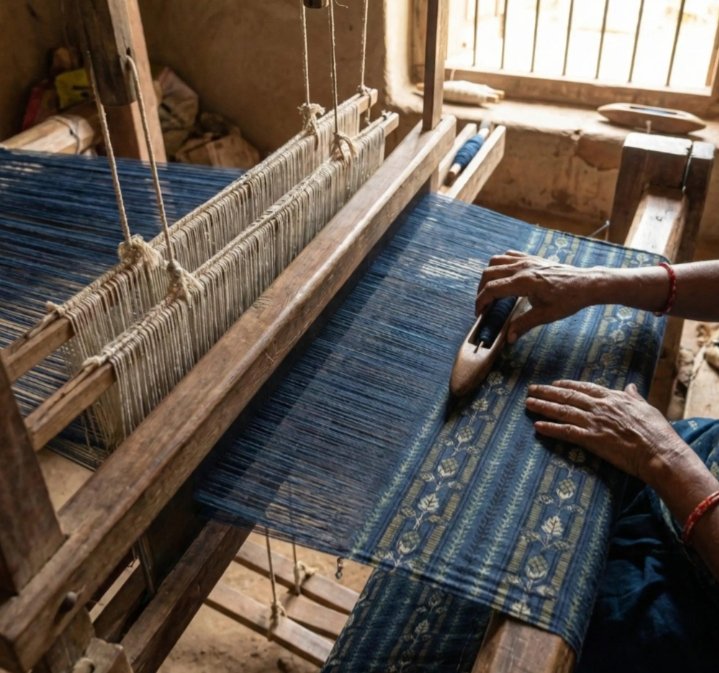
India’s cotton handloom clusters produce an extraordinary range of fabrics, from Mangalagiri and Chanderi cottons to Balaramapuram, Maheshwari, and Bengal handloom textiles. While the artistry of these products is widely recognized, the business behind them often relies on fragmented inventory management. Many cooperatives, societies, and independent weavers still maintain stock records manually, making it difficult to respond quickly to market demand.
A national digital inventory network could significantly improve the efficiency of the cotton handloom sector.
Today, retailers frequently struggle to determine where specific fabrics are available. One weaving cluster may have excess inventory while another faces shortages. Without real-time visibility, orders are delayed, customers turn elsewhere, and valuable stock remains unsold.
A digital inventory platform would connect handloom societies, cooperatives, wholesalers, exporters, and retailers through a shared digital ecosystem. Every completed fabric could be entered into a secure database with details such as weave type, colour, dimensions, yarn count, production date, quantity, and location.
Retailers searching for a particular cotton fabric could immediately identify available stock across multiple weaving centres. Instead of waiting weeks for fresh production, existing inventory could be dispatched quickly, improving customer satisfaction while reducing storage costs.
The system would also improve production planning. If digital data indicates growing demand for particular colours, designs, or fabric weights, weaving societies could adjust production before shortages develop. Decisions would increasingly be based on actual market information rather than estimates.
Government agencies would benefit from improved visibility into national production. Policy makers could identify clusters experiencing declining orders and direct training, financial support, or promotional campaigns where they are most needed.
Exporters would gain access to a larger pool of verified inventory without physically visiting multiple weaving centres. International buyers increasingly expect fast order fulfilment, and digital inventory systems help meet those expectations while maintaining traditional production methods.
Banks and financial institutions could also use verified inventory records when assessing working capital requirements. Digitally recorded stock provides greater confidence than paper registers, improving access to formal credit for weaving enterprises.
The platform could eventually integrate logistics providers, allowing shipments to be booked directly after an order is confirmed. Customers would receive tracking information while producers gain better control over delivery schedules.
Digital inventory data also creates valuable insights into seasonal demand, regional preferences, export trends, and production efficiency. These analytics can guide investment decisions, marketing strategies, and infrastructure planning for the handloom sector.
India’s cotton handloom industry has preserved its heritage through generations of skilled artisans. By strengthening it with modern digital inventory infrastructure, the country can reduce waste, improve market access, increase exports, and ensure that traditional craftsmanship remains commercially competitive in an increasingly digital economy.