India’s snack manufacturing industry consumes thousands of tonnes of edible oil every day to produce potato chips, banana chips, namkeen, bhujia, murukku, sev, fried peanuts, and many other popular products. After repeated frying, this oil reaches the end of its safe operational life and must be replaced. The disposal of used cooking oil presents an important governance challenge because improperly handled oil may reenter the food supply chain illegally or create environmental pollution. A dedicated governance framework for used cooking oil collection could improve food safety while supporting the circular economy.
Every manufacturing facility could be required to digitally record the quantity of fresh edible oil purchased, the amount consumed during production, and the volume of used cooking oil generated. Smart flow meters installed on storage tanks could automatically record oil movement, reducing manual reporting errors and improving transparency.
Used cooking oil could only be transferred to government licensed collection agencies through a national digital tracking platform. Every collection vehicle would receive electronic documentation identifying the source factory, collection time, oil quantity, destination facility, and final utilization. This complete chain of custody would make unauthorized diversion significantly more difficult.
Government regulations could require licensed collectors to deliver used cooking oil only to approved biodiesel producers, industrial chemical manufacturers, or other authorized recycling facilities. Digital confirmation from the receiving facility would complete the transaction and create an auditable record for regulators.
Artificial intelligence could analyze procurement and disposal records to identify unusual patterns. For example, factories purchasing large quantities of edible oil but reporting unusually low volumes of used cooking oil could automatically be flagged for inspection. Such risk based regulation would improve enforcement efficiency while reducing unnecessary inspections for compliant businesses.
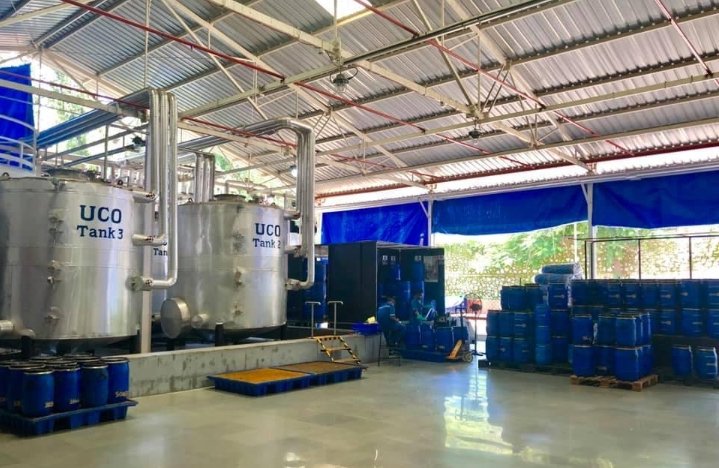
Storage standards should also form part of the governance framework. Used cooking oil must be stored separately from fresh edible oil in clearly identified containers with appropriate safety measures. Digital inspections could verify compliance while monitoring storage capacity, spill prevention systems, and environmental protection measures.
Small snack manufacturers often lack organized disposal infrastructure. Government supported regional collection centers could aggregate used cooking oil from multiple businesses before transporting it to recycling facilities. This shared system would improve compliance while reducing operating costs for small enterprises.
Research institutions could support the program by developing improved technologies for converting used cooking oil into biodiesel, industrial lubricants, bio based chemicals, and renewable fuels. Expanding commercial applications would increase the economic value of recycling while reducing environmental waste.
Consumers would also benefit from stronger governance because it reduces the possibility of degraded oil being illegally resold for food preparation. Greater transparency throughout the disposal chain would strengthen confidence in the quality of packaged snacks produced by responsible manufacturers.
A comprehensive governance framework for used cooking oil collection would improve food safety, strengthen environmental protection, encourage resource recovery, support renewable energy production, reduce illegal practices, and modernize India’s snack manufacturing industry through transparent and technology driven regulation.