
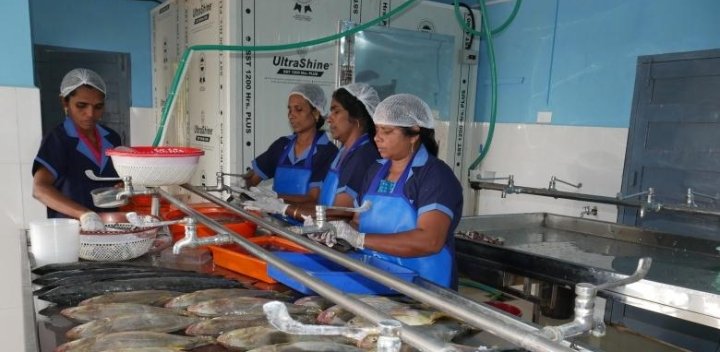
Kerala can unlock a new model of economic development by combining the collective strengths of cooperatives with the capital, technology, and commercial expertise of private investors. This approach can help farmers, fishermen, artisans, small manufacturers, and local entrepreneurs access advanced machinery and digital infrastructure that would be too expensive for individual participants to acquire independently.
The central idea is to separate collective ownership and participation from the financing and operation of sophisticated technology. Cooperatives can aggregate demand, organise members, and provide local accountability, while private investors help finance productive assets and bring professional management, technical expertise, and market access.
The model could be applied to agricultural processing, fisheries, cold storage, precision machinery, renewable energy, shared logistics, and digital platforms. For example, a cooperative of farmers could aggregate produce and secure local participation, while private investors finance automated sorting, grading, packaging, refrigeration, and quality-testing equipment. The facility could serve hundreds of producers, with transparent user charges and revenues supporting operations, debt repayment, and member benefits.
India already has policy foundations for this direction. The National Cooperation Policy 2025 encourages technological modernisation, professional management, digital platforms, and expansion into emerging sectors. Kerala also has existing assistance frameworks for cooperative processing projects, providing a basis for developing more ambitious investment partnerships.
To implement the model, the government could establish a pipeline of investment-ready cooperative technology projects. Each proposal would include a feasibility study, capital requirements, expected utilisation, projected cash flows, environmental safeguards, and a clear allocation of risks and returns. Private participation could take the form of equipment leasing, secured loans, revenue-sharing contracts, or equity investment through a legally appropriate enterprise structure.
The essential safeguard is that investment must strengthen, rather than undermine, cooperative autonomy. Members should retain meaningful democratic control, while investors receive clearly defined contractual rights and commercially reasonable returns. Independent audits, transparent procurement, conflict-of-interest rules, and accessible dispute-resolution mechanisms would protect both sides. Cooperative principles explicitly recognise that external capital must be accepted on terms consistent with member control and institutional independence.
Kerala can create a scalable development model in which cooperatives provide the collective foundation, private investors supply capital and technology, and government institutions facilitate viable projects. This would allow smaller producers and local enterprises to access sophisticated infrastructure without bearing its full cost individually, while creating new opportunities for employment, productivity, and regional economic growth.