Small businesses, farmers, artisans, and emerging manufacturers often face two major barriers to modernisation: the high cost of advanced machinery and the shortage of people trained to operate it. Individually, they may not have sufficient demand to justify purchasing expensive equipment or the financial capacity to maintain it. Yet without access to modern technology, they struggle to improve productivity, maintain consistent quality, and compete in larger markets.
Kerala can address both challenges through a shared machinery and automation training system. The idea is to create a network of facilities where businesses can access advanced equipment on a pooled basis while workers receive practical training in operating, programming, maintaining, and managing automated production systems.
This model would make technology accessible without requiring every entrepreneur to establish a fully equipped factory.
The principle is straightforward: machinery can be shared across enterprises, while technical skills can be developed across the workforce.
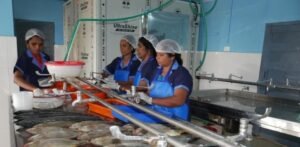
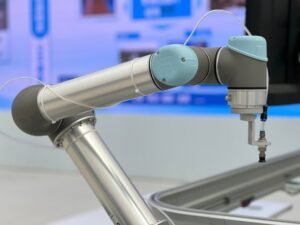
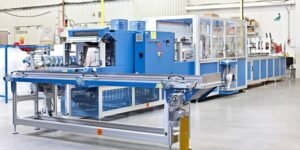
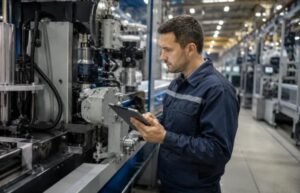
A pooled machinery programme should cover both conventional equipment and advanced automation. In agro-processing, this could include washing and grading lines, pulpers, dryers, industrial freezers, packaging machines, and cold-storage systems. In manufacturing, shared facilities could provide CNC machines, laser cutters, 3D printers, robotic arms, programmable logic controllers, and industrial inspection equipment. The choice of machinery should reflect local demand, expected utilisation, maintenance costs, and the availability of trained operators.
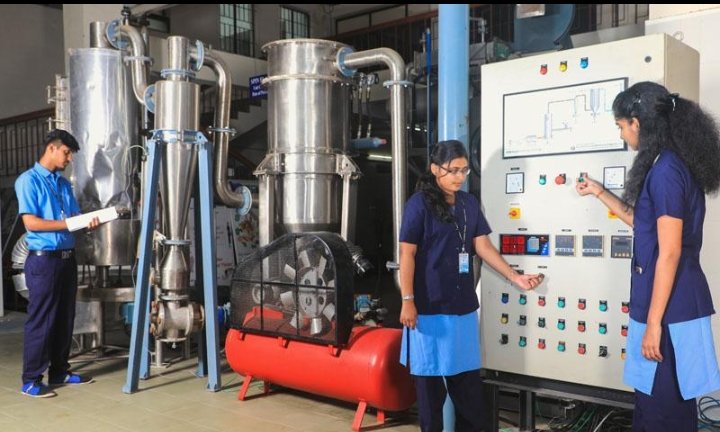
Training must be integrated into the facility from the beginning. Participants should learn machine operation, programming, safety procedures, troubleshooting, preventive maintenance, sensor integration, and production data analysis. Practical instruction should be delivered on the same equipment that businesses will use, with opportunities for internships and supervised production assignments.
Kerala already has examples of the underlying approach. The state’s Common Facility Service Centres provide machinery access, technical services, and training, while the central government’s MSME Technology Centres combine advanced equipment with industry-oriented skills development.
A new generation of shared technology centres could bring these functions together through a sustainable operating model. Cooperatives, industry associations, educational institutions, government agencies, and private investors could jointly establish facilities. Businesses would pay for machine time, testing, maintenance, and specialised services, while training programmes could be funded through industry contributions and eligible public schemes.
The ultimate objective is to make advanced technology accessible to businesses that cannot afford it individually, while developing a workforce capable of using that technology productively. By combining pooled machinery with practical automation training, Kerala can strengthen its small enterprises, create skilled employment, and build a more competitive, technology-enabled economy.