India’s paper industry has been a pillar of economic activity for generations. It supplies products essential for education, publishing, packaging, healthcare, food distribution, and manufacturing. Although digital communication has reduced demand for certain grades of paper, the rapid expansion of e commerce, sustainable packaging, tissue products, and industrial applications continues to create new opportunities. To remain globally competitive, India’s paper manufacturers must embrace Industry 4.0 technologies that improve efficiency, sustainability, and product quality.
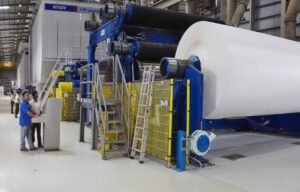
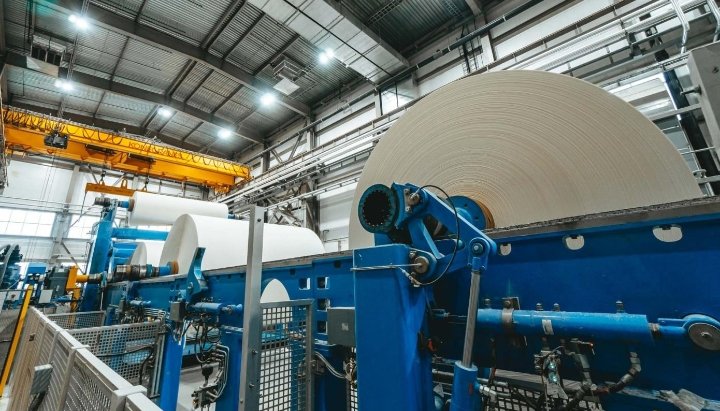
Paper manufacturing is a highly integrated process involving raw material preparation, pulping, bleaching, sheet formation, pressing, drying, coating, cutting, and packaging. Every stage influences the final quality of the product. Even small variations in moisture content, temperature, pressure, or pulp consistency can affect strength, texture, color, and durability. Industry 4.0 enables continuous monitoring and optimization of these complex processes.
The foundation of Industry 4.0 is the Industrial Internet of Things. Thousands of sensors installed throughout a paper mill can measure machine performance, steam pressure, vibration, temperature, water flow, pulp density, and energy consumption. This information is transmitted continuously to centralized monitoring systems where engineers gain complete visibility over factory operations.
Artificial intelligence transforms this operational data into practical insights. AI algorithms can identify production inefficiencies, recommend process adjustments, and predict quality variations before they occur. Instead of reacting to problems after defective paper has already been produced, manufacturers can intervene early and maintain consistent production standards.
Predictive maintenance is one of the most valuable Industry 4.0 applications. Paper mills operate large and expensive equipment such as digesters, refiners, rollers, dryers, pumps, compressors, and conveyors. Unexpected equipment failures can stop production for many hours or even days, creating significant financial losses.
Sensors monitoring vibration, temperature, electrical loads, and lubrication conditions detect early signs of equipment wear. Artificial intelligence analyzes these patterns and estimates when maintenance should be performed. Maintenance teams receive advance notifications, allowing repairs to be completed during planned shutdowns instead of emergency situations.
Digital twins further enhance operational efficiency. A digital twin is a virtual model of the entire paper mill that continuously receives information from production equipment. Engineers can simulate production changes, evaluate new operating conditions, and optimize machine settings without interrupting actual production. This reduces risk while accelerating process improvements.
Quality inspection also benefits significantly from automation. High speed cameras combined with machine vision systems inspect every meter of paper for holes, wrinkles, stains, tears, thickness variations, and surface defects. Artificial intelligence classifies defects instantly and recommends corrective actions. Continuous inspection ensures higher product consistency while reducing customer complaints.
Energy efficiency is particularly important because paper manufacturing consumes substantial amounts of electricity, steam, and water. Industry 4.0 systems optimize boiler operations, steam distribution, drying temperatures, and electrical consumption across the factory. Even modest improvements in energy efficiency generate substantial cost savings over time while reducing carbon emissions.
Water management represents another critical opportunity. Paper production requires significant quantities of water for pulping, washing, bleaching, and cooling. Smart monitoring systems continuously track water quality, consumption, recycling rates, and wastewater treatment performance. Manufacturers can reduce freshwater usage while improving environmental compliance and lowering operating costs.
Supply chain integration extends Industry 4.0 beyond factory operations. Digital platforms connect suppliers, transport companies, warehouses, distributors, and customers through real time information sharing. Production schedules automatically adjust according to raw material availability and customer demand, reducing inventory costs while improving delivery reliability.
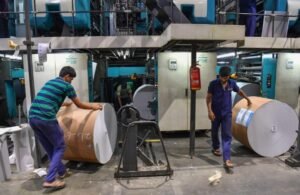
Robotics also plays an increasing role in paper manufacturing. Automated guided vehicles transport raw materials and finished products throughout the factory. Robotic systems handle packaging, palletizing, loading, and warehouse operations with greater speed and precision than traditional manual methods. Employees can focus on higher value technical and supervisory responsibilities.
Sustainability has become a major competitive factor in global markets. Customers increasingly prefer paper products manufactured with responsible environmental practices. Industry 4.0 enables continuous monitoring of emissions, waste generation, recycled fiber usage, and renewable energy consumption. Reliable environmental data strengthens sustainability reporting while improving corporate reputation.
India’s growing demand for packaging materials, food grade paper, medical paper products, and specialty industrial papers creates strong opportunities for expansion. Manufacturers adopting Industry 4.0 technologies will be better positioned to meet evolving customer expectations while competing with leading international producers.
The transition does not require replacing every machine immediately. Many paper manufacturers can begin by installing sensors, modern monitoring systems, and artificial intelligence on existing production lines. As digital capabilities expand, factories can gradually introduce robotics, digital twins, and advanced automation.
Paper manufacturing has evolved continuously for centuries by adopting new technologies that improve productivity and quality. Industry 4.0 represents the next major stage in this evolution. By combining artificial intelligence, connected sensors, digital twins, robotics, and advanced analytics, India’s paper industry can become more efficient, environmentally sustainable, and globally competitive while strengthening one of the country’s most enduring manufacturing sectors.