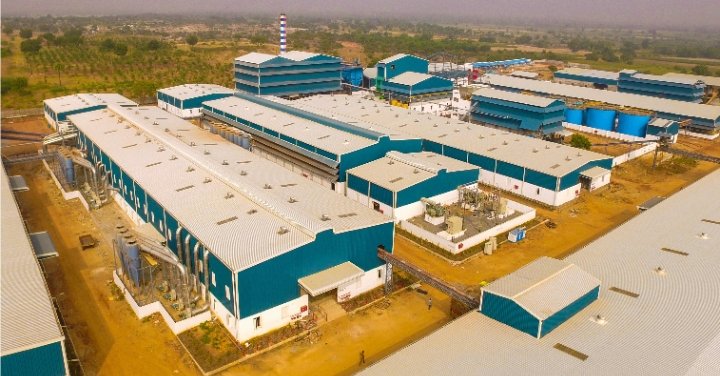
India’s oleochemicals industry is becoming an increasingly important segment of the country’s chemical manufacturing sector. Oleochemicals are derived from vegetable oils and natural fats and are widely used in soaps, detergents, cosmetics, pharmaceuticals, food additives, lubricants, textiles and biodegradable industrial products. As industries shift toward renewable raw materials and environmentally friendly chemicals, India has an opportunity to strengthen its oleochemicals industry through Industry 4.0 technologies.
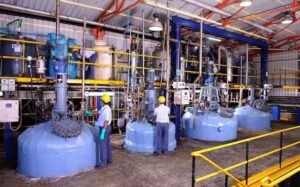
Oleochemical manufacturing involves hydrolysis, esterification, hydrogenation, distillation and purification processes that require precise control over temperature, pressure, reaction time and product composition. Maintaining consistency is essential because customers expect uniform quality across products such as fatty acids, fatty alcohols, glycerin and specialty esters.
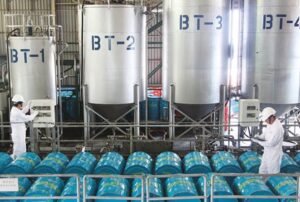
Industry 4.0 enables manufacturers to monitor every production stage using connected industrial sensors. Reactors, distillation columns, heat exchangers, storage tanks and packaging systems continuously generate operational data, allowing engineers to observe manufacturing performance in real time.
Artificial intelligence improves process optimization by analysing years of production data together with current operating conditions. Machine learning algorithms identify process settings that maximize production efficiency while reducing raw material losses and energy consumption. These improvements strengthen profitability while maintaining product quality.
Raw material management becomes particularly important because oleochemical manufacturing depends heavily on vegetable oils such as palm oil, coconut oil and other renewable feedstocks. Smart inventory systems monitor raw material quality and recommend production adjustments whenever natural variations occur in incoming supplies.
Digital twins provide manufacturers with virtual models of processing facilities. Engineers can evaluate equipment upgrades, optimize production schedules and simulate process modifications without interrupting actual manufacturing. This reduces technical risks while accelerating innovation.
Predictive maintenance improves reliability across pumps, compressors, centrifuges, distillation columns and filtration systems. Connected monitoring devices analyse vibration, pressure and temperature patterns to identify equipment deterioration before failures occur. Planned maintenance minimizes production interruptions while extending equipment life.
Energy efficiency represents another major opportunity. Oleochemical production requires significant heating, cooling and steam generation. Intelligent energy management systems monitor utility consumption throughout the plant and recommend operating adjustments that lower energy costs without affecting output.
Quality assurance also benefits from Industry 4.0 technologies. Online analytical instruments continuously measure product purity, acidity, moisture and chemical composition during manufacturing. Operators receive immediate feedback whenever quality parameters begin moving outside acceptable limits.
India’s cosmetics and personal care industries increasingly require high-quality oleochemical ingredients. Smart manufacturing systems help producers maintain the consistency demanded by domestic and international customers while supporting export growth.
Environmental sustainability is one of the strongest advantages of oleochemicals because they are derived largely from renewable biological resources. Industry 4.0 further strengthens sustainability by reducing waste generation, improving resource utilization and optimizing water consumption throughout manufacturing operations.
Water recycling systems equipped with intelligent monitoring can identify leakages, optimize treatment processes and improve reuse efficiency. Reduced freshwater consumption lowers environmental impact while decreasing operating expenses.
Supply chain integration connects procurement, production planning, warehouse management and customer demand through digital manufacturing platforms. Manufacturers become more responsive to changing market conditions while reducing inventory costs.
Worker safety also improves through connected industrial monitoring. Sensors continuously observe reactor conditions, pressure systems and chemical storage areas. Automated alerts enable operators to respond quickly whenever abnormal operating conditions develop.
The pharmaceutical industry represents another growing market for high-purity oleochemical derivatives. Industry 4.0 technologies help manufacturers meet stringent documentation, traceability and quality standards expected by pharmaceutical customers.
Artificial intelligence also supports research and development. Production data collected over many years becomes a valuable resource for developing new formulations and improving manufacturing efficiency. Machine learning models identify opportunities for innovation that traditional analysis may overlook.
Indian automation companies have an opportunity to develop specialized software platforms, industrial sensors and analytics systems tailored specifically for oleochemical production. Domestic technological innovation can strengthen both manufacturing competitiveness and the industrial software sector.
Engineering institutions should prepare future chemical engineers by integrating automation, industrial data analytics, artificial intelligence and digital manufacturing into academic programs. Graduates equipped with these skills will support the continued modernization of India’s specialty chemical industries.
Government initiatives promoting bio-based manufacturing, industrial modernization and digital transformation can encourage wider adoption of Industry 4.0 technologies across the oleochemicals sector. Research partnerships involving universities, manufacturers and technology companies can further accelerate innovation.
Global demand for renewable chemicals continues to expand as industries seek sustainable alternatives to petroleum-derived products. India possesses significant strengths in agricultural resources, chemical engineering and manufacturing capability that position it well to benefit from this transition.
Industry 4.0 transforms oleochemical manufacturing into an intelligent production ecosystem where every stage is continuously monitored, analysed and optimized. By combining renewable raw materials with advanced digital technologies, India’s oleochemicals industry can improve efficiency, strengthen sustainability and establish itself as a globally competitive supplier of high-value bio-based chemicals.