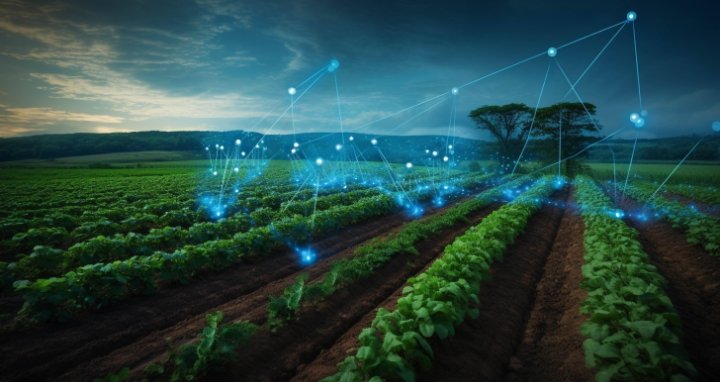
India’s agricultural sector is one of the largest in the world, yet much of its digital ecosystem remains fragmented. Farmers, researchers, policymakers, agribusinesses, banks, insurance companies, and logistics providers often rely on disconnected sources of information. Building a National Agricultural Data Infrastructure would create a common digital foundation that securely connects these stakeholders while improving productivity, transparency, and resilience across the entire agricultural value chain.
A modern agricultural data infrastructure is more than a collection of databases. It is a nationwide platform capable of integrating weather observations, satellite imagery, soil health records, irrigation systems, crop disease monitoring, market prices, transportation networks, warehouse inventories, export statistics, and financial services. Instead of operating in isolation, these datasets can interact in real time, enabling faster and more informed decisions.
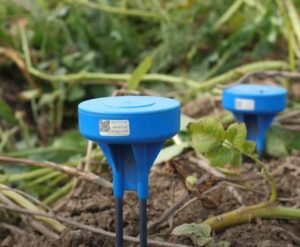
One of the greatest advantages of such an infrastructure is precision farming. Farmers can receive localized recommendations based on the specific conditions of their land rather than relying on generic agricultural advice. Soil moisture readings, rainfall forecasts, fertilizer recommendations, pest alerts, and crop health assessments can all be delivered through mobile applications in regional languages. This allows farmers to reduce unnecessary expenses while increasing crop yields.
Satellite imagery plays a critical role in this ecosystem. High-resolution images collected throughout the growing season can identify stressed crops before problems become visible from the ground. Artificial intelligence can analyze these images to detect nutrient deficiencies, water stress, weed growth, or disease outbreaks. Early intervention reduces crop losses and improves food security while lowering the environmental impact of excessive chemical use.
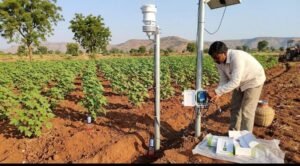
Weather integration is equally important. Agriculture depends heavily on rainfall, temperature, humidity, and wind conditions. By combining data from weather stations, satellites, and forecasting models, farmers can receive highly localized weather predictions. These forecasts support better planning for sowing, irrigation, fertilizer application, pesticide spraying, and harvesting. Even small improvements in forecast accuracy can translate into substantial economic gains across millions of farms.
Agricultural markets also benefit significantly from digital infrastructure. Farmers often lack timely information about prices in nearby markets or demand from processing industries. A unified digital platform can display current prices, transportation costs, storage availability, and buyer requirements across multiple regions. Better information strengthens farmers’ bargaining power and reduces the influence of information asymmetry.
Supply chain visibility is another major opportunity. Once crops leave the farm, they pass through traders, warehouses, transport companies, processing units, exporters, and retailers. Digital tracking systems using QR codes, RFID tags, GPS devices, and cloud platforms can monitor products throughout the supply chain. This improves food safety, reduces waste, simplifies recalls when necessary, and enhances export credibility.
Banks and insurance providers can also benefit from integrated agricultural data. Loan approvals become faster when verified crop information, historical production records, and satellite observations are available digitally. Crop insurance claims can be processed more efficiently using remote sensing instead of lengthy manual inspections. Faster settlements improve trust among farmers and financial institutions alike.
Research institutions would gain access to anonymized datasets covering different crops, climates, soil types, and farming practices across the country. Such information supports the development of improved crop varieties, better irrigation methods, advanced disease prediction models, and more effective agricultural policies. Universities and startups could build innovative applications on top of standardized digital infrastructure.
Food processing industries require reliable forecasts of crop availability months in advance. Agricultural data infrastructure can estimate production volumes using satellite monitoring, weather patterns, and field reports. This helps manufacturers plan procurement, optimize factory utilization, and reduce disruptions caused by unexpected shortages.
Climate change increases the urgency of investing in digital agricultural infrastructure. Extreme weather events, prolonged droughts, floods, and changing rainfall patterns require rapid access to accurate information. Governments can monitor vulnerable regions in real time, coordinate disaster response, estimate damages, and prioritize relief efforts more effectively through integrated digital systems.
Data governance is essential for the success of such an initiative. Farmers must retain confidence that their personal information is secure and used responsibly. Clear rules regarding ownership, privacy, consent, cybersecurity, and data sharing should be established. Open standards should encourage innovation while protecting sensitive information from misuse.
India’s startup ecosystem would find enormous opportunities within a national agricultural data platform. Entrepreneurs could develop specialized services for irrigation optimization, pest detection, financial analytics, machinery sharing, carbon credit verification, sustainability reporting, and supply chain management. A common infrastructure lowers barriers to innovation because startups no longer need to build foundational datasets independently.
State governments would also benefit through improved agricultural planning. Officials could identify emerging disease outbreaks, monitor irrigation coverage, evaluate fertilizer usage, assess crop diversification efforts, and measure the effectiveness of government schemes using reliable real-time information rather than delayed reports.
The economic benefits extend beyond farming itself. Better agricultural intelligence improves food processing, logistics, exports, retail operations, commodity trading, financial services, and manufacturing industries linked to agriculture. As efficiency increases across the value chain, consumer prices become more stable while rural incomes gain greater resilience.
India has already demonstrated global leadership in digital public infrastructure across several sectors. Extending this approach to agriculture represents the next logical step. By creating a secure, interoperable, and scalable Agricultural Data Infrastructure, the country can strengthen food security, support sustainable farming, accelerate rural innovation, and build a digitally connected agricultural economy capable of meeting the challenges of the coming decades.