Agricultural genetics has traditionally focused on questions such as yield, disease resistance, drought tolerance and crop quality. These remain important, but the emergence of machine learning creates an opportunity to ask a much more detailed question: which combinations of genetic and physical crop features create the greatest value for specific agricultural and processing applications?
A future crop genetics system could use machine learning to connect genetic information with thousands of measurable crop characteristics. Instead of evaluating a variety simply as a high-yielding or low-yielding crop, researchers could build detailed biological profiles showing how that variety behaves from seed to processing plant.
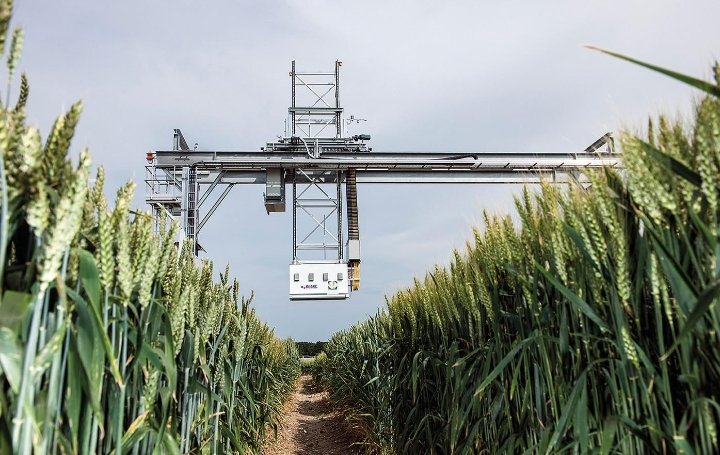
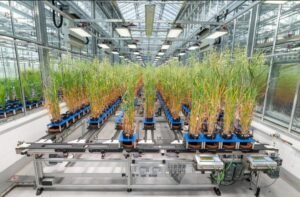
The concept is sometimes described as phenotyping at scale. A crop can be measured for characteristics such as plant height, leaf structure, flowering time, fruit size, colour, texture, maturity period, water requirements, disease response, nutrient composition, oil content, starch characteristics, fibre properties and many other traits.
The important development is that these measurements can increasingly be collected digitally.
Cameras can capture plant growth. Sensors can measure environmental conditions. Laboratory instruments can measure biochemical composition. Genomic technologies can characterize genetic variation. Processing factories can measure how different varieties behave during manufacturing.
Machine learning can then search for relationships across these datasets.
Imagine a research programme involving thousands of crop varieties. Each variety has genetic information, agricultural observations and processing results. One variety might produce slightly lower yields but contain substantially higher levels of a valuable compound. Another might mature earlier. A third might have physical properties that make automated processing easier.
Traditional analysis could examine these characteristics individually. Machine learning can potentially examine combinations of traits and identify patterns that researchers might otherwise overlook.
This creates the possibility of a crop feature map.
Instead of thinking of a crop as a single product, researchers could describe it as a collection of economically relevant biological characteristics.
For a fruit, those characteristics might include pulp percentage, sugar profile, acidity, fibre content, firmness, colour, seed proportion, shelf life and processing behaviour.
For an oilseed, the feature map could include oil concentration, fatty-acid composition, seed size, extraction efficiency, resistance to environmental stress and storage stability.
For a fibre crop, researchers might measure fibre length, strength, thickness, cellulose characteristics and processing performance.
The machine learning system could then connect these characteristics to economic outcomes.
This is where genetics becomes directly connected to industrial strategy.
Suppose a processor wants a fruit that produces a high quantity of stable puree. The ideal variety may not be the one with the highest yield per hectare. It may be the variety with the best combination of pulp recovery, processing stability, harvest timing and disease resistance.
Machine learning could help researchers search for those combinations.
The next step would be predictive breeding.
Once researchers identify genetic markers associated with valuable characteristics, they can potentially use them to guide breeding programmes. Instead of growing thousands of plants and waiting years to determine which ones have desirable characteristics, researchers can use genetic information to prioritize candidates for further testing.
This does not eliminate field trials. Biology is too complex for that. But it can make breeding programmes more targeted.
The same approach could be applied to climate adaptation.
A variety’s performance is influenced by both genetics and environment. Machine learning models can potentially examine how different genotypes respond to temperature, rainfall, soil conditions and other environmental variables.
This could help identify varieties that are particularly suited to specific regions.
Rather than searching for one universally superior crop, agriculture could develop location-specific genetic portfolios.
One variety could perform well in humid coastal conditions. Another could perform better under heat stress. Another could have characteristics suitable for intensive processing.
This would make agricultural genetics more geographically precise.
The processing industry could become an important source of data in this system.
Food factories already generate enormous amounts of information. They measure raw material quality, processing temperatures, extraction yields, moisture levels, energy consumption, product consistency and waste.
If these data are connected to the varieties being processed, researchers can begin asking which genetic characteristics lead to better industrial performance.
This creates a feedback loop between factory and farm.
The factory measures performance. The data goes to researchers. Researchers identify useful crop characteristics. Breeders select for those characteristics. Farmers cultivate improved varieties. The resulting crops return to the factory for further evaluation.
Over time, the entire agricultural system becomes a learning system.
This could also change the economics of agricultural research.
Instead of breeding varieties only for generic market categories, research programmes could be commissioned around specific industrial requirements.
A beverage company might support research into fruit varieties with particular flavour and processing characteristics. A starch manufacturer might support research into crops with desirable starch properties. A biomaterials company might fund research into high-performance fibres.
This creates a potential commercial relationship between genetics and downstream manufacturing.
Universities and public research institutions could provide foundational research, while private companies could finance application-specific development. Farmers and cooperatives could participate in field trials and production networks.
However, the quality of the data would determine the quality of the machine learning system.
Poor measurements produce poor predictions. Genetic data must be linked correctly to field observations. Environmental conditions need to be recorded accurately. Processing measurements need standardized definitions.
A regional crop data infrastructure could therefore become as important as the laboratories themselves.
Each crop variety could have a continuously expanding digital profile. Researchers could add genetic information. Farmers could contribute field observations. Processing companies could contribute industrial performance data. Laboratories could contribute biochemical measurements.
The result could resemble a biological database for regional agriculture.
Over time, such systems could reveal unexpected opportunities.
A crop traditionally grown for food might contain characteristics valuable to cosmetics. A processing by-product might contain useful compounds. A variety considered commercially unimportant might possess an unusual combination of traits that makes it attractive to a specialized industry.
Machine learning is particularly useful in discovering these relationships because agricultural datasets can contain many variables and complex interactions.
The goal is not to allow an algorithm to decide what farmers should grow. The goal is to give researchers, farmers and businesses a much more detailed map of the biological possibilities available to them.
This distinction is important.
Agricultural genetics involves living systems, local ecosystems, farmers’ livelihoods and food systems. Predictions must therefore be tested in real environments, and technological recommendations require scientific validation.
Machine learning should function as a discovery and decision-support tool, not as a substitute for field experimentation.
The long-term possibility is nevertheless significant.
A region could build a digital genetic library containing thousands of varieties and millions of observations. Researchers could query the system for specific combinations of characteristics. Processing companies could identify the biological inputs best suited to new products. Breeders could search for genetic combinations associated with desired traits.
Agricultural innovation would become increasingly data-driven.
The most interesting transformation may be conceptual.
Instead of defining crops primarily by their names, agriculture could begin defining them by their measurable features.
A banana would no longer be simply a banana. It could be described through hundreds of characteristics relevant to nutrition, processing, storage, flavour, fibre and industrial applications.
A coconut could be understood through its oil characteristics, fibre properties, water composition, shell properties and processing behaviour.
A spice could be characterized by its chemical profile, aroma compounds, extraction efficiency and stability.
Once these features can be measured, compared and connected to genetic variation, they become targets for systematic innovation.
The agricultural industry could therefore move from simply breeding better crops to engineering better biological inputs for specific economic purposes.
That would create a new intersection between genetics, machine learning and agro-processing.
The farm would remain the place where crops are grown. But the intelligence determining what those crops should become could increasingly emerge from laboratories, datasets, algorithms and processing facilities working together.