Agricultural markets normally begin with crops. Farmers grow rice, wheat, bananas, vegetables, fruits, oilseeds or spices, and industries purchase whatever characteristics are available in those crops. The relationship between genetics and industry is therefore mostly indirect.
A radically different agricultural system could begin with biological characteristics rather than crop names.
Imagine a national digital exchange where food companies, biotechnology firms, biomaterial manufacturers, pharmaceutical companies and other industries can specify the biological characteristics they want from future agricultural production. Researchers could then search genetic collections, field databases and scientific literature to determine where those characteristics already exist and how they might be developed at greater scale.
The exchange would essentially become a marketplace for biological requirements.
A company might not ask for a particular variety of banana. It might ask for fruit with high pulp recovery, specific texture, predictable maturation and processing stability. An oil manufacturer might request seeds with particular oil characteristics. A biomaterial company might need plant fibres with specific strength and length. A food ingredient manufacturer could search for plants containing useful compounds at commercially meaningful concentrations.
The important change is that the industrial requirement would travel upstream into agricultural research.
Today, breeding programmes frequently begin with available genetic diversity and attempt to improve it according to established agricultural objectives. A crop trait exchange would introduce another source of direction: future industrial demand.
This could create a much tighter relationship between genetics and manufacturing.
The first component would be a biological trait database. Instead of storing information about crops only by species and variety, the database would describe measurable characteristics.
These could include yield, maturity, plant architecture, disease response, environmental tolerance, protein composition, starch properties, oil content, fibre characteristics, pigment concentration, flavour compounds, processing yield and storage behaviour.
The database could combine genomic information with phenotypic measurements and industrial processing results.
This distinction is important because genes alone do not determine economic performance. Environmental conditions, cultivation methods and processing technologies also influence the final outcome.
Machine learning could be used to search this multidimensional dataset.
Suppose an industry requires a crop with five characteristics simultaneously. Finding individual plants with each characteristic separately might be relatively easy. Finding one genetic background that combines all five could be much harder.
A machine learning system could search historical breeding data and genetic relationships for promising combinations.
It could also identify trade-offs.
Perhaps increasing one characteristic tends to reduce another. Perhaps a particular trait performs well only under specific climatic conditions. Perhaps two characteristics interact in ways that traditional breeding programmes have not fully recognized.
The system would not replace breeders or experimental science. It would help researchers decide where to look.
The second component would be an industrial demand registry.
Companies could submit future requirements without necessarily specifying the genetic solution.
For example, a processor could say that it expects to need an agricultural raw material that produces substantially higher extraction efficiency than currently available varieties. A biomaterials company could specify requirements for fibre strength, flexibility and consistency. A food manufacturer could seek raw materials that remain stable under particular processing conditions.
Researchers could translate these industrial requirements into measurable biological traits.
This would create a new kind of interface between industry and science.
The company describes the manufacturing problem.
Scientists translate the problem into biological measurements.
Breeders search for appropriate genetic material.
Farmers eventually produce the biological input.
Processors evaluate the industrial result.
The data then returns to the research system.
This feedback loop could continuously improve agricultural genetics.
The third component would be regional biological laboratories.
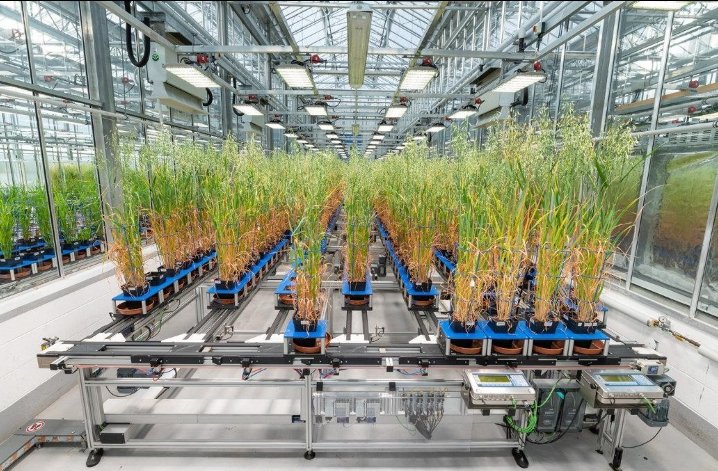
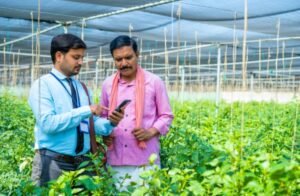
A national exchange would be most useful if regions had physical infrastructure capable of evaluating crop traits. Laboratories could analyse nutritional composition, oils, starches, fibres, pigments and other characteristics. Controlled environments could evaluate plant responses to different conditions. Field networks could test promising varieties under real agricultural conditions.
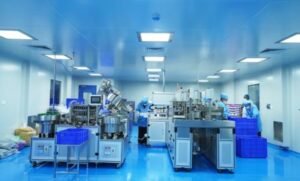
Processing laboratories could then determine whether biological improvements actually translate into industrial improvements.
This is essential because a crop can look excellent in a laboratory and still perform poorly in a factory.
The fourth component would be digital provenance.
Every experimental variety could have a detailed record connecting its genetic material, field trials, environmental conditions and processing performance.
This would make it possible to understand how a biological characteristic behaves across locations and seasons.
Over time, the country could build an enormous biological knowledge graph.
A researcher could query relationships between genetic markers, crop traits, environmental conditions and processing outcomes. A processor could discover varieties that have historically performed well for a particular application. A farmer cooperative could identify varieties suitable for local conditions and contracted markets.
Such a system would create value even before a new variety is commercially released.
The fifth component would be a market for future biological capabilities.
Companies could announce long-term demand for particular agricultural characteristics. Research institutions could compete or collaborate to develop solutions. Funding could be directed toward promising biological opportunities.
This would introduce an unusual financial mechanism into agricultural research.
Instead of funding research only because a crop is currently important, capital could be allocated toward biological capabilities expected to become economically valuable.
A region might therefore invest in research around high-performance plant fibres before a major biomaterials industry exists. Another region could develop varieties optimized for fermentation feedstocks before a large-scale fermentation economy develops.
Agricultural policy would become anticipatory.
The government could identify strategic biological capabilities that may support future industries and create research infrastructure before commercial demand becomes enormous.
This could become particularly relevant as biotechnology, synthetic biology and advanced food processing converge.
Future food systems may require specialized proteins, enzymes, fibres, oils, pigments and other biological ingredients. Some of these may come from plants, algae, fungi or microorganisms.
The agricultural sector could become a much broader biological manufacturing platform.
However, governance would be critical.
A trait exchange should not become a mechanism through which powerful companies control farmers or genetic resources. Participation should be transparent. Contracts should be understandable. Farmers should receive fair compensation for production and, where applicable, benefit-sharing arrangements should be respected.
Genetic resources also require responsible management. Biological materials may have ecological, cultural and legal significance. Research involving advanced biotechnology requires appropriate scientific and regulatory oversight.
The objective should be to create an innovation system, not a centralized biological command system.
There is also a major opportunity for small companies.
A startup should not need to own thousands of acres or a sophisticated agricultural research campus to develop a new food product. Through a shared biological infrastructure, it could search for suitable crop varieties, access research facilities, contract field trials and work with processors.
This could lower the barriers to biological entrepreneurship.
A small food company might discover an unusual local variety with valuable processing properties. Instead of remaining a regional curiosity, that variety could enter a structured research and commercialization pathway.
The same could happen with traditional agricultural materials that have been overlooked because they were never evaluated using modern analytical tools.
Machine learning could be especially useful here.
It could search historical agricultural datasets for unusual combinations of traits. A crop that has mediocre yield but exceptional biochemical characteristics might become valuable for a specialized industrial application.
The system could therefore expand the definition of agricultural productivity.
Productivity would no longer mean simply kilograms produced per hectare.
It could include the amount of valuable biological functionality produced per hectare.
That is a profound change.
A smaller farm producing a highly specialized biological input could potentially generate more economic value than a much larger farm producing an undifferentiated commodity.
The ultimate vision is an agricultural economy in which genetics, computation, biotechnology and processing operate as one continuous innovation system.
Industry identifies future biological needs. Digital systems translate those needs into measurable traits. Researchers search genetic diversity. Machine learning identifies promising combinations. Breeders and biotechnologists develop candidate varieties. Farmers test and produce them. Processing facilities measure industrial performance. The resulting data returns to the system.
The agricultural economy becomes capable of learning continuously.
Instead of asking agriculture to respond to whatever industries currently demand, society could begin deliberately developing biological capabilities for industries that are likely to emerge.
That would make crop genetics more than an agricultural research activity.
It would become a form of long-term industrial infrastructure, capable of discovering and developing the biological raw materials of the next generation of food, materials and manufacturing industries.