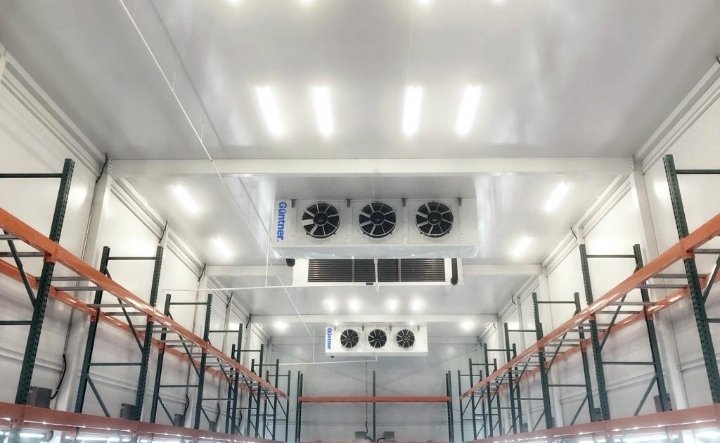
Cold-storage facilities are usually treated as electricity consumers that must maintain low temperatures continuously. However, refrigeration systems have a degree of operational flexibility because stored products and insulated rooms can retain cooling for limited periods. With appropriate engineering controls, this flexibility can help reduce electricity costs and support a more efficient power grid.
The emerging business opportunity is to coordinate refrigeration across multiple warehouses, seafood processors, food distributors and agricultural storage facilities. Instead of each facility operating independently, a digital platform could manage suitable cooling loads according to electricity prices, renewable-energy availability and storage requirements.
Industry 4.0 technologies provide the foundation for this approach. Smart meters can monitor electricity consumption, while temperature sensors track conditions inside storage rooms. Artificial intelligence can forecast cooling demand, solar generation and electricity prices, recommending when refrigeration equipment should operate more intensively or temporarily reduce its load. Digital twins can simulate operating scenarios to estimate potential savings without compromising product quality.
For example, a facility with adequate thermal capacity might increase cooling during periods of abundant solar generation and reduce compressor demand briefly during an expensive peak-price period. Such adjustments must remain within validated temperature limits and account for product characteristics, equipment constraints and recovery requirements. Not every cold room will have the same flexibility.
A specialist energy-management company could aggregate flexibility across many facilities and sell monitoring, optimisation and demand-response services. Depending on local electricity-market rules and utility programmes, the company might also participate in approved demand-response arrangements or provide flexibility services through an authorised aggregator. Revenue could come from subscriptions, shared energy savings and eligible grid-service payments.
Kerala offers a potential testing ground for this model because refrigeration is important to fisheries, food distribution and agricultural supply chains. A pilot could connect several facilities within one industrial cluster, install appropriate metering and monitoring systems, and establish baseline electricity consumption. The first objective would be to demonstrate reliable energy savings while maintaining required storage conditions.
Implementation requires careful coordination with electricity suppliers, facility operators and relevant regulators. The platform would need cybersecurity controls, reliable communications, fail-safe temperature limits and clear responsibility for product quality. Any grid-service revenue would depend on actual market access and applicable regulations rather than simply installing smart controls.
The larger opportunity is to transform cold storage from a passive electricity load into a digitally coordinated energy resource. By combining thermal storage, renewable-energy forecasting, intelligent refrigeration and demand management, distributed cold-chain operators could reduce costs and contribute to a more flexible electricity system without building new refrigeration capacity solely for that purpose.