Water is one of the most critical public services provided by governments. Every day, millions of households, industries, hospitals, schools, and businesses depend on uninterrupted access to clean water. Yet across India, water utilities continue to face challenges such as leakage, uneven supply, aging infrastructure, poor billing systems, groundwater depletion, and fragmented data. While investments have largely focused on expanding physical infrastructure, the next stage of reform should prioritize digital governance that connects every aspect of the water ecosystem through a single national platform.
A national digital governance platform for water utilities would integrate municipalities, state water authorities, treatment plants, distribution networks, consumers, regulators, and maintenance agencies. Instead of operating independently with different software systems and manual processes, every stakeholder would contribute to and benefit from a common digital infrastructure. Such a platform would improve transparency, accountability, and service delivery across urban and rural India.
One of the greatest challenges in water management is the lack of real time information. Many utilities discover pipeline leaks only after significant water has already been lost. Pressure variations often remain unnoticed until consumers report service disruptions. Water quality monitoring may occur only at scheduled intervals, leaving authorities unaware of emerging contamination risks.
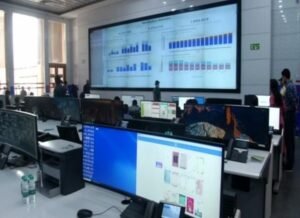
Modern sensors installed throughout treatment plants and distribution networks can continuously monitor pressure, flow rates, water quality, reservoir levels, and equipment performance. These sensors would transmit information to a centralized governance platform where officials can monitor conditions across entire cities or districts. Early detection allows maintenance teams to respond before minor issues become major failures.
Leakage remains one of the largest sources of water loss. In many cities, a substantial percentage of treated water never reaches consumers because of aging pipelines, illegal connections, or damaged infrastructure. Artificial intelligence can analyze sensor data to identify abnormal flow patterns that indicate leaks. Maintenance crews can receive precise locations, reducing inspection time and minimizing water losses.
Digital governance also strengthens financial sustainability. Many water utilities struggle with incomplete customer records, manual billing systems, delayed payments, and inaccurate consumption estimates. Smart water meters connected to the national platform would automatically record usage, generate bills, and detect unusual consumption patterns. Consumers could access their water usage through mobile applications, encouraging conservation while improving transparency.
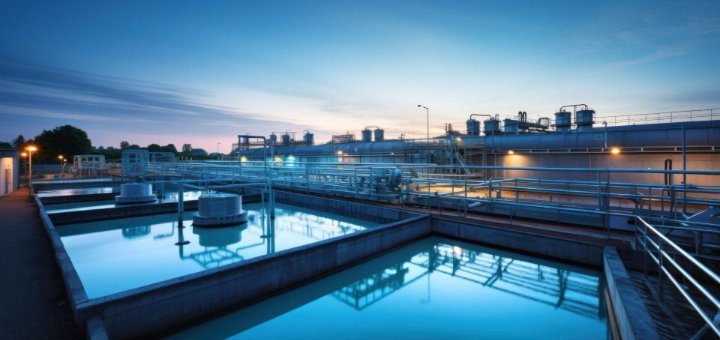
Water quality monitoring becomes significantly more reliable through digital systems. Treatment plants can continuously measure parameters such as pH, turbidity, chlorine concentration, and microbial indicators. If measurements exceed acceptable limits, automated alerts would notify engineers and public health officials immediately. This rapid response capability protects public health while increasing public confidence in municipal water supplies.
A unified governance platform also supports long term infrastructure planning. Every repair, equipment replacement, pipeline failure, and maintenance activity generates valuable information. Over time, this historical database allows authorities to identify assets approaching the end of their operational life. Instead of waiting for failures, governments can prioritize preventive investments based on actual performance data.
Climate change has made water management increasingly complex. Extreme rainfall, prolonged droughts, and changing groundwater conditions require adaptive decision making. Digital platforms can integrate weather forecasts, reservoir levels, groundwater monitoring, river flows, and consumption trends into predictive models. Authorities would gain several days or weeks of advance warning before potential shortages or flooding events, enabling more effective planning.
Citizen participation represents another important feature of digital governance. Mobile applications can allow residents to report leaks, illegal connections, contaminated water, damaged pipelines, or service interruptions. These reports would enter a centralized workflow where officials assign maintenance teams, monitor progress, and communicate updates to citizens. Such transparency improves trust between utilities and the communities they serve.
Industrial water users can also benefit from integrated digital governance. Large industries often consume significant quantities of water while generating wastewater requiring treatment. Digital monitoring enables regulators to verify compliance with discharge standards while encouraging industries to improve water recycling and efficiency. Shared data reduces administrative burdens while strengthening environmental protection.
The platform should also integrate with other public infrastructure systems. Road construction projects, electricity distribution, telecommunications, and gas pipelines frequently intersect with water infrastructure. Coordinated digital planning reduces accidental pipeline damage during excavation while improving infrastructure maintenance across sectors.
Cybersecurity will be essential because water infrastructure forms part of the nation’s critical public assets. Strong encryption, secure authentication, continuous monitoring, and resilient backup systems must be incorporated into every component of the digital architecture. Protecting operational technology becomes just as important as protecting physical infrastructure.
India has already demonstrated its ability to build large scale digital public infrastructure in areas such as payments and identity. Applying similar principles to water governance can transform one of the country’s most essential public services. A national digital governance platform would improve operational efficiency, strengthen accountability, reduce water losses, enhance public health, and support sustainable resource management.
As India’s cities continue to expand and climate pressures intensify, water governance must evolve beyond traditional administrative systems. By embracing digital infrastructure, artificial intelligence, and integrated data platforms, India can create a resilient water management system capable of meeting the needs of future generations while ensuring that one of humanity’s oldest public services remains reliable, transparent, and sustainable.