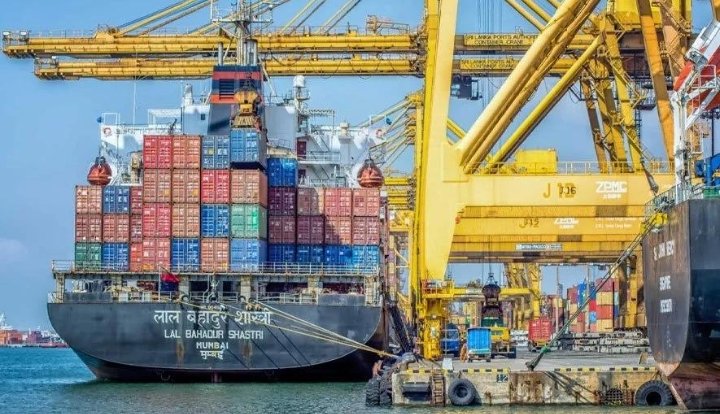
India’s export strategy has traditionally focused on physical products. Cars, medicines, textiles, chemicals, machinery and agricultural goods are important parts of the country’s international trade.
But an overlooked opportunity lies between products and services.
India could export industrial capability itself.
A manufacturer in Africa or Southeast Asia may not need to purchase an entire factory from India. It may need help designing a production line, sourcing machinery, identifying suppliers, installing equipment, training workers and maintaining the system.
Indian companies could provide all of this as one integrated service.
This would create a different kind of export business.
Instead of asking what product India can sell, the question becomes what industrial problem India can solve.
India already has companies with experience in engineering, fabrication, automation, software, project management, quality control and industrial procurement. These capabilities are spread across thousands of businesses.
The opportunity is to combine them.
Imagine an Indian consortium helping establish a food-processing plant in Africa. One company supplies machinery. Another designs the factory. Another provides automation. Another supplies packaging equipment. Another trains workers. An Indian financial institution helps structure the purchase.
The foreign customer receives an operational industrial system rather than a collection of unrelated products.
This model could be particularly useful for emerging economies that are trying to industrialise but lack complete domestic supply chains.
India has an advantage because it understands many of the constraints faced by developing markets. Indian companies have experience operating in environments where infrastructure, financing, labour skills and supply chains can be imperfect.
That experience itself has export value.
India could develop specialised industrial solution companies focused on sectors such as food processing, textiles, pharmaceuticals, agricultural machinery, renewable energy, water treatment and light manufacturing.
These companies would function almost like industrial general contractors.
They would assemble Indian capabilities and deliver them overseas.
The revenue opportunity would extend beyond the initial project. Maintenance contracts, spare parts, software, training, upgrades and technical consulting could create long-term relationships.
This would also help smaller Indian manufacturers enter international markets.
A small machinery company may struggle to establish a foreign sales network on its own. As part of an integrated Indian industrial consortium, however, its products could become part of a much larger international project.
India has spent years trying to become the factory of the world.
Perhaps there is another possibility.
India could become the engineering partner of the developing world.
The next generation of Indian exports may not be a single product packed into a container.
It could be an entire solution that allows another country to manufacture, process, build or operate something more efficiently.
That is a much deeper form of trade.
India would not simply export what it makes.
It would export what it knows how to make possible.