Agriculture in monsoon climate regions depends heavily on seasonal rainfall. A successful monsoon can produce abundant harvests, while irregular rainfall, delayed monsoons, or excessive precipitation can significantly reduce agricultural productivity. Traditional irrigation practices often rely on fixed schedules or farmers’ experience rather than real time environmental data. As climate variability increases, this approach becomes less efficient and frequently results in water wastage, crop stress, nutrient loss, and unnecessary energy consumption. Industry 4.0 offers an intelligent solution by transforming irrigation systems into connected, automated, and predictive agricultural infrastructure.
Industry 4.0 integrates artificial intelligence, the Internet of Things, cloud computing, robotics, digital twins, satellite technology, and advanced analytics into industrial operations. In agriculture, these technologies enable irrigation systems to respond dynamically to changing weather, soil conditions, and crop requirements.
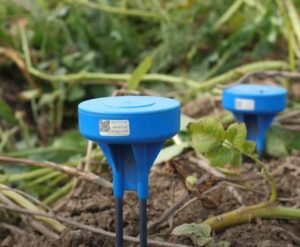
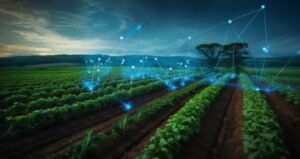
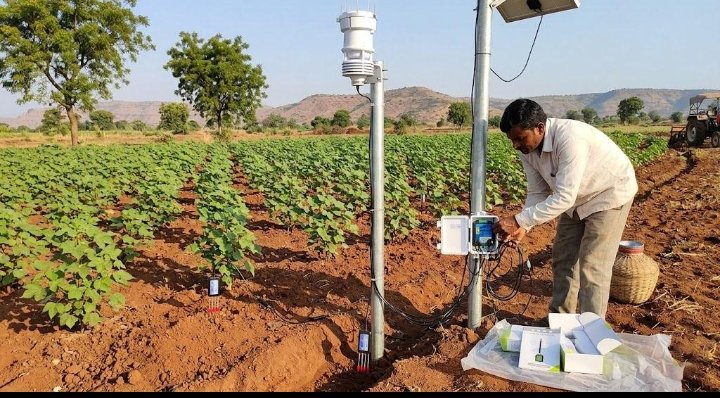
The foundation of a smart irrigation system is an extensive network of IoT sensors distributed throughout agricultural fields. Soil moisture sensors measure the amount of water available around plant roots. Temperature sensors monitor environmental conditions affecting crop growth. Humidity sensors evaluate atmospheric moisture, while rainfall sensors record precipitation throughout the growing season. Additional sensors measure soil salinity, nutrient availability, groundwater levels, and water pressure within irrigation pipelines.
These sensors continuously transmit information to cloud platforms where artificial intelligence analyses environmental conditions. Machine learning models combine live sensor data with weather forecasts, satellite observations, historical rainfall records, crop growth stages, and soil characteristics. The system calculates exactly how much irrigation each field requires and determines the optimal time for watering.
Artificial intelligence helps farmers avoid unnecessary irrigation before expected rainfall. If weather forecasts predict significant precipitation within the next several hours, irrigation schedules are automatically adjusted. This conserves water, reduces pumping costs, and prevents nutrient leaching caused by excessive soil moisture.
Digital twin technology creates virtual models of farms, irrigation networks, reservoirs, canals, pumps, and agricultural fields. Farmers and irrigation authorities can simulate different rainfall scenarios to evaluate water availability, irrigation efficiency, and crop performance under changing climate conditions. Infrastructure improvements can be tested digitally before construction begins.
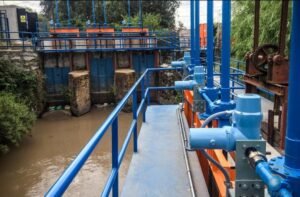
Automation further improves irrigation efficiency. Intelligent control systems automatically open and close irrigation valves according to recommendations generated by artificial intelligence. Different fields receive different amounts of water depending on soil type, crop variety, and local weather conditions. Human intervention is required only for supervision and strategic decision making.
Satellite technology provides additional insights into crop health. Multispectral satellite imagery identifies variations in plant growth, water stress, vegetation density, and soil moisture across large agricultural regions. Artificial intelligence combines satellite information with ground based sensors to identify irrigation problems before visible crop damage appears.
Drone technology strengthens precision agriculture. Drones equipped with multispectral cameras inspect fields after rainfall, identifying waterlogged areas, drainage problems, irrigation leaks, and uneven crop development. Artificial intelligence analyses these images to recommend localized irrigation adjustments rather than treating the entire farm uniformly.
Predictive maintenance reduces irrigation system failures. Pumps, motors, valves, pipelines, and filtration systems are continuously monitored using vibration sensors, pressure sensors, electrical current measurements, and temperature sensors. Artificial intelligence detects early signs of wear and schedules maintenance before equipment breaks down during critical growing periods.
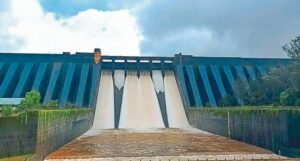
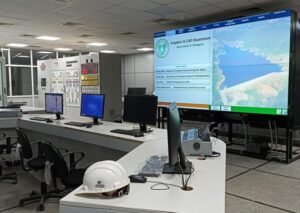
Cloud computing enables collaboration among farmers, irrigation departments, weather agencies, agricultural researchers, and water management authorities. Shared digital platforms provide real time information about water availability, reservoir levels, irrigation demand, and rainfall forecasts, supporting coordinated water allocation across agricultural regions.
Edge computing improves operational reliability in rural areas where internet connectivity may be limited. Local controllers installed near irrigation equipment continue processing sensor data and controlling valves even when communication with cloud servers is temporarily interrupted.
Renewable energy integration further enhances sustainability. Solar powered irrigation pumps combined with intelligent energy management systems reduce dependence on grid electricity and diesel generators. Artificial intelligence schedules irrigation when solar energy production is highest, lowering operating costs while reducing carbon emissions.
India has one of the world’s largest irrigation systems, supporting millions of farmers across diverse climatic zones. Monsoon variability creates significant challenges for water management, particularly in states where agriculture depends on both rainfall and irrigation. Smart irrigation systems would improve water use efficiency while increasing crop productivity and reducing production costs.
Economic benefits are substantial. Farmers spend less on electricity, diesel fuel, and water while achieving higher yields through more precise irrigation. Reduced water consumption also lowers pressure on groundwater resources and extends the availability of irrigation supplies during dry periods.
Environmental benefits include reduced groundwater extraction, lower energy consumption, improved soil health, decreased fertilizer runoff, and better protection of nearby rivers and wetlands. Efficient irrigation also supports climate adaptation by improving agricultural resilience during unpredictable monsoon seasons.
Several implementation challenges remain. Initial investment in sensors, communication infrastructure, cloud platforms, and automated irrigation equipment can be significant for small farmers. Artificial intelligence models require reliable environmental data and continuous improvement. Farmer training and technical support are essential to ensure successful adoption.
Government support, agricultural cooperatives, and public private partnerships can accelerate deployment by reducing equipment costs and providing shared digital infrastructure. Demonstration farms and extension programs help farmers understand the practical benefits of Industry 4.0 technologies.
Industry 4.0 is transforming irrigation from a manually managed activity into an intelligent agricultural system capable of responding to changing environmental conditions in real time. By combining artificial intelligence, IoT sensors, digital twins, drones, satellite technology, cloud computing, and automation, farmers gain the ability to produce more food with fewer resources. As monsoon patterns become increasingly unpredictable, smart irrigation management will become a cornerstone of sustainable agriculture, strengthening food security while protecting precious water resources.