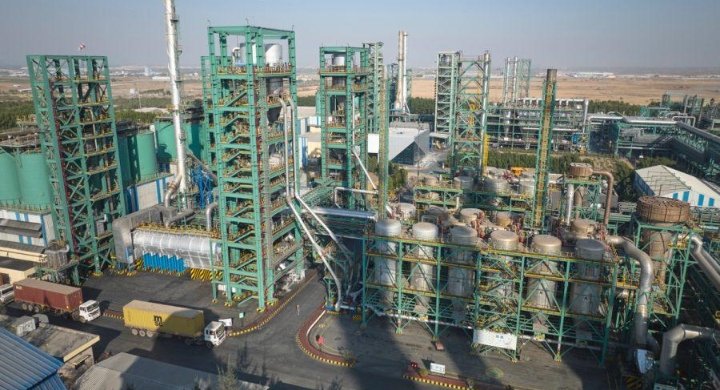
India is among the world’s major producers of carbon black, a material that plays a vital role in tyre manufacturing, rubber products, plastics, inks and coatings. More than two-thirds of carbon black production is used by the tyre industry, making it an essential part of India’s growing automotive manufacturing ecosystem. As vehicle production expands and exports increase, carbon black manufacturers face increasing pressure to improve quality, reduce energy consumption and strengthen environmental performance. Industry 4.0 provides a practical framework for achieving these objectives.
Carbon black is produced by the controlled combustion or thermal decomposition of heavy petroleum feedstocks inside high-temperature reactors. The manufacturing process requires precise management of combustion conditions, feedstock flow, air supply and cooling systems. Small changes in these parameters can significantly influence particle size, surface area and product quality.
Industry 4.0 enables continuous monitoring of these production variables through connected sensors distributed across reactors, pipelines, burners and processing equipment. Real-time information gives operators a complete understanding of manufacturing conditions, allowing rapid adjustments whenever deviations occur.
Artificial intelligence strengthens production optimization by analysing thousands of operating variables simultaneously. Historical production records combined with live sensor data allow machine learning systems to recommend operating conditions that maximize product consistency while minimizing energy consumption and raw material losses.
Maintaining uniform product quality is particularly important because tyre manufacturers require carbon black with highly consistent physical and chemical properties. Variations in particle size or structure directly affect tyre durability, rolling resistance and overall performance. Intelligent monitoring systems continuously evaluate production quality, allowing corrective action before defective batches are produced.
Digital twins create virtual models of carbon black manufacturing facilities. Engineers can simulate equipment upgrades, production changes and maintenance schedules without interrupting actual plant operations. This reduces technical risks while supporting continuous process improvement.
Predictive maintenance is another important Industry 4.0 application. High-temperature reactors, pumps, blowers, conveyors and cooling systems operate continuously under harsh industrial conditions. Connected monitoring systems detect abnormal vibration, temperature and pressure patterns that indicate equipment deterioration. Maintenance can then be planned before failures disrupt production.
Feedstock optimization also becomes more effective through digital technologies. Carbon black production depends on consistent feedstock quality. Smart monitoring systems evaluate incoming raw materials and automatically adjust operating conditions to maintain stable production despite variations in feedstock characteristics.
Energy efficiency is becoming increasingly important because carbon black manufacturing is energy intensive. Intelligent energy management platforms monitor fuel consumption, combustion efficiency and heat recovery systems throughout the plant. Artificial intelligence identifies opportunities to reduce energy use while maintaining production output.
Waste heat recovery offers another opportunity for digital optimization. Large amounts of thermal energy generated during manufacturing can be recovered for steam production or electricity generation. Smart monitoring ensures these recovery systems operate at maximum efficiency throughout changing production conditions.
Environmental performance has become a major priority for carbon black manufacturers. Industry 4.0 systems continuously monitor emissions, particulate matter and energy consumption while generating automated compliance reports. Real-time environmental monitoring enables manufacturers to respond quickly whenever operating conditions approach regulatory limits.
The tyre industry’s transition toward electric vehicles introduces additional quality requirements. Electric vehicle tyres demand materials that improve durability, reduce rolling resistance and enhance overall performance. Smart manufacturing systems help carbon black producers consistently meet these increasingly demanding specifications.
Supply chain integration also benefits from Industry 4.0. Production planning, inventory management, logistics and customer demand forecasts can operate within a unified digital platform. Better coordination reduces inventory costs while improving delivery reliability for tyre manufacturers.
Worker safety improves through connected industrial monitoring. Sensors continuously observe furnace conditions, gas concentrations and equipment performance. Automated warning systems notify operators immediately when abnormal operating conditions develop, allowing faster response to potential hazards.
Indian engineering companies have an opportunity to develop specialized automation platforms and industrial analytics software for carbon black production. Domestic technology solutions can address the unique operating requirements of Indian manufacturers while supporting the country’s industrial software ecosystem.
Engineering education must also evolve. Chemical and mechanical engineering students should receive training in industrial automation, artificial intelligence, industrial data analytics and digital manufacturing systems to prepare them for modern production environments.
Government initiatives supporting energy efficiency, industrial digitalization and advanced manufacturing can accelerate Industry 4.0 adoption across the carbon black sector. Collaborative programs involving research institutions, technology companies and manufacturers will strengthen long-term industrial competitiveness.
India’s carbon black industry already supports one of the world’s largest tyre manufacturing sectors. Modernizing production through Industry 4.0 can further improve efficiency, product quality and environmental sustainability while strengthening export competitiveness.
As global manufacturing moves toward intelligent production systems, data-driven decision making will become as important as chemical engineering expertise. Carbon black manufacturers that embrace connected technologies, predictive analytics and digital process optimization will be better positioned to meet the evolving demands of the automotive industry.
Industry 4.0 therefore represents a strategic opportunity for India’s carbon black industry to combine manufacturing excellence with digital innovation, creating smarter factories that support the country’s growing leadership in automotive and advanced materials manufacturing.