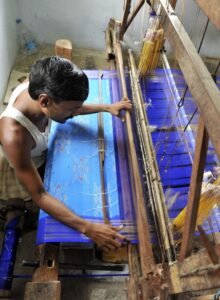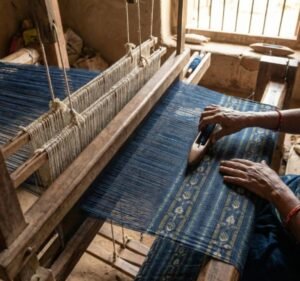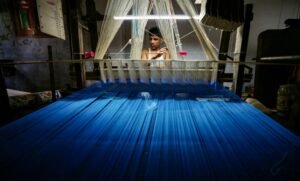
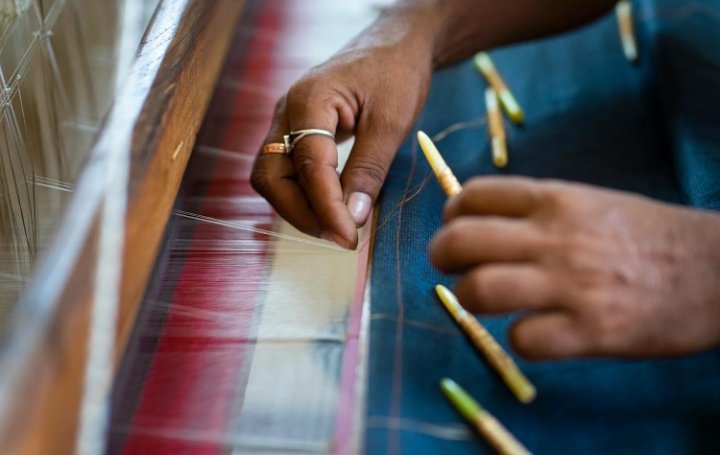
Chanderi has earned its place among India’s most distinguished handloom centres through centuries of craftsmanship. Its lightweight silk and cotton fabrics, elegant motifs, and refined weaving techniques have attracted patrons ranging from royal families to modern fashion designers. While the weaving tradition remains strong, the design ecosystem around Chanderi can benefit significantly from stronger digital infrastructure.
Traditionally, new designs spread slowly through personal interactions, exhibitions, traders, and occasional collaborations with designers. Today, digital infrastructure makes it possible to create an entirely different model. A digital design network could connect Chanderi weavers with textile institutes, fashion designers, universities, exporters, retailers, and research organizations across India.
Every approved design could be stored in a secure digital repository. Instead of relying on physical samples, weavers could access high-resolution design files, colour references, motif libraries, border patterns, and weaving specifications through cloud-based platforms. This reduces the time required to introduce new collections while maintaining consistency in production.
The platform could also preserve Chanderi’s historical heritage. Hundreds of traditional motifs inspired by nature, architecture, temples, and royal patronage could be digitally archived. Future generations of weavers would have permanent access to these cultural assets, reducing the risk of traditional designs disappearing over time.
Artificial intelligence can further enhance this ecosystem by analysing consumer preferences across different markets. Demand patterns from metropolitan cities, export destinations, and online marketplaces can help identify which colour combinations, motifs, and fabric types are gaining popularity. Designers can use these insights while still respecting Chanderi’s traditional identity.
Digital collaboration allows designers in Mumbai, Bengaluru, Delhi, London, or Tokyo to work directly with weaving societies without frequent travel. Design revisions, technical discussions, and production planning can all occur through secure online platforms. This accelerates innovation while reducing development costs.
Educational institutions also benefit from such a network. Students studying textile design can contribute fresh ideas while learning directly from experienced Chanderi artisans. These collaborations encourage innovation while ensuring that academic research remains connected to practical industry needs.
A digital design network also creates opportunities for intellectual property protection. New motifs and original collections can be documented with timestamps, ownership records, and licensing agreements. This encourages designers to collaborate confidently while protecting the interests of both creators and weavers.
Government agencies and textile development organizations can use the platform to organize digital competitions, design grants, and innovation challenges focused specifically on Chanderi. Winning concepts can move directly into commercial production through participating weaving cooperatives.
Exporters gain access to continuously updated collections rather than depending solely on seasonal visits to the weaving cluster. International buyers can review digital samples, request modifications, and place production orders more efficiently.
As India’s textile industry becomes increasingly connected through digital infrastructure, Chanderi has an opportunity to evolve beyond being simply a weaving centre. It can become a national hub for textile design innovation, where centuries-old craftsmanship is strengthened by cloud technology, digital collaboration, secure intellectual property management, and data-driven market insights. Such an approach preserves tradition while ensuring that Chanderi remains relevant in an increasingly competitive global textile economy.