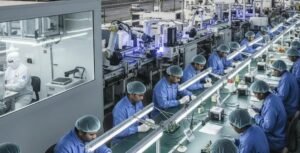
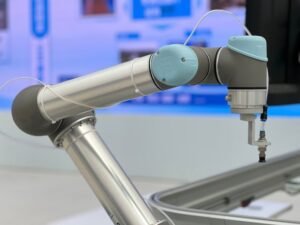
India is one of the world’s largest pharmaceutical manufacturers, supplying medicines to domestic and international markets. The country’s pharmaceutical industry has developed a strong reputation for producing affordable generic medicines while expanding into vaccines, biologics, specialty drugs, and advanced therapeutics. As global competition intensifies and regulatory expectations become increasingly stringent, Industry 4.0 technologies offer an opportunity to transform pharmaceutical manufacturing through AI-driven continuous production systems.
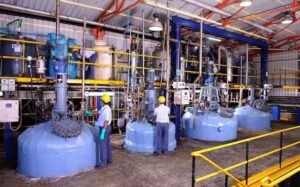
Traditional pharmaceutical manufacturing often follows batch production methods. Raw materials are processed in separate stages, quality testing occurs between batches, and production pauses while equipment is cleaned and prepared for the next cycle. Although reliable, this approach can lead to longer production times, higher inventory costs, and greater operational complexity.
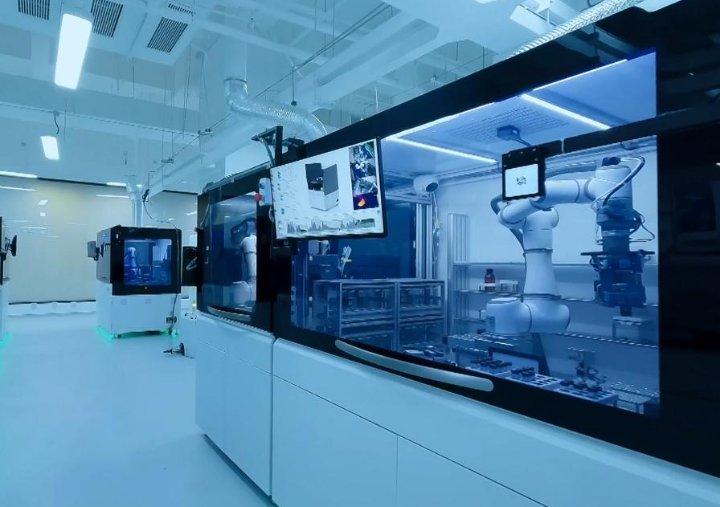
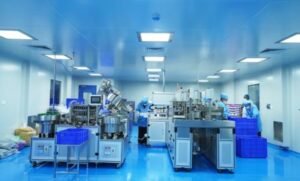
Continuous pharmaceutical manufacturing replaces batch processing with uninterrupted production. Raw materials enter one end of the production line while finished medicines emerge continuously from the other. Every stage is monitored by intelligent digital systems that maintain precise operating conditions throughout the manufacturing process.
Artificial intelligence acts as the central decision-making engine within these facilities. Thousands of sensors continuously measure temperature, pressure, humidity, mixing speed, particle size, chemical composition, and equipment performance. AI analyses this information in real time, making immediate adjustments whenever operating conditions begin to drift from optimal parameters.
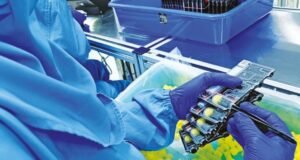
Machine vision systems play an important role in quality assurance. High-speed cameras inspect tablets, capsules, vials, syringes, and packaging throughout production. AI algorithms identify microscopic defects, colour variations, surface imperfections, incorrect filling levels, damaged packaging, and labelling errors with remarkable accuracy. Products that fail quality standards are automatically removed without interrupting production.
Digital twins further strengthen manufacturing efficiency. Every production line has a virtual counterpart that mirrors real-world operations continuously. Engineers can simulate process adjustments, equipment upgrades, or new formulations within the digital environment before implementing them in the physical factory. This reduces operational risks while accelerating innovation.
Predictive maintenance significantly improves factory reliability. Pharmaceutical equipment such as mixers, pumps, compressors, conveyors, reactors, filtration systems, and packaging machines continuously generate operational data. Artificial intelligence detects subtle performance changes that indicate developing mechanical problems. Maintenance can therefore be scheduled before equipment failures disrupt production.
Regulatory compliance becomes more efficient through digital automation. Pharmaceutical manufacturers operate under strict quality standards established by national and international regulatory agencies. Automated documentation records every process parameter, equipment adjustment, quality inspection, and production event. Digital records improve traceability while simplifying regulatory audits.
Energy efficiency represents another important advantage. Pharmaceutical manufacturing requires extensive heating, cooling, ventilation, and clean room operations. AI continuously analyses electricity consumption, equipment loading, and environmental controls to reduce energy usage while maintaining strict production standards.
Supply chain integration extends the benefits beyond factory operations. Production planning systems communicate directly with suppliers, warehouses, logistics providers, distributors, and healthcare institutions. Raw material deliveries, inventory levels, production schedules, and customer demand become synchronized through digital infrastructure, reducing delays and excess inventory.
Worker safety also improves within AI-enabled pharmaceutical facilities. Intelligent monitoring systems detect hazardous chemical leaks, abnormal equipment behaviour, air quality changes, and clean room contamination risks immediately. Automated responses help protect both employees and product quality.
Research and development teams benefit from continuous manufacturing data. Every production cycle generates valuable operational information that scientists can analyse to improve formulations, optimize manufacturing parameters, reduce waste, and accelerate the commercialization of new medicines.
India’s pharmaceutical exports can become even more competitive through Industry 4.0 adoption. International buyers increasingly expect consistent quality, full traceability, and highly reliable manufacturing processes. AI-driven continuous manufacturing demonstrates advanced technological capability while supporting compliance with global regulatory requirements.
Small and medium pharmaceutical manufacturers can also participate through cloud-based digital platforms. Instead of building expensive in-house computing infrastructure, companies can access artificial intelligence, production analytics, quality monitoring, and predictive maintenance services through secure industrial cloud environments.
Cybersecurity becomes a critical component of modern pharmaceutical manufacturing. Digital factories rely on interconnected production systems that must be protected against cyber threats. Secure industrial networks, encrypted communications, continuous monitoring, and robust access controls ensure uninterrupted operations while protecting sensitive manufacturing information.
India possesses strong expertise in pharmaceuticals, software engineering, artificial intelligence, automation, and industrial manufacturing. Bringing these strengths together through AI-driven continuous pharmaceutical manufacturing can position the country as a global leader in Industry 4.0. The result would be faster production, higher quality medicines, improved regulatory compliance, lower manufacturing costs, stronger export competitiveness, and a more resilient pharmaceutical sector prepared for the future of global healthcare.