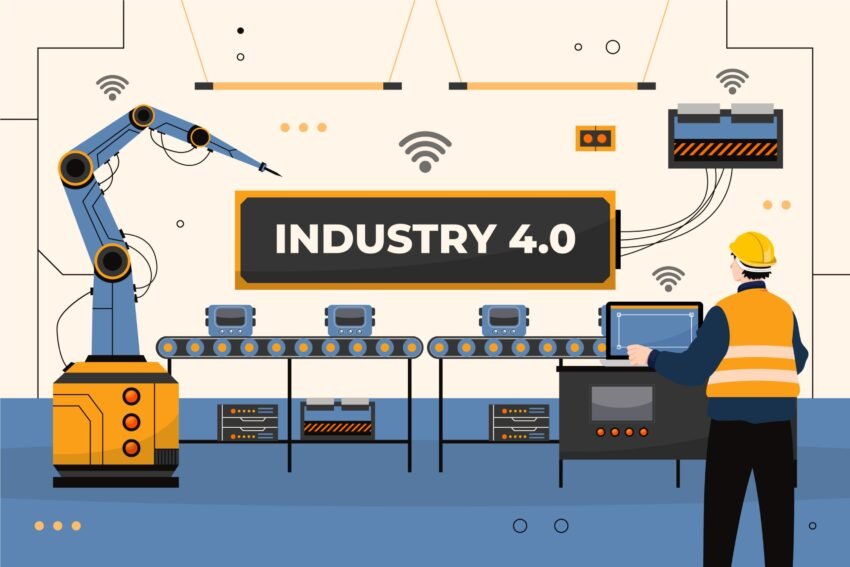
Industry 4.0 is no longer a vision for the future. It is rapidly becoming the global standard for manufacturing, logistics, and industrial competitiveness. Countries that adopt intelligent factories, automation, artificial intelligence, robotics, industrial Internet of Things, digital twins, and data driven production systems will define the next era of industrial growth. For India, embracing Industry 4.0 is not simply an opportunity. It is an urgent national priority.
India has set ambitious goals for manufacturing, exports, employment, and economic growth. Achieving these goals will require more than expanding factory capacity. It will require building factories that are smarter, faster, safer, and globally competitive. Industry 4.0 provides the technological foundation to achieve this transformation.
Global manufacturers increasingly expect supply chains to operate with real time visibility, predictive maintenance, automated quality control, and digital integration. Companies that fail to modernize risk losing contracts to competitors that can deliver higher quality products at lower costs with greater reliability. India cannot rely solely on low cost labour in an increasingly technology driven world.
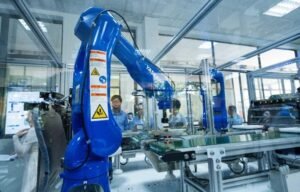
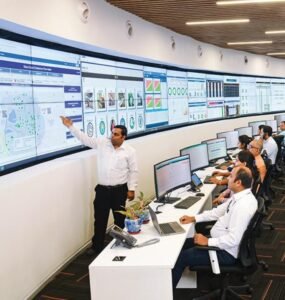
Artificial intelligence is transforming manufacturing by analysing production data, identifying defects, predicting equipment failures, and optimizing operations. Robotics is improving productivity while reducing repetitive and hazardous work. Industrial sensors provide continuous monitoring of machines, helping manufacturers reduce downtime and improve efficiency. These technologies are becoming essential for competing in international markets.
Industry 4.0 also supports India’s export ambitions. Buyers across the world increasingly demand consistent quality, traceability, environmental compliance, and digital documentation. Smart factories make it easier to meet these expectations while strengthening India’s reputation as a reliable manufacturing partner.
Small and medium enterprises must not be left behind. They form the backbone of India’s industrial economy and supply chains. Government support through incentives, technology centres, affordable digital solutions, and workforce training can help these businesses adopt Industry 4.0 technologies without facing overwhelming financial barriers.
Human capital remains central to industrial transformation. Engineers, technicians, machine operators, software developers, data analysts, and production managers will all require new skills to work alongside intelligent systems. Educational institutions, industrial training centres, and universities should update their curricula to prepare the next generation for advanced manufacturing.
Digital infrastructure is equally important. Reliable broadband connectivity, cloud computing, cybersecurity, industrial data platforms, and artificial intelligence computing resources enable factories to operate efficiently and securely. A national Industry 4.0 strategy should be closely integrated with India’s broader digital infrastructure strategy.
Sustainability is another important advantage. Smart factories optimize energy consumption, reduce waste, improve resource efficiency, and support cleaner production processes. These improvements strengthen both environmental performance and business competitiveness.
Industry 4.0 is also a matter of national resilience. Global disruptions have demonstrated the importance of strong domestic manufacturing capabilities in sectors such as electronics, healthcare, defence, semiconductors, pharmaceuticals, and critical technologies. Advanced manufacturing enables India to strengthen supply chains while reducing dependence on external sources.
Successful implementation requires collaboration between governments, industry, academia, technology providers, and research institutions. States should develop industrial innovation clusters that support advanced manufacturing through shared facilities, research partnerships, startup ecosystems, and workforce development programmes.
India has the talent, entrepreneurial spirit, and industrial base to become a global leader in advanced manufacturing. What is needed now is a coordinated national effort that accelerates the adoption of Industry 4.0 technologies across sectors and across states.
The next industrial revolution is already underway. Countries that move quickly will attract investment, generate high value employment, strengthen exports, and improve economic resilience. Those that delay risk falling behind. For India, Industry 4.0 is not simply about modernizing factories. It is about securing the country’s long term economic competitiveness, technological leadership, and industrial future.