District administration has long been the backbone of governance in India. While national and state governments formulate policies, it is at the district level that these policies are implemented and experienced by citizens. From disaster management and healthcare to education, agriculture, infrastructure and welfare programmes, district administrations influence nearly every aspect of daily life. As India advances towards a digitally connected future, transforming district administration through digital governance and real time data systems can significantly improve public service delivery and policy implementation.
The responsibilities of district administrations have expanded considerably over the past few decades. Population growth, urbanisation, technological change and rising citizen expectations have increased the complexity of governance. Traditional administrative methods that depend heavily on paperwork, periodic reporting and manual coordination are no longer sufficient to manage rapidly changing situations. Digital technologies provide an opportunity to make district governance more efficient, transparent and responsive.
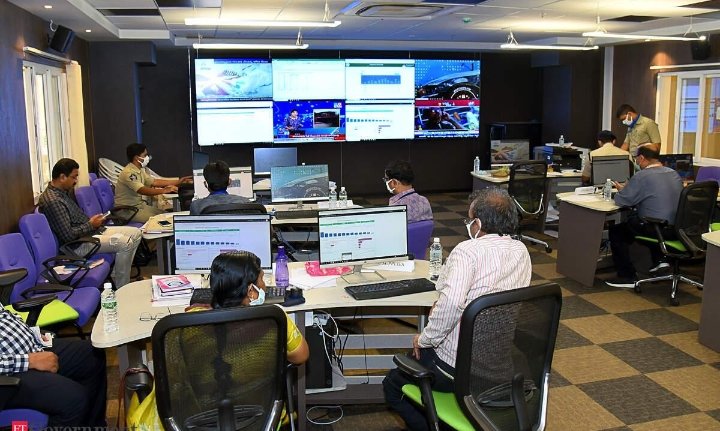
Real time governance begins with reliable information. Every district generates valuable data from hospitals, schools, police stations, revenue offices, agricultural departments, transport authorities, local governments and public utilities. Instead of existing in separate departmental databases, this information should be integrated into a unified district dashboard that provides administrators with a comprehensive view of local conditions.
Such a dashboard can display healthcare indicators, school attendance, rainfall, crop conditions, infrastructure projects, public grievances, road maintenance, water supply, electricity distribution and financial expenditure in real time. District collectors and departmental officers can identify emerging problems quickly and coordinate timely interventions before situations become critical.
Healthcare provides one of the strongest examples of the benefits of digital administration. Hospitals, primary health centres and community clinics can update patient statistics, medicine availability, disease surveillance and ambulance services through integrated digital platforms. Administrators gain a district wide view of healthcare delivery, allowing them to deploy medical staff and resources where they are needed most.
Education can also benefit significantly from digital monitoring. School attendance, teacher vacancies, examination results, infrastructure maintenance and student enrolment can all be tracked through integrated information systems. District education officers can identify underperforming schools, monitor improvement programmes and allocate resources more effectively.
Agriculture remains central to many districts across India. Digital platforms combining weather forecasts, satellite imagery, soil information, irrigation data and market prices allow district administrations to provide timely support to farmers. Crop diseases, drought conditions and flood risks can be identified early, improving agricultural planning and reducing economic losses.
Public grievance systems should become fully digital and transparent. Citizens should be able to register complaints through mobile applications, websites or local service centres while receiving regular updates on progress. Administrators can monitor response times, identify recurring issues and improve accountability across departments.
Infrastructure management also becomes more efficient through digital systems. Roads, bridges, schools, hospitals, water supply networks and public buildings can be monitored using geographic information systems and mobile inspection tools. Real time updates enable officials to prioritise repairs and allocate maintenance budgets more effectively.
Artificial intelligence can further strengthen district administration by identifying patterns that might otherwise remain unnoticed. AI systems can analyse healthcare trends, agricultural production, public grievances, financial expenditure and infrastructure performance to recommend priority actions. These analytical tools support administrators without replacing human judgment.
Revenue administration also stands to benefit from digital transformation. Land records, property registration, taxation and licensing processes become faster and more transparent through integrated online platforms. Digital records reduce administrative delays while improving legal certainty for citizens and businesses.
Disaster preparedness is another area where real time governance is particularly valuable. Flood monitoring, rainfall measurements, river levels, weather forecasts and emergency communication systems allow district administrations to coordinate rapid responses during natural disasters. Early warning systems supported by digital infrastructure can save lives and minimise economic damage.
Coordination among departments is equally important. Many public challenges involve multiple government agencies working together. Malnutrition, for example, may require coordination among health, education, women and child development, agriculture and local government departments. Shared digital platforms encourage collaborative decision making while reducing duplication of effort.
Financial management becomes more transparent when expenditure data is updated continuously. District officials can monitor budget utilisation, project progress and procurement activities through digital dashboards. Better financial visibility improves planning while reducing inefficiencies in public spending.
Rural development programmes also benefit from digital governance. Information regarding roads, drinking water, sanitation, housing, employment schemes and village infrastructure can be tracked across every panchayat within the district. Decision makers can identify areas requiring additional support while monitoring programme outcomes more accurately.
Cybersecurity should remain a core component of digital district administration. Government databases contain sensitive personal and administrative information that must be protected against cyber threats. Strong access controls, encryption, regular security audits and staff training help maintain public confidence in digital governance systems.
Capacity building is equally essential. District officials, departmental staff and local government employees should receive continuous training in digital technologies, data interpretation and artificial intelligence. Technology delivers meaningful improvements only when supported by capable and confident public servants.
Digital inclusion should remain a guiding principle throughout this transformation. Citizens living in rural areas, elderly individuals and people with limited digital literacy should continue to have access to government services through assisted service centres, multilingual platforms and community support systems.
District administrations should also encourage greater citizen participation. Public dashboards displaying project status, infrastructure development, environmental indicators and service delivery performance improve transparency while strengthening trust between governments and communities.
India’s digital public infrastructure already provides a strong foundation for modernising governance at the district level. By integrating real time information, artificial intelligence and citizen centred digital services into everyday administration, districts can become more responsive, efficient and accountable.
The future of governance will not be determined solely by policies formulated in capitals but by how effectively they are implemented in districts across the country. Strengthening district administration through digital governance and real time data systems will improve public services, accelerate development and ensure that the benefits of technology reach every community. A digitally empowered district administration can become one of the most important building blocks of a stronger, more efficient and more inclusive India.