
India’s civil services have played a central role in nation building since Independence. Civil servants have guided the country through economic reforms, infrastructure expansion, public health campaigns, disaster management and digital transformation. As India enters the age of artificial intelligence, the role of the civil service is once again evolving. The future will require public administrators who are not only knowledgeable about law and public administration but also comfortable with data, digital technologies and evidence based decision making.
Artificial intelligence is transforming governments around the world. Routine administrative work is becoming automated, digital platforms are improving service delivery and predictive analytics are helping governments anticipate future challenges. These technologies do not reduce the importance of civil servants. Instead, they redefine their responsibilities by shifting attention from routine processing towards strategic leadership, policy design and public engagement.
The traditional strengths of India’s civil services remain highly relevant. Integrity, constitutional values, administrative experience and commitment to public welfare cannot be replaced by technology. However, future administrators will also require the ability to understand digital systems, interpret complex datasets and work alongside intelligent software tools.
Training should become the first priority. Civil service education should expand beyond public administration, economics and law to include artificial intelligence, cybersecurity, data analytics, cloud computing, digital governance and systems thinking. Officers entering public service should understand both the opportunities and limitations of emerging technologies.
Continuous learning will become essential throughout an officer’s career. Technology evolves rapidly, making periodic training just as important as initial education. Mid career programmes should regularly introduce officers to advances in artificial intelligence, digital public infrastructure, automation and international governance practices.
Artificial intelligence can significantly improve administrative efficiency. Government departments process millions of applications every year relating to licences, pensions, welfare schemes, taxation, land records and public services. AI assisted systems can verify documents, identify missing information and process routine requests much faster than conventional methods. This reduces waiting times while allowing officers to focus on complex cases requiring human judgment.
Policy development also stands to benefit. Artificial intelligence can analyse economic trends, demographic changes, agricultural production, healthcare statistics and infrastructure performance to support informed policymaking. Civil servants equipped with analytical tools can evaluate multiple policy options before implementation, improving both efficiency and effectiveness.
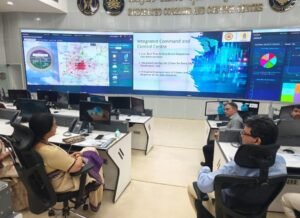
District administration will become increasingly data driven. District collectors may soon rely on integrated digital dashboards displaying healthcare performance, educational outcomes, agricultural conditions, infrastructure projects, financial expenditure and public grievances in real time. Access to such information enables quicker responses and better coordination across departments.
Citizen engagement is also changing. Digital platforms allow people to submit grievances, access services and communicate with government more easily than ever before. Civil servants must therefore develop stronger communication skills while ensuring that digital governance remains inclusive for citizens with limited technological access.
Cybersecurity should become a core administrative responsibility. Government departments manage sensitive personal and financial information that must be protected from cyber threats. Senior administrators should understand cyber risks, data governance and digital resilience to ensure the continuity of essential public services.
Ethics will become even more important in the AI era. Artificial intelligence can support decision making, but it should never replace accountability. Public officials remain responsible for ensuring that government decisions are fair, transparent and consistent with constitutional principles. Human oversight should always guide systems affecting legal rights and public welfare.
Collaboration across disciplines will define future governance. Civil servants will increasingly work alongside engineers, economists, healthcare professionals, environmental scientists, cybersecurity experts and data analysts. Administrative leadership will depend on the ability to coordinate diverse teams working towards common public objectives.
Evidence based governance should become standard practice. Rather than relying solely on historical experience, policymakers can use real time information to evaluate programme performance and refine public policies. Officers capable of interpreting evidence will be better equipped to deliver measurable improvements in governance.
Innovation should also be encouraged within government institutions. Officers should have opportunities to test new ideas through pilot projects before expanding successful initiatives across districts or states. A culture that rewards responsible experimentation can accelerate improvements in public administration.
The recruitment process itself may gradually evolve. Alongside traditional assessments of general knowledge and analytical ability, future civil servants may require stronger exposure to technology, quantitative reasoning, digital management and interdisciplinary problem solving. Such changes would reflect the increasingly complex nature of governance.
Leadership skills will remain indispensable. Artificial intelligence can process information quickly, but it cannot inspire public confidence, negotiate between competing interests or make ethical judgments during crises. Effective leadership, empathy and communication will continue to distinguish outstanding public servants.
Rural administration also deserves attention. While digital platforms expand rapidly, many citizens still require assisted access to government services. Civil servants must ensure that technological progress reduces inequalities rather than creating new barriers. Digital inclusion should remain a guiding principle of governance.
India’s digital public infrastructure provides a strong foundation for this transformation. Digital identity, electronic payments, cloud based governance platforms and expanding broadband connectivity enable public institutions to operate more efficiently than ever before. The next step is ensuring that the civil service possesses the knowledge and skills needed to maximise these capabilities.
International cooperation offers additional learning opportunities. Many countries are experimenting with artificial intelligence in taxation, healthcare, transport, environmental management and public finance. Indian civil servants can adapt successful international practices while ensuring that solutions remain appropriate for India’s constitutional framework and social diversity.
Public trust must remain the ultimate objective. Technology should make governance more transparent, responsive and accountable. Citizens should experience faster services, clearer communication and better policy outcomes without compromising privacy or fairness.
India’s civil services have repeatedly adapted to changing national priorities throughout history. The transition from paper based administration to digital governance demonstrated the ability of public institutions to embrace innovation while preserving constitutional values. The emergence of artificial intelligence represents the next stage of this evolution.
Preparing the civil services for the AI era is not simply about introducing new technologies. It is about building a professional, ethical and technologically capable administrative system that combines human wisdom with digital intelligence. By investing in training, innovation, cybersecurity and evidence based governance, India can create a civil service that is fully prepared to lead the nation through the challenges and opportunities of the twenty first century.