India has entered a new era of governance where technology is becoming as important as legislation and administration. Over the past decade, digital platforms have transformed how citizens access government services, make payments, receive benefits and interact with public institutions. The next stage of this transformation will not simply involve putting more services online. It will involve using artificial intelligence, data analytics and digital platforms to make governance more responsive, transparent and efficient.
Governments generate enormous amounts of information every day. Data flows from healthcare systems, educational institutions, transport networks, tax administration, agriculture, public distribution systems, law enforcement agencies and local governments. When this information is properly integrated and analysed, it can provide valuable insights that improve policymaking and public service delivery.
Data driven governance allows governments to move from reactive administration to proactive governance. Instead of responding only after problems emerge, public institutions can identify trends early, anticipate future challenges and allocate resources more effectively. Artificial intelligence makes this possible by analysing large datasets far more quickly than traditional methods.
Healthcare offers one of the strongest examples of data driven governance. Integrated digital health records combined with AI can help identify disease outbreaks, predict hospital resource requirements and improve healthcare planning. Governments can monitor vaccination coverage, maternal health indicators and disease patterns in real time, allowing faster interventions where they are most needed.
Education can benefit in similar ways. Digital learning platforms generate information about student performance, attendance and learning outcomes. Data analysis can identify schools requiring additional support, evaluate teaching methods and improve resource allocation. Rather than relying solely on periodic inspections, education departments can monitor performance continuously through digital systems.
Agriculture remains another sector where digital governance can create significant value. Satellite imagery, weather data, soil information and crop analytics provide governments with detailed insights into agricultural conditions across the country. Farmers can receive timely advisory services while policymakers gain better information for planning procurement, irrigation and disaster relief.
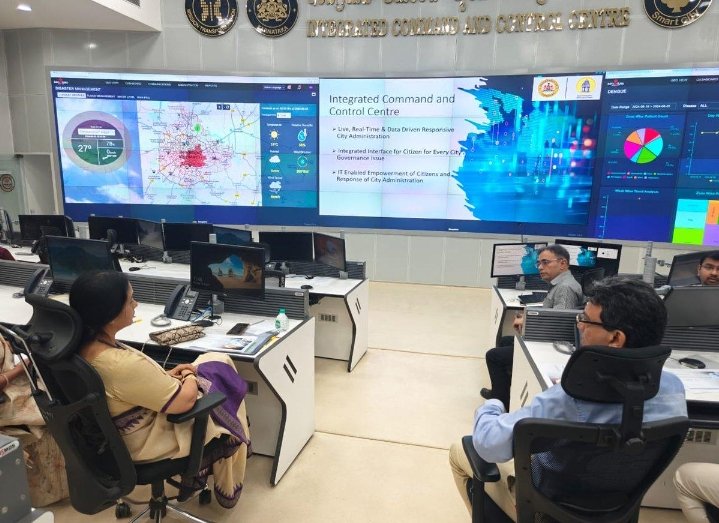
Urban governance is becoming increasingly dependent on digital technologies. Traffic management, waste collection, water distribution, public transportation and environmental monitoring all generate real time information. Smart city platforms allow administrators to monitor urban systems continuously and respond more quickly to emerging issues. Citizens also benefit from faster services and improved quality of life.
Artificial intelligence can also improve the efficiency of government administration. Routine tasks such as document verification, application processing, record management and citizen inquiries can be partially automated, reducing processing times and allowing public officials to focus on more complex responsibilities. Automation should enhance human decision making rather than replace it, particularly in matters involving legal rights and public welfare.
Transparency represents another important advantage of digital governance. Online dashboards displaying project progress, expenditure, infrastructure development and service delivery improve public accountability. Citizens gain greater visibility into how public resources are being utilised, strengthening confidence in government institutions.
Public finance management can also become more efficient through data analytics. Governments can monitor expenditure patterns, identify inefficiencies and evaluate programme outcomes more accurately. Evidence based budgeting ensures that limited financial resources are directed toward programmes delivering measurable public benefits.
Disaster management provides another compelling application. Artificial intelligence can analyse weather forecasts, river levels, satellite imagery and historical disaster patterns to improve preparedness. Early warning systems supported by real time data help authorities evacuate vulnerable communities and coordinate emergency responses more effectively.
Law enforcement agencies can use digital platforms to improve operational efficiency while respecting legal safeguards and civil liberties. Crime pattern analysis, emergency response coordination and resource deployment become more effective when supported by reliable data. Technology should strengthen professional policing while maintaining transparency and accountability.
One of the greatest strengths of data driven governance lies in interdepartmental coordination. Government departments often operate independently despite addressing interconnected issues. Shared digital platforms encourage collaboration among healthcare, education, agriculture, transport, finance and local government agencies, resulting in more integrated policymaking.
However, digital governance must always protect citizens’ privacy. Personal information should be collected only when necessary, stored securely and used responsibly. Strong legal frameworks governing data protection, cybersecurity and transparency are essential for maintaining public trust. Citizens should understand how their information is being used and retain confidence that it will not be misused.
Cybersecurity must therefore remain a central priority. As governments become increasingly dependent on digital platforms, protecting public systems from cyber threats becomes essential for national security and service continuity. Regular security audits, encryption, access controls and incident response capabilities should be integrated into every digital initiative.
Capacity building within government institutions is equally important. Public officials should receive training in digital technologies, artificial intelligence, data interpretation and evidence based policymaking. Technology is most effective when combined with skilled professionals capable of interpreting information and making informed decisions.
Digital inclusion must also remain a guiding principle. Technology should make government services more accessible to every citizen regardless of geography, language, income or educational background. Services should be available through multiple channels, including mobile applications, local service centres and multilingual digital platforms.
India’s existing digital public infrastructure provides a strong foundation for future innovation. Digital identity systems, payment platforms, electronic document services and expanding broadband connectivity create opportunities for more integrated governance across every level of government. Building upon these achievements requires continued investment in interoperability, open standards and secure digital ecosystems.
Artificial intelligence should also support policy evaluation. Governments often launch ambitious programmes but lack timely information about their effectiveness. AI powered analytics can measure programme outcomes continuously, helping policymakers refine initiatives based on evidence rather than assumptions. This approach encourages continuous improvement while ensuring better value for public expenditure.
The future of governance will depend increasingly on the intelligent use of information. Nations capable of combining digital infrastructure, artificial intelligence and responsible policymaking will deliver faster, more transparent and more citizen focused public services. India has already demonstrated global leadership in digital public infrastructure. The next challenge is transforming that foundation into a comprehensive model of data driven governance that improves the daily lives of every citizen while strengthening national development.