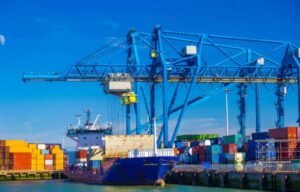
Global trade is usually organized around new products, standardized components, and established supply chains. Yet a substantial opportunity exists in a less visible market: spare parts that are no longer manufactured but remain essential to operating machinery around the world. As industrial equipment ages, its original manufacturers may discontinue components, change product lines, or stop providing technical support. The resulting shortage can force businesses to replace otherwise functional machinery at considerable expense.
A new approach to international trade could turn these obsolete components into a valuable commercial category.
The concept of a spare parts passport involves creating a digital identity for industrial components, including their dimensions, materials, technical specifications, compatible machines, manufacturing history, and verified alternatives. Such a system could connect businesses holding unused inventory with buyers searching for components that are difficult to obtain through conventional suppliers.
Consider a manufacturing facility operating a twenty-year-old production line. A small mechanical component fails, but the original supplier no longer produces it. Replacing the entire machine may cost millions, while the missing component might be relatively inexpensive to manufacture. The difficulty is not necessarily the absence of manufacturing capability. It is the inability to identify the exact component, locate a suitable supplier, and verify compatibility.
A global digital exchange could help solve this problem.
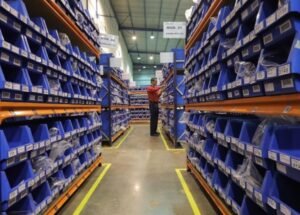
Industrial businesses, equipment dealers, repair workshops, and decommissioned factories could register verified information about available components. Buyers could search using part numbers, technical drawings, photographs, material specifications, or machine identification details. Artificial intelligence could help identify equivalent components when original part numbers are unavailable, while engineering specialists would verify critical matches before installation.
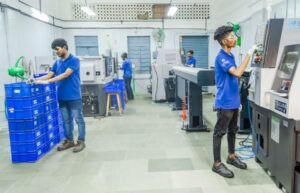
This could create new opportunities for countries with strong engineering and manufacturing capabilities. Indian machine shops, precision engineering companies, and industrial repair businesses could produce low-volume replacement components for international customers. Instead of competing exclusively on mass production, they could specialize in solving difficult supply problems.
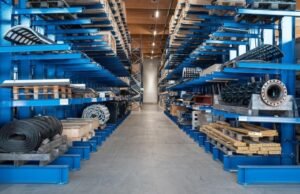
The system could also encourage the recovery of components from decommissioned machinery. Equipment that has reached the end of its operational life may still contain functional motors, gearboxes, pumps, control modules, and other valuable parts. Verified recovery and resale could reduce industrial waste while providing affordable replacements to businesses operating older equipment.
A spare parts passport would need more than a searchable catalogue. It could include information about material composition, manufacturing tolerances, testing results, applicable safety standards, export restrictions, and provenance. Secure digital records could improve confidence in cross-border transactions and help buyers distinguish genuine components from unverified substitutes.
Governments could support this market by developing common data standards, encouraging industrial inventories to be digitized, and facilitating cross-border certification. Industrial associations could establish testing facilities where recovered or newly manufactured components are inspected before entering international markets.
There are important limitations. Similar-looking components may have different performance characteristics, and an incorrect replacement can cause equipment damage or serious safety risks. Pressure-bearing parts, aircraft components, medical equipment, and other safety-critical products require especially rigorous verification and regulatory compliance. Intellectual property restrictions and export-control requirements must also be respected.
The commercial opportunity lies in making the search, verification, and exchange of obsolete components more efficient, not in treating every old part as automatically interchangeable.
India could begin with selected sectors such as textile machinery, agricultural equipment, packaging systems, machine tools, and industrial pumps. These markets would provide opportunities to test whether digital identification and supplier matching can reduce downtime and create profitable manufacturing services.
The broader lesson is that international trade does not have to depend entirely on producing something new. Maintaining existing infrastructure can generate significant economic value. By making obsolete components discoverable, verifiable, and commercially accessible, India could help build a specialized global market that connects industrial maintenance with advanced manufacturing.
In the future, a component that appears commercially worthless in one country could become an essential export opportunity in another.