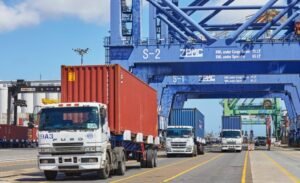
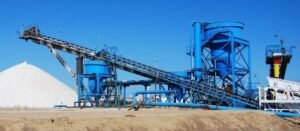
India exports millions of tonnes of minerals every year, including iron ore, granite, bauxite, alumina, manganese ore, and industrial minerals. While mining productivity has steadily improved, many exporters continue to face delays once minerals reach ports. Congestion, inefficient scheduling, manual documentation, equipment downtime, and poor coordination between trucks, railways, warehouses, and ships can increase costs and reduce competitiveness. Industry 4.0 technologies are now transforming ports into intelligent logistics hubs capable of moving minerals more efficiently than ever before.
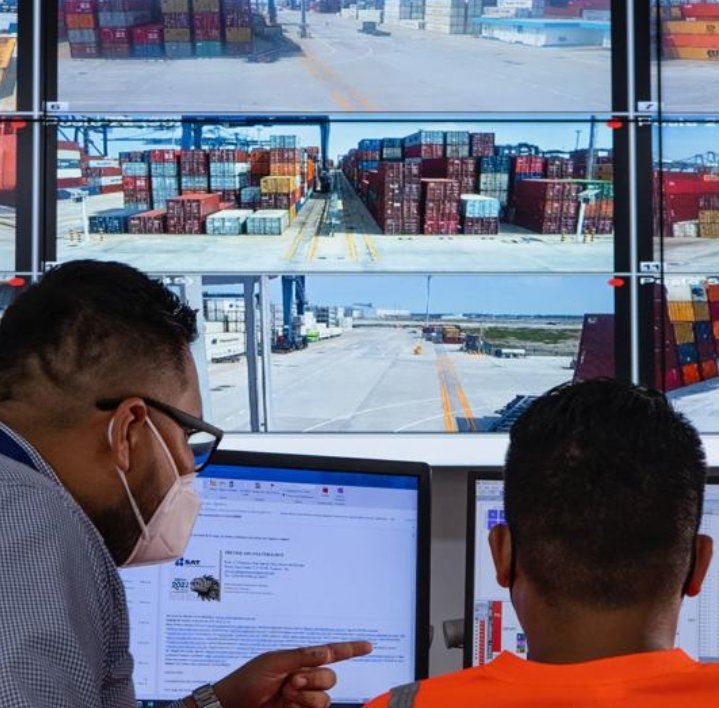
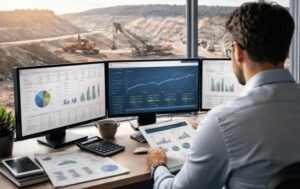
Smart port logistics combines artificial intelligence, the Internet of Things, cloud computing, robotics, digital twins, and predictive analytics to manage every stage of cargo movement. Instead of relying on manual coordination, digital systems monitor operations continuously and optimize decisions in real time.
The journey begins long before a shipment reaches the port. GPS enabled trucks carrying minerals from mines transmit their location continuously. Railway wagons transporting iron ore or coal send updates on estimated arrival times. AI software analyzes this information together with weather conditions, traffic congestion, and rail schedules to predict when cargo will arrive. Port operators receive advance notice and prepare unloading equipment before the vehicles enter the terminal.
Once minerals arrive, automated weighing systems record cargo details immediately. RFID tags, QR codes, and digital documentation eliminate much of the paperwork traditionally associated with cargo handling. Every movement is recorded electronically, reducing delays and minimizing administrative errors.
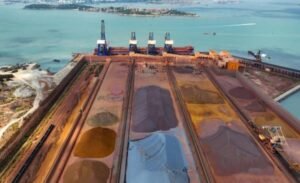
Artificial intelligence also optimizes stockyard management. Large export terminals often store minerals temporarily before loading them onto ships. Different grades of ore must be separated carefully to meet customer specifications. AI systems determine the most efficient storage locations while ensuring that cargo can be retrieved quickly when vessels arrive.
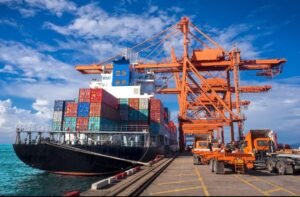
Loading ships is another area where smart logistics creates significant improvements. Traditional scheduling may result in cranes waiting for cargo or trucks waiting for unloading equipment. AI continuously monitors equipment availability, workforce schedules, vessel positions, and cargo readiness. It automatically adjusts loading plans to reduce idle time and maximize equipment utilization.
Predictive maintenance further increases efficiency. Port equipment such as cranes, conveyor belts, stackers, reclaimers, and loaders operate under demanding conditions. IoT sensors monitor vibration, temperature, hydraulic pressure, electrical performance, and mechanical wear. Machine learning algorithms detect early signs of equipment failure and recommend maintenance before breakdowns occur. This prevents unexpected interruptions that could delay vessel departures.
Digital twin technology allows port authorities to simulate operations before implementing changes. Engineers can create virtual models of terminals and evaluate different traffic patterns, storage layouts, crane assignments, and vessel schedules. The simulations identify bottlenecks and recommend improvements without disrupting actual operations.
India’s growing exports of critical minerals make efficient ports even more important. Manufacturers of electric vehicles, batteries, renewable energy equipment, and electronics depend on reliable delivery schedules. Delays at ports can disrupt production lines across multiple countries. Smart logistics helps Indian exporters meet strict international delivery commitments while improving customer satisfaction.
Environmental sustainability also benefits from digital optimization. Trucks spend less time waiting with engines running, reducing fuel consumption and emissions. Ships can coordinate arrival times more accurately, minimizing time spent anchored outside ports. Efficient equipment scheduling lowers electricity consumption while improving overall energy efficiency.
Customs and regulatory procedures become faster through digital integration. Export declarations, quality certificates, laboratory reports, and shipping documents can be exchanged electronically among exporters, customs officials, shipping companies, and port authorities. Automated verification reduces manual inspections while maintaining compliance with national and international regulations.
Artificial intelligence can also improve security. Computer vision systems monitor cargo areas continuously using high resolution cameras. AI detects unauthorized access, unusual vehicle movements, safety violations, or operational anomalies in real time. Security personnel receive instant alerts, allowing rapid response while maintaining safe operations.
International buyers increasingly demand shipment visibility throughout the supply chain. Smart logistics platforms allow customers to monitor cargo status from the mine to the destination port. Real time tracking increases confidence and enables buyers to plan manufacturing schedules more accurately.
The economic impact extends beyond individual ports. Faster cargo movement improves the competitiveness of Indian mineral exports by reducing transportation costs and shortening delivery times. Lower logistics expenses enable exporters to compete more effectively in international markets while attracting additional foreign customers.
Technology companies also gain opportunities to develop specialized solutions for the maritime and mining sectors. Software developers, automation firms, sensor manufacturers, telecommunications providers, and data analytics companies all contribute to building intelligent port ecosystems. This supports innovation while creating highly skilled employment opportunities.
Training remains an important requirement. Port operators, logistics managers, engineers, customs officials, and equipment technicians must learn to work with advanced digital systems. Universities and technical institutions can develop specialized programs that prepare professionals for the next generation of intelligent logistics.
Investment in digital infrastructure will continue to increase as cargo volumes grow. High speed communication networks, cloud computing platforms, cybersecurity systems, autonomous equipment, and advanced analytics will become standard features of major export terminals.
India’s ambition to become a leading global manufacturing and export economy depends not only on producing minerals but also on transporting them efficiently. Smart port logistics represents a practical application of Industry 4.0 that strengthens the entire export value chain. By integrating artificial intelligence, automation, predictive analytics, and digital connectivity, Indian ports can reduce delays, improve productivity, enhance sustainability, and provide exporters with the reliable logistics needed to compete successfully in global mineral markets.