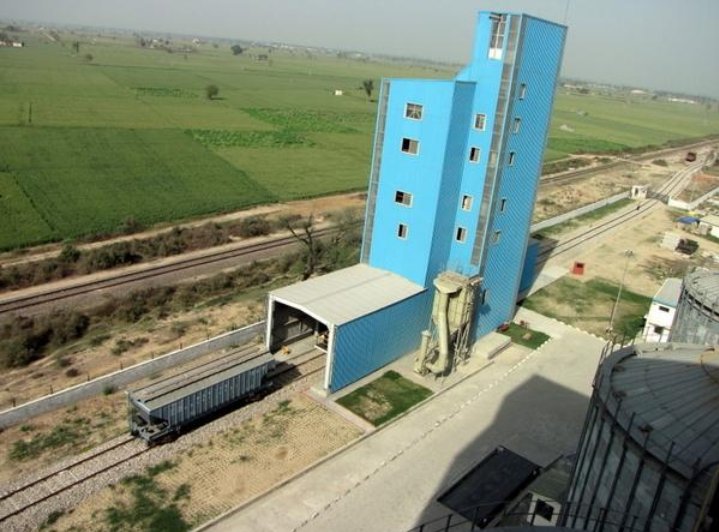
India produces hundreds of millions of tonnes of agricultural commodities every year. Cereals, pulses, oilseeds, spices, fruits, vegetables, cotton, and other farm products move through an enormous network of warehouses before reaching processors, exporters, retailers, and consumers. Despite this scale, storage management remains fragmented in many regions, leading to spoilage, inventory losses, inefficient logistics, and fluctuating market supplies. A Smart Agricultural Warehouse Digital Infrastructure can transform food storage into an intelligent, connected, and highly efficient national system.
The foundation of this infrastructure is the digital integration of every registered agricultural warehouse. Government warehouses, cooperative storage facilities, private warehouses, cold storage units, silos, and processing centres would be connected through a unified digital platform that continuously monitors inventory, environmental conditions, equipment health, and logistics operations.
Internet of Things sensors would play a central role. Temperature, humidity, grain moisture, carbon dioxide concentration, insect activity, and structural conditions inside warehouses can be monitored continuously. These sensors automatically transmit information to cloud-based platforms where warehouse operators receive instant alerts if storage conditions begin to threaten product quality.
Artificial intelligence enhances warehouse management by analysing large volumes of operational data. AI systems can predict spoilage risks, identify abnormal storage conditions, recommend ventilation schedules, optimize inventory movement, and estimate warehouse capacity requirements based on seasonal production forecasts.
Grain quality preservation is one of the most valuable outcomes of digital infrastructure. Wheat, rice, maize, pulses, and oilseeds require carefully controlled storage environments. Small increases in moisture or temperature can encourage fungal growth, insect infestations, and quality deterioration. Continuous monitoring allows operators to intervene immediately before significant losses occur.
Digital inventory management creates complete transparency throughout the storage network. Every incoming shipment receives a unique digital identity containing information about origin, crop variety, harvest date, quality grade, storage location, ownership, and movement history. Warehouse operators can instantly locate products without relying on manual records.
Farmers also benefit directly. Through mobile applications, they can view nearby warehouse availability, compare storage charges, reserve warehouse space, and monitor stored inventory remotely. Small farmers gain access to storage opportunities that were previously difficult to identify.
Warehouse receipt financing becomes more efficient through digital records. Financial institutions can verify the existence, quantity, and quality of stored agricultural products without lengthy physical inspections. Farmers receive faster access to loans while banks reduce lending risks through verified digital information.
Artificial intelligence can also optimize warehouse utilization. Seasonal demand varies significantly across different crops and regions. AI predicts storage requirements months in advance using production forecasts, weather conditions, historical trends, and market demand. Warehouse managers can allocate space more efficiently and reduce idle capacity.
Logistics coordination improves substantially. Transport companies, processors, exporters, and retailers gain visibility into warehouse inventories across the country. Digital scheduling reduces truck waiting times, minimizes unnecessary transportation, and accelerates movement of agricultural commodities from farms to markets.
Food processors depend on reliable raw material supplies throughout the year. A connected warehouse infrastructure allows manufacturers to identify available inventories, estimate product freshness, and coordinate procurement more effectively. Production becomes more stable while reducing unexpected shortages.
Government agencies gain access to national food inventory dashboards. Authorities can monitor grain reserves, identify regional shortages, evaluate food security, and coordinate emergency distribution during natural disasters or market disruptions. Policy decisions become increasingly data-driven rather than dependent on delayed reporting.
Export competitiveness also improves. International buyers require confidence that agricultural commodities have been stored under proper conditions before shipment. Digital environmental records documenting temperature, humidity, storage duration, and quality inspections strengthen India’s credibility in global agricultural markets.
Predictive maintenance further improves warehouse operations. Equipment such as conveyors, elevators, ventilation systems, refrigeration units, generators, and electrical installations continuously generate operational data. AI analyses vibration, power consumption, and performance trends to predict failures before breakdowns occur, reducing maintenance costs and operational interruptions.
Climate resilience represents another important advantage. Extreme temperatures, floods, cyclones, and changing weather patterns increasingly threaten agricultural storage. Smart monitoring systems enable faster emergency responses, protecting valuable food stocks during adverse conditions.
India already possesses strong capabilities in cloud computing, artificial intelligence, digital communications, and industrial automation. Applying these technologies to agricultural warehousing can significantly reduce post-harvest losses, improve market efficiency, strengthen food security, support agricultural exports, and increase farmer incomes. A Smart Agricultural Warehouse Digital Infrastructure would become one of the essential pillars supporting a modern, technology-driven agricultural economy capable of meeting the demands of future generations.