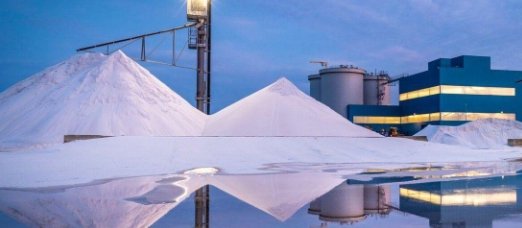
Salt production is one of the oldest industries in human civilization and remains essential to food processing, chemical manufacturing, pharmaceuticals, water treatment, textiles, leather processing, and numerous industrial applications. India is among the world’s largest producers of salt, with extensive production along the coasts of Gujarat, Tamil Nadu, Rajasthan, and other regions. Although the industry has centuries of experience, many production processes continue to rely on traditional methods. Industry 4.0 offers an opportunity to combine this experience with intelligent technologies that improve productivity, quality, sustainability, and export competitiveness.
Salt production begins with seawater or brine entering evaporation ponds where sunlight and wind gradually increase salinity before crystallization occurs. The process is highly dependent on weather, water quality, evaporation rates, and careful operational management. Small variations in environmental conditions can significantly affect production volumes and product quality.
Industry 4.0 begins with connected sensors installed across evaporation ponds, pumping stations, processing facilities, storage yards, and packaging units. These sensors continuously monitor salinity, water depth, temperature, humidity, wind speed, solar radiation, and crystallization progress. Instead of relying entirely on manual observation, operators receive real time information from every stage of production.
Artificial intelligence transforms this operational data into practical recommendations. AI systems analyze weather forecasts, historical production patterns, evaporation rates, and pond conditions to recommend optimal water movement between ponds. Better timing improves crystal formation while increasing overall productivity.
Digital twins provide another powerful capability. Every salt production facility can maintain a virtual model that mirrors actual operations in real time. Managers can simulate different harvesting schedules, pond layouts, water management strategies, and production scenarios before making changes in the field. This reduces operational risks while supporting long term planning.
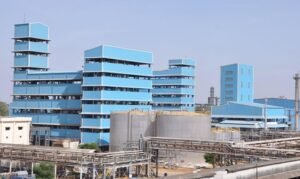
Predictive maintenance improves equipment reliability throughout the production process. Pumps, conveyors, crushers, washing systems, packaging machines, and transport vehicles continuously report vibration, temperature, electrical loads, and mechanical performance. Artificial intelligence predicts equipment failures before breakdowns interrupt production.
Machine vision systems strengthen quality assurance. High resolution cameras inspect salt crystals for size, color, purity, moisture content, and contamination. Artificial intelligence classifies products automatically and identifies quality deviations before packaging begins. This ensures greater consistency while reducing manual inspection requirements.
Automation can also improve packaging and warehouse operations. Robotic systems can fill bags, stack pallets, transport finished products, and prepare export consignments with greater speed and accuracy. Automated guided vehicles move products through warehouses while reducing manual handling.
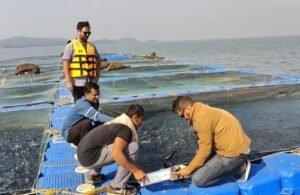
Environmental management benefits significantly from connected technologies. Sensors continuously monitor groundwater conditions, brine usage, wastewater quality, and surrounding environmental parameters. Digital monitoring helps producers comply with environmental regulations while improving resource management.
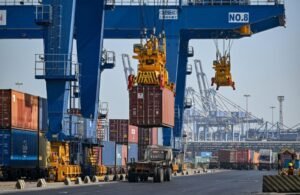
Supply chain integration extends Industry 4.0 beyond production sites. Salt producers, chemical manufacturers, food processing companies, pharmaceutical firms, logistics providers, ports, exporters, and distributors can exchange real time information regarding inventory, production schedules, transportation, and customer demand. Better coordination reduces storage costs while improving delivery performance.
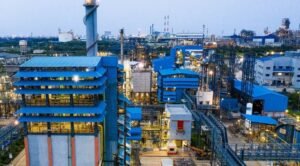
Energy efficiency also becomes more important as processing facilities expand. Smart monitoring systems optimize electricity consumption across pumps, washing units, drying equipment, packaging machinery, and warehouse operations. Lower energy consumption reduces production costs while improving sustainability.
Worker safety improves through connected monitoring systems. Wearable devices, environmental sensors, and automated alerts identify heat stress, equipment hazards, electrical risks, and unsafe operating conditions. Faster response improves workplace safety while reducing operational risks.
India’s salt industry supplies both domestic markets and international customers. As buyers increasingly demand consistent quality, reliable delivery, and sustainable production practices, digital technologies become essential for maintaining competitiveness.
The transition to Industry 4.0 can begin gradually through sensor networks, predictive maintenance, digital monitoring, and artificial intelligence before expanding into robotics, digital twins, and advanced automation. This phased approach allows producers to modernize operations while managing investment costs effectively.
Salt has supported human civilization for thousands of years and remains one of the world’s most essential industrial commodities. By integrating artificial intelligence, connected sensors, digital twins, machine vision, robotics, and advanced analytics, India’s salt production industry can become more productive, environmentally responsible, and globally competitive while modernizing one of the oldest industries in human history.